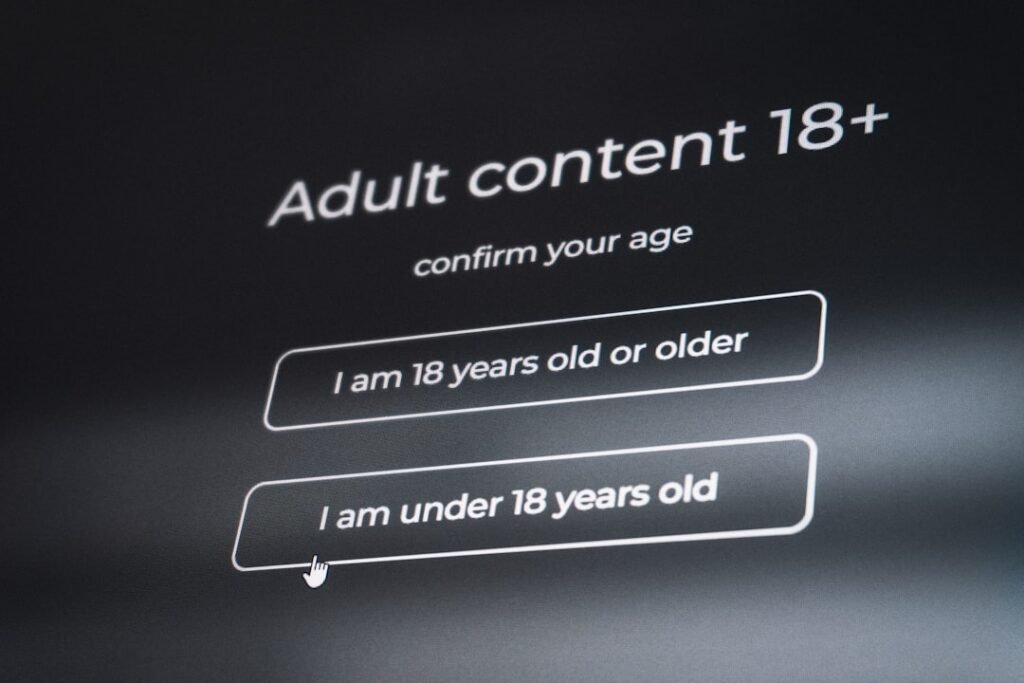
In a world where the internet is increasingly concerned with privacy and security, a Toronto-based startup, Veritone Voice, is pushing the envelope with its new voice age verification technology. As digital platforms grapple with the challenge of ensuring age-appropriate access, Veritone’s solution could become an essential tool. The technology, which uses voice recognition to determine a user’s age, promises to streamline verification processes for online services while raising questions about privacy and accuracy.
## What Veritone Voice Actually Does
Veritone Voice offers a voice-based age verification tool designed to replace traditional methods like submitting identification documents or answering personal questions. Users simply speak a few phrases into a microphone, and the system analyzes vocal characteristics to estimate their age. The company claims its technology can accurately determine age within a few years, providing a frictionless experience for users and potentially reducing fraud.
The technology leverages machine learning algorithms trained on vast datasets of voice samples. According to Veritone, the system’s accuracy improves with each interaction, allowing it to adapt to diverse accents and speech patterns. While the concept is intriguing, the practical application remains to be seen, particularly in how it handles edge cases and cultural nuances in speech.
## Competitive Context
Veritone Voice enters a crowded market of age verification solutions, where competitors typically rely on physical ID checks or knowledge-based authentication. Companies like Jumio and Yoti have established themselves as leaders by offering solutions that integrate with government databases or use biometric data. Veritone’s voice-based approach differentiates it by eliminating the need for physical documents, which can be cumbersome and prone to forgery.
However, the startup faces challenges in proving the reliability and security of its voice analysis. Critics may argue that voice recognition technology, while novel, could struggle with accuracy in noisy environments or with users who have atypical speech patterns. Moreover, the technology must contend with privacy advocates concerned about the collection and storage of voice data. As the market evolves, Veritone will need to demonstrate not only technological prowess but also a commitment to ethical data handling.
## Real Implications for Founders, Engineers, and Industry
For founders and engineers, Veritone’s approach presents an intriguing case study in leveraging AI for practical applications. The technology’s development could inspire similar innovations across industries seeking to streamline user verification processes. However, it also underscores the importance of addressing privacy concerns and ensuring that AI systems are transparent and fair.
Investors eyeing this space should consider the broader implications of voice-based verification. While there’s potential for high adoption in sectors like gaming, social media, and e-commerce, the path to widespread acceptance will require overcoming regulatory hurdles and consumer skepticism. Companies must also be prepared to invest in robust data protection measures to avoid backlash.
Engineers working on AI and machine learning solutions can view Veritone’s technology as a reminder of the importance of diverse datasets and continuous model training. The success or failure of voice age verification will hinge on its ability to perform consistently across various user demographics and environments.
As Veritone Voice moves forward, the company must navigate a landscape where innovation meets regulation. The startup will need to engage with policymakers and stakeholders to establish standards that safeguard user data while promoting technological advancement.
The next steps for Veritone involve scaling their technology and proving its efficacy in real-world applications. For founders and engineers, this means keeping an eye on how Veritone refines its algorithms and addresses data privacy concerns. Investors should watch for partnerships and regulatory developments that could impact the adoption of voice-based verification solutions.