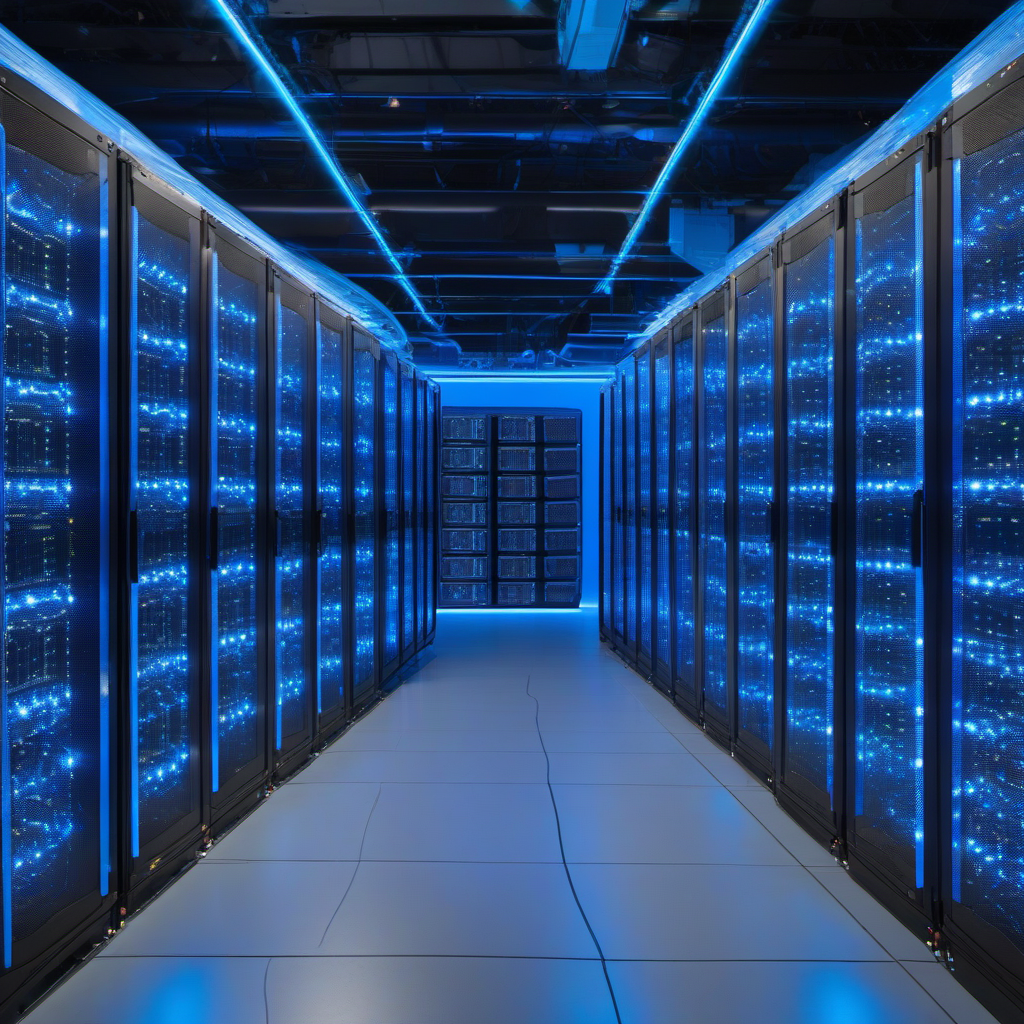
In a move that could reshape the landscape of artificial intelligence (AI), Toronto-based tech firm QuantumNet has unveiled a new supercomputer networking system designed to turbocharge large-scale AI training. As AI models grow ever more complex, the need for faster and more efficient training processes becomes critical. QuantumNet’s latest offering promises to slash training times by up to 50%, potentially giving AI developers and researchers a powerful new tool to accelerate their projects.
## What QuantumNet’s System Does
QuantumNet’s new networking solution aims to address a significant bottleneck in AI development: the slow data transfer speeds between supercomputing nodes. The company claims its system utilizes a novel architecture that optimizes data flow, reducing latency and improving bandwidth. This advancement can make a substantial difference in training massive AI models that require the simultaneous processing power of thousands of interconnected GPUs.
The system is built on a proprietary technology that integrates seamlessly with existing supercomputers. This means that organizations won’t need to overhaul their current infrastructure to reap the benefits. According to QuantumNet, early tests conducted in collaboration with the University of Toronto showed promising results, with AI training times halved for a well-known language model.
## Competitive Context
QuantumNet enters an arena where giants like NVIDIA, Google, and IBM dominate. These companies have long been working on enhancing AI training capabilities through both hardware and software solutions. NVIDIA, for instance, has its own suite of high-performance computing solutions tailored for AI, while Google Cloud offers specialized TPUs for machine learning workloads.
However, QuantumNet’s focus on the networking layer sets it apart. By concentrating on the data transfer aspect, the company addresses a pain point often overshadowed by the more glamorous advancements in processing power. If QuantumNet’s claims hold true, it could carve out a niche by offering a complementary solution that enhances the performance of existing AI hardware.
## Real Implications for Founders and Engineers
For AI startups and engineers, QuantumNet’s system could mean the difference between being first to market or playing catch-up. Faster training times can lead to quicker iterations, allowing teams to refine their models and improve accuracy at a much faster pace. This can be particularly beneficial in competitive fields like autonomous driving, natural language processing, and drug discovery, where the race to develop the most effective models is intense.
Moreover, for startups operating on tight budgets, the ability to leverage existing infrastructure without significant additional investment is a major plus. It allows smaller companies to compete on a more level playing field with tech behemoths that have access to vast computing resources.
## What Happens Next
QuantumNet plans to roll out its networking system to select partners by early next year, with a broader launch expected by mid-2024. The company is also exploring partnerships with major cloud providers to integrate its technology into existing cloud-based AI solutions.
For founders and engineers, this development is worth watching closely. Those who can quickly adapt and integrate QuantumNet’s system into their workflows might gain a competitive edge in the fast-paced AI market. Keeping an eye on how this technology evolves could be crucial for anyone looking to leverage AI in their products and services.