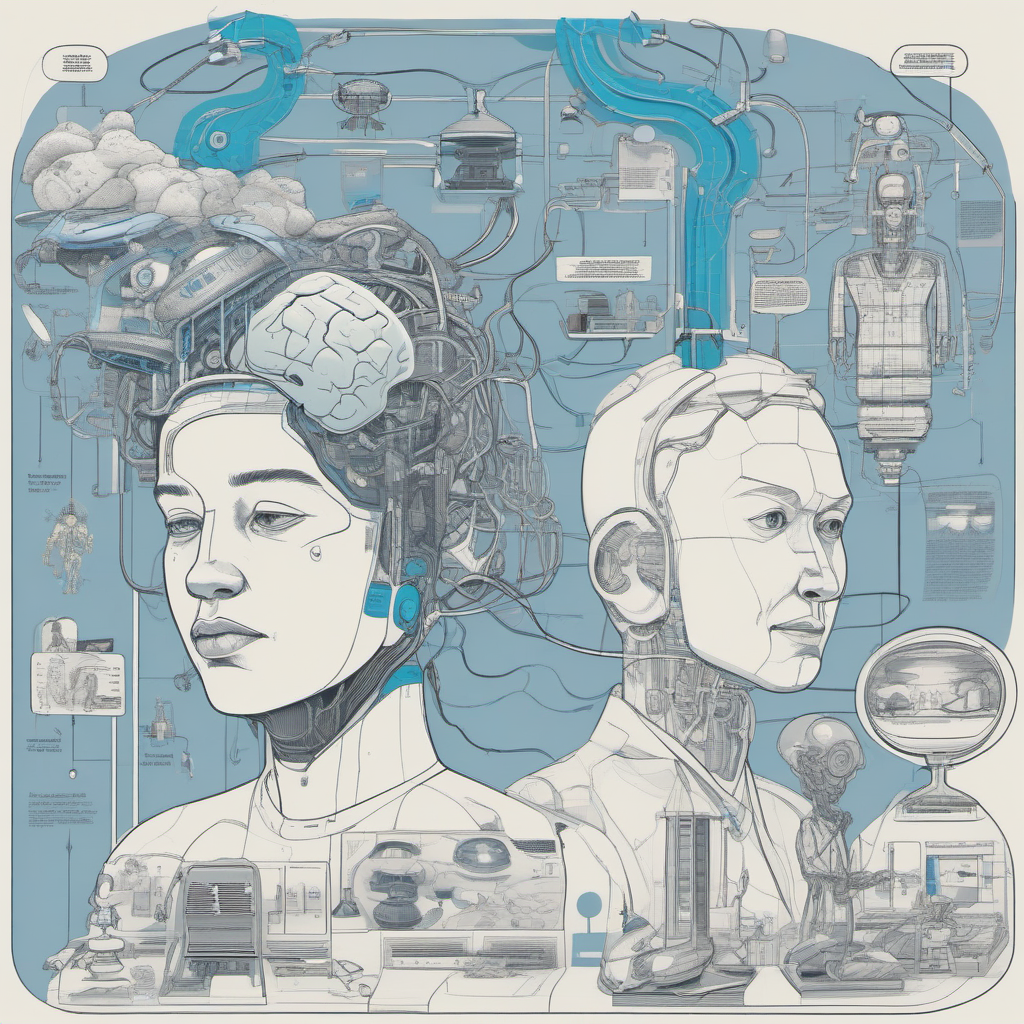
The rise of AI language models has forced companies to rethink their strategies for data processing and interpretation, and the latest development in this space is the introduction of new rules for context engineering in Claude 5 generation models. This move is crucial because it aims to refine how AI interprets and generates human-like text, potentially reshaping natural language processing applications across various industries.
## What Claude 5 Actually Does
Claude 5, developed by Anthropic, is a state-of-the-art AI language model designed to enhance natural language understanding and generation. Unlike its predecessors, Claude 5 focuses on context engineering, a technique that refines how AI systems interpret the context of conversations or documents. This involves advanced algorithms that can better understand nuances in human language, making interactions with AI more intuitive and less prone to misinterpretation. The model is designed to improve applications ranging from customer service chatbots to content creation tools, promising more accurate and relevant outputs.
## Competitive Context
In the crowded field of AI development, Claude 5 finds itself competing with heavyweights like OpenAI’s GPT-4 and Google’s Bard. These models have already set high benchmarks for natural language processing capabilities. However, Anthropic is betting on its unique approach to context engineering as a differentiator. While OpenAI and Google focus on scaling model size and computational power, Anthropic’s strategy emphasizes refining the contextual understanding within the model. Whether this angle will provide a substantial edge remains to be seen, as the competition continues to evolve rapidly, with each player striving for more sophisticated and reliable AI outputs.
## Real Implications for Founders, Engineers, and Industry
For founders and engineers, the emergence of Claude 5 presents both opportunities and challenges. On the one hand, improved context understanding can lead to more efficient AI-driven tools, potentially reducing the resources needed for training and fine-tuning models. This could lower entry barriers for startups looking to leverage AI, making it easier to integrate advanced language models into their products without extensive customization.
On the flip side, the pressure to adopt the latest technology can lead to a “fear of missing out” on the most advanced capabilities, pushing companies to integrate new models before fully understanding their implications or potential drawbacks. Engineers will need to stay abreast of these developments, focusing on how to best implement context engineering techniques to enhance model performance while ensuring alignment with ethical AI practices.
## What Happens Next
As Anthropic rolls out Claude 5, the focus will likely shift toward real-world applications and feedback from early adopters. This phase will be critical in determining the model’s practical benefits and limitations. Founders and engineers should keep a close eye on user experiences and case studies to gauge where Claude 5 truly excels and where it may fall short.
The takeaway for those in the tech industry is clear: while Claude 5 may not be a panacea, it represents a meaningful shift towards more nuanced AI interactions. Understanding and leveraging these advancements will be key for anyone looking to remain competitive in the AI landscape. As always, the ability to critically assess and adapt to these changes will separate the leaders from the followers in the ever-evolving world of technology.
Originally reported by Y Combinator.