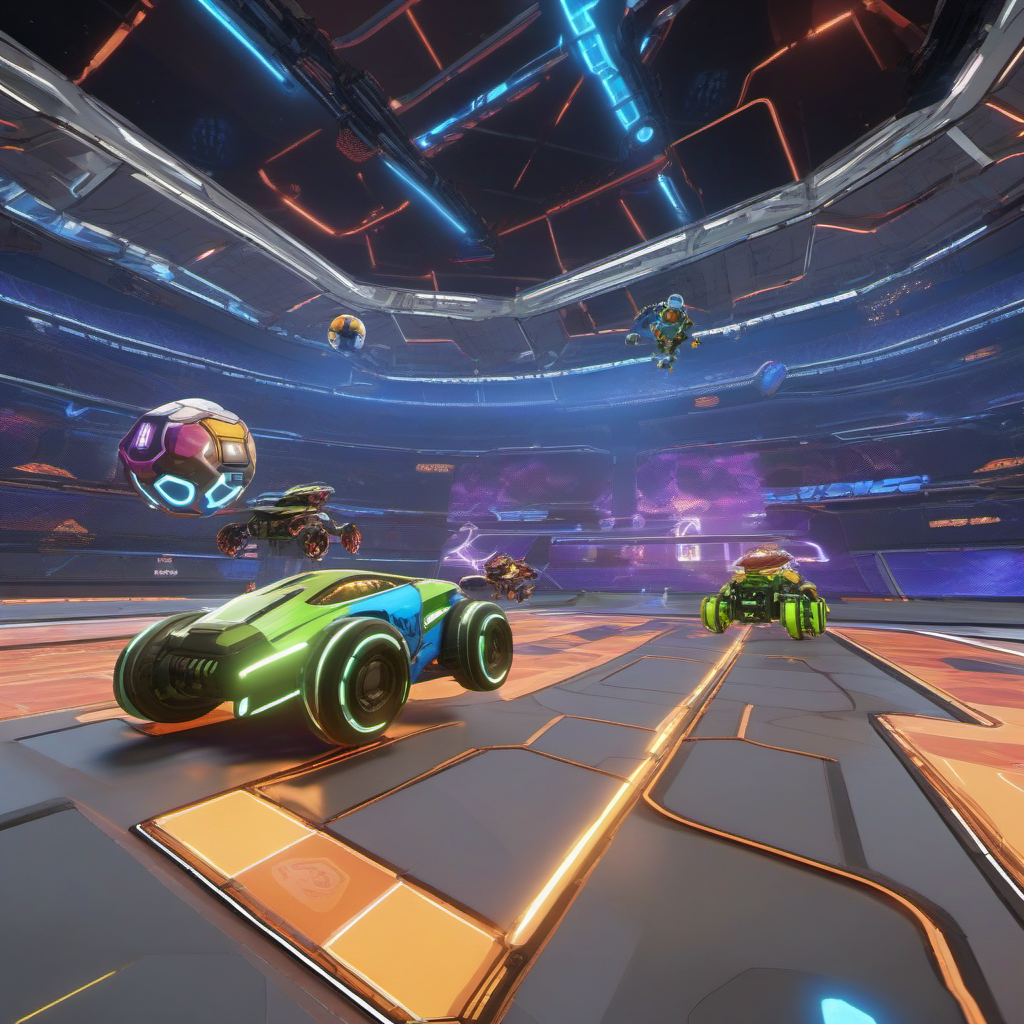
In a move that could reshape how AI models are trained for complex real-world applications, a startup named MIRA has emerged from stealth mode with an intriguing approach: training their systems using the popular video game Rocket League. This matters because it highlights a shift in how AI can be developed and tested in dynamic, multi-agent environments, potentially unlocking new capabilities in areas like autonomous vehicles, robotics, and beyond.
## What MIRA Actually Does
MIRA focuses on creating Multiplayer Interactive World Models that leverage the fast-paced, physics-driven environment of Rocket League as a training ground. Unlike traditional AI training that relies heavily on static datasets, MIRA’s approach uses the real-time, competitive nature of the game to teach AI models how to navigate complex scenarios involving multiple agents. The idea is that these models can then be applied to real-world situations that require rapid decision-making and adaptation.
Rocket League, known for its blend of soccer and vehicular acrobatics, provides an ideal sandbox for developing sophisticated AI. The game’s unpredictable nature and the necessity for strategic interaction between multiple players make it a rich environment for training AI to handle similar real-world dynamics. This method promises to enhance the AI’s ability to predict and adapt to human behaviors, which is crucial for applications like self-driving cars and collaborative robots.
## Competitive Context
MIRA isn’t the first to use video games as a training tool for AI, but its focus on multiplayer, physics-based games like Rocket League sets it apart. Companies like OpenAI have famously used games such as Dota 2 to develop AI that can compete at high levels, but these environments are more strategic and less dependent on real-time physics. MIRA’s unique angle could potentially fill a niche that other AI-focused companies haven’t fully explored.
The competitive landscape for AI training is crowded, with well-funded giants like DeepMind and smaller startups constantly vying for breakthroughs. MIRA’s approach could attract attention from investors seeking new methods to train AI in ways that are both scalable and effective. However, without substantial proof of real-world applicability beyond the gaming context, MIRA will need to demonstrate clear advantages over existing methods to maintain its edge.
## Real Implications for Founders, Engineers, and Industry
For founders and engineers, MIRA’s approach may present new opportunities to collaborate on AI projects that require sophisticated, adaptable models. The use of video games as training grounds could lower barriers to entry for developing complex AI systems, offering a more cost-effective and accessible platform than traditional methods. This could democratize AI innovation, allowing smaller teams to compete with larger players.
However, skepticism remains about whether these models can seamlessly transition from virtual to real-world applications. Engineers tasked with implementing these systems will need to address challenges such as integrating AI trained in game environments with real-world sensors and data inputs. Success will depend on MIRA’s ability to demonstrate that their models can perform reliably outside the controlled confines of a digital playground.
## What Happens Next
MIRA’s next steps will likely involve securing additional funding to expand their research and development efforts, as well as seeking partnerships with industries that stand to benefit from their technology. For founders and engineers watching this space, the key takeaway is to stay informed about how AI training methodologies evolve and to consider how these advancements might be leveraged in your own projects. Whether MIRA’s approach will disrupt existing methods or simply complement them remains to be seen, but it certainly adds a new dimension to the ongoing AI narrative.