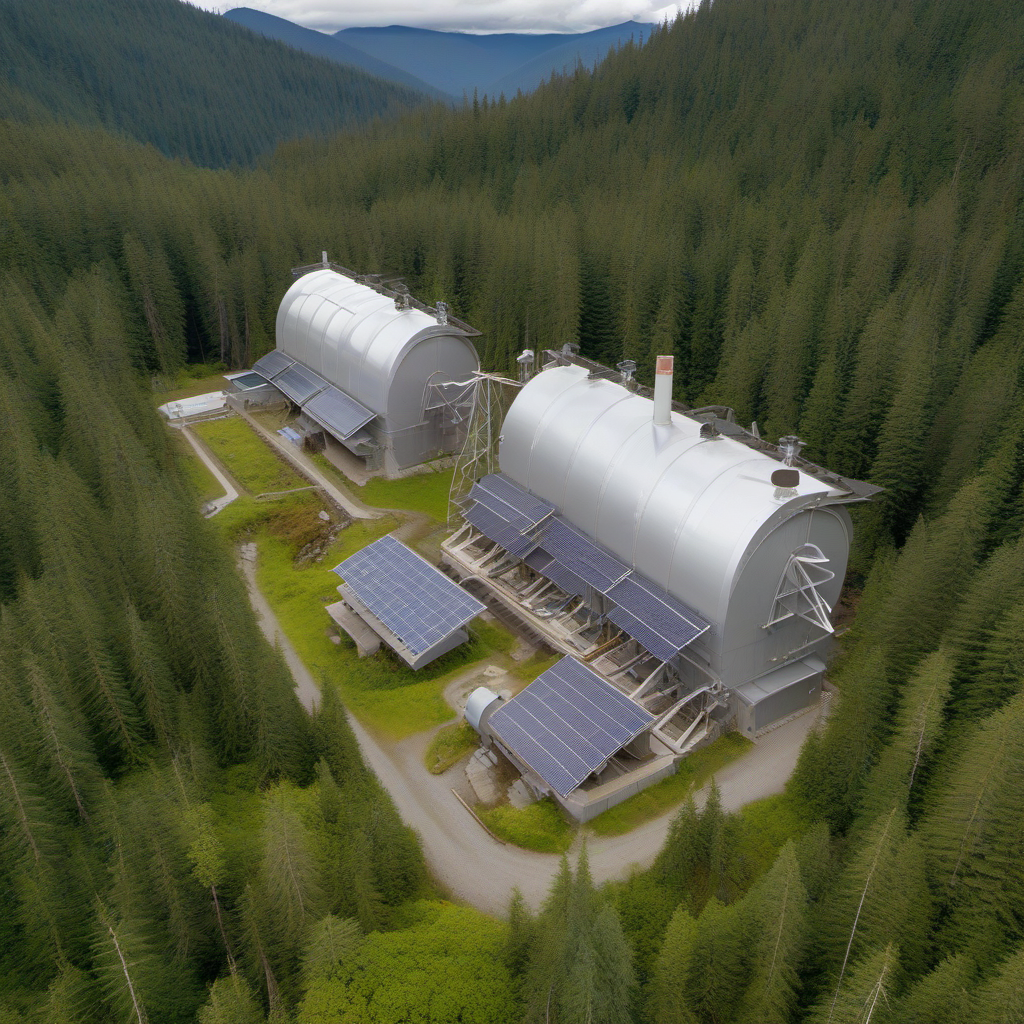
The Canadian federal government has committed $4.5 million to bolster clean energy projects across British Columbia, a move that underscores its ambition to transform Canada into a clean energy superpower. This funding, aimed at reducing reliance on diesel and fostering economic growth, is part of the Clean Energy for Rural and Remote Communities (CERRC) program. But what does this actually mean for the innovative landscape of energy systems in B.C., and who stands to gain the most?
## What the Projects Actually Do
The funding targets a variety of energy projects that leverage renewable sources such as water, biomass, and solar power. In Gwa’yi village, the Padakus Hydropower Project will use $1.1 million to harness the power of a 350-kW run-of-river system. Meanwhile, the TYE Clean Energy Capacity Building Initiative receives $1 million to empower the Skidegate Band Council and Old Massett Village Council to develop localized clean energy systems. These projects aim to provide sustainable electricity and heating solutions while supporting community-led energy initiatives.
Haida Gwaii will see a $1.25 million investment in a solar and energy storage project designed to enhance the quality and reliability of the region’s power supply. In Massett, a $450,000 grant will facilitate the installation of a 390-kW Viessmann biomass boiler at the Northern Haida Gwaii Hospital and Health Centre, providing renewable heating solutions. The Mowachaht and Muchalaht First Nations are also set to benefit, with over $100,000 allocated for a wave energy project in Yuqot, and the Daylu Dena Council will receive more than $300,000 for geothermal testing in the Lower Post region.
## Competitive Context
While these projects may seem promising, the clean energy sector is crowded with claims of sustainability and innovation, often leaving consumers and investors to sift through a deluge of overhyped announcements. Canada’s clean energy market is already populated by established players in solar, wind, and biomass technologies. However, the focus on rural and remote communities, particularly Indigenous communities, provides a niche where these projects could make a tangible impact.
The CERRC program, launched in 2018 and recapitalized in 2021, has invested $453 million across 230 projects nationally. This places it as a significant player in the niche of rural clean energy solutions, but it also faces the challenge of demonstrating real-world benefits beyond the initial funding boost. The direct involvement of Indigenous communities in these projects might serve as a competitive differentiator, offering localized expertise and tailored energy solutions.
## Real Implications for Founders and Engineers
For founders and engineers in the clean energy space, these projects offer both inspiration and a cautionary tale. The focus on community-driven solutions highlights the importance of aligning technological innovation with local needs and priorities. Engineers might find opportunities to apply their skills in designing systems that are not only efficient but also culturally and environmentally sensitive.
However, the competitive landscape demands rigorous proof of concept and scalability. Entrepreneurs should note the importance of securing government backing and partnerships with local communities as key components of a successful clean energy venture. The projects also underscore the potential for public-private partnerships, where government funding can de-risk projects and attract additional private investment.
## What Happens Next
As these projects unfold, the real test will be their ability to deliver on promises of reduced diesel reliance and increased energy reliability. Success could pave the way for further funding and expansion of similar initiatives across Canada, providing a blueprint for sustainable energy development in rural and remote areas.
For founders and engineers, this means keeping an eye on the outcomes and leveraging lessons learned to inform future projects. Securing funding will remain competitive, but those who can demonstrate both technical prowess and meaningful community engagement will likely find themselves best positioned to capitalize on Canada’s clean energy ambitions.