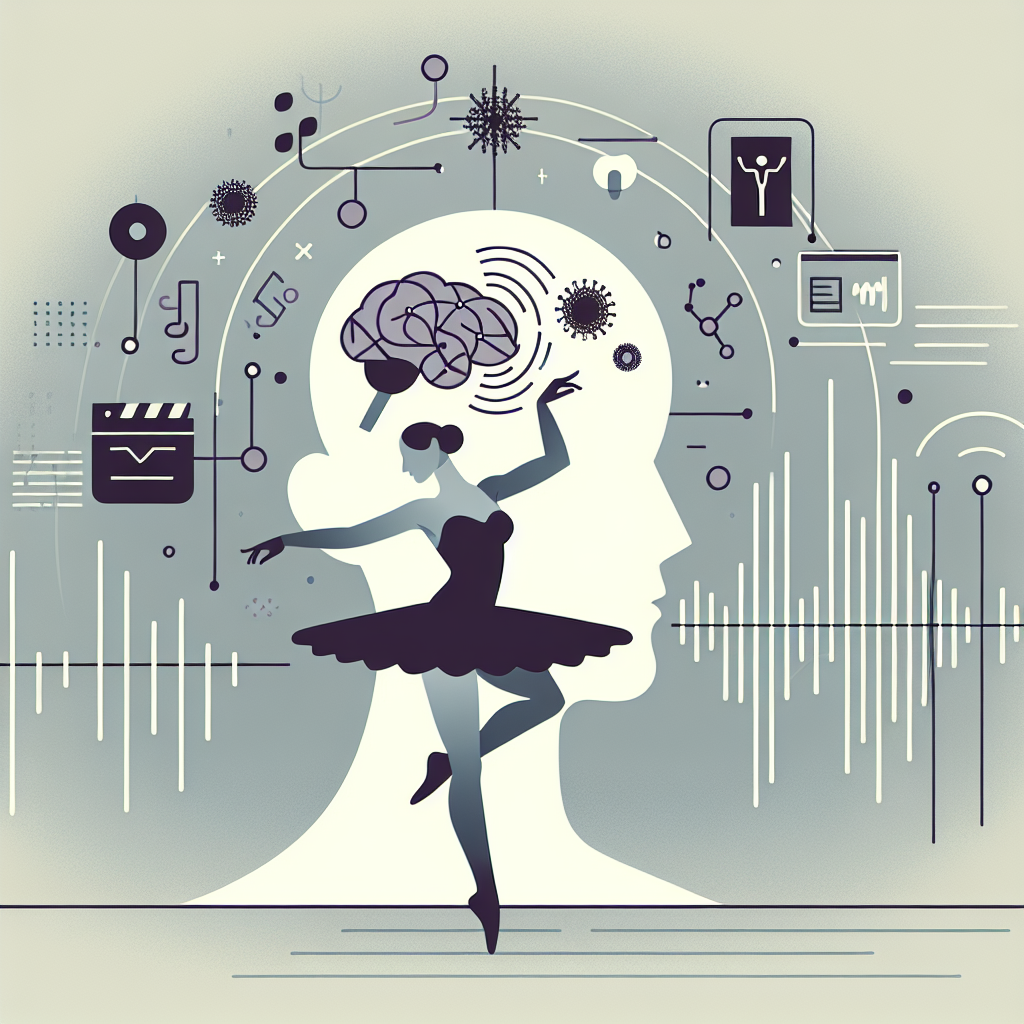
A groundbreaking performance in Amsterdam has highlighted a significant technological advancement in assistive technology. Dentsu Lab’s Project Humanity enabled Breanna Olson, a dancer living with ALS, to perform live using brainwave detection technology. This development underscores the potential for new interfaces in human-computer interaction, particularly for individuals with severe physical disabilities.
## Dentsu Lab’s Technological Innovation
Dentsu Lab, a creative technology firm, has been working on interfaces that translate muscle signals and brainwaves into digital expressions. Their recent demonstration in Amsterdam showcased how these technologies can enable individuals with disabilities to express themselves through digital avatars. Using electromyography (EMG) sensors, the system detects electrical activity from muscle contractions, even those that are minimal. This data is then processed to animate a digital avatar, allowing users to control it with their intentions.
In the case of Breanna Olson’s performance, the technology shifted to brainwave detection. This method captured her neural signals, translating them into real-time choreography performed by her digital avatar. The event, titled “Waves of Will,” was a collaboration with NTT Inc. and served as a live proof of concept for the technology.
## Context and Industry Implications
This development is part of a broader trend in assistive technology aimed at redefining human-computer interaction for individuals with physical disabilities. Traditional interfaces rely on physical movement, but for the estimated 200 million people worldwide with significant disabilities, alternative methods are essential.
Dentsu Lab’s technology has implications beyond accessibility. By creating a general-purpose digital avatar, users can interact with various software applications, not just bespoke assistive tools. This opens up possibilities in gaming, remote work, education, and social interaction, potentially integrating more people into the digital economy and the emerging Metaverse.
## Future Prospects
The successful demonstration in Amsterdam marks a significant step forward, but it also points to the potential for further development and integration of such technologies. If generalized, these interfaces could transform how people with disabilities interact with digital environments, making them more inclusive.
As Dentsu Lab continues to refine its technology, the implications for the tech industry are profound. By addressing the needs of those with physical disabilities, the company is not only expanding the reach of digital interaction but also setting a precedent for inclusive innovation in technology.
This development suggests a future where digital interfaces are designed with accessibility at their core, potentially reshaping the landscape of human-computer interaction. As the technology evolves, it could lead to broader adoption and integration across various sectors, making digital spaces more accessible to everyone.