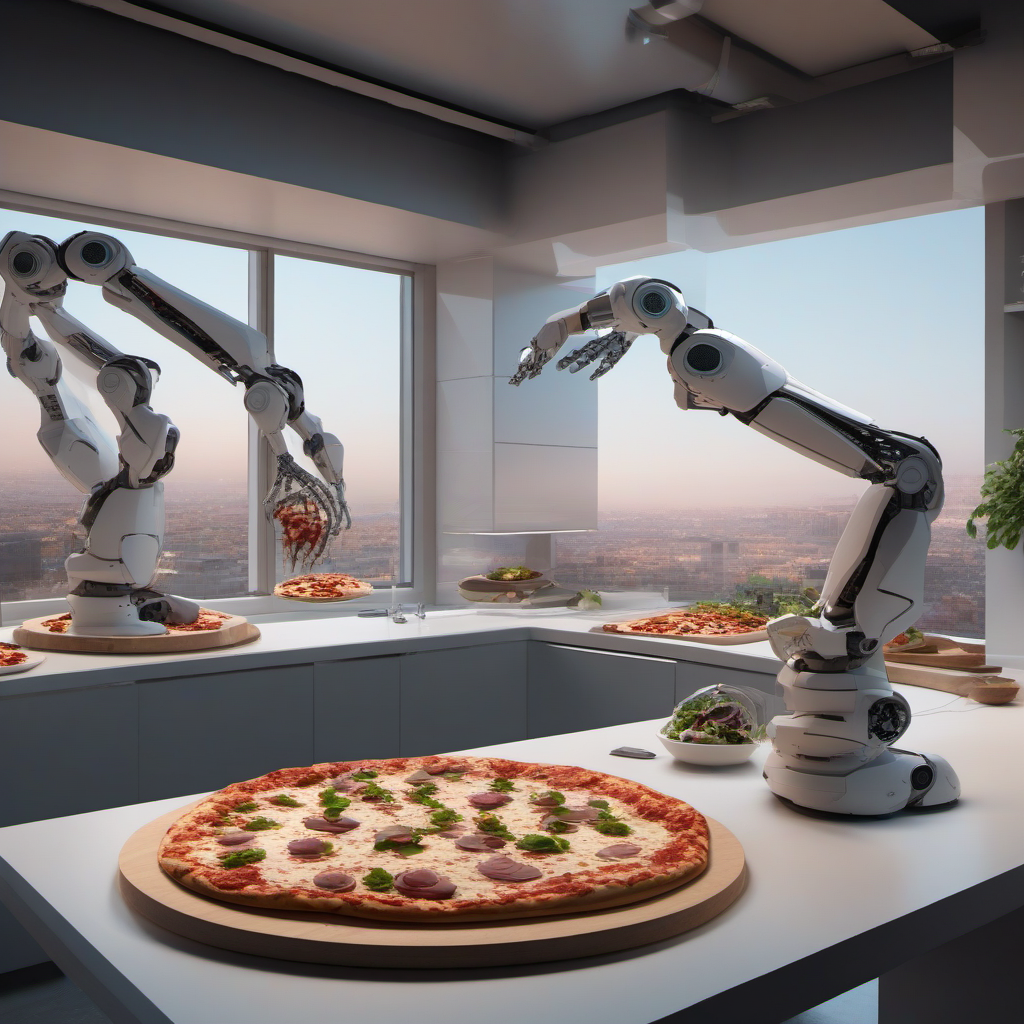
Appetronix has taken a bold step in the robotic kitchen industry with its acquisition of Cibotica, a Vancouver-based robotics company specializing in restaurant automation. This strategic move, announced Tuesday, aims to enhance Appetronix’s technological capabilities and expedite its expansion into diverse culinary formats and venues. With the integration of Cibotica’s technology, Appetronix is positioning itself to tackle both fully autonomous restaurant models and the automation of existing human-operated kitchens, broadening its competitive edge in a rapidly evolving market.
### What Appetronix and Cibotica Actually Do
Appetronix, based in London, Ontario, focuses on developing fully autonomous robotic kitchens. Since its inception as SJW Robotics in 2020, the company has been innovating in the field of commercial restaurant automation. It currently operates robotic kitchens in collaboration with mid-sized U.S. pizza chain Donatos, including a fully autonomous location at Columbus International Airport. Appetronix’s future plans include launching robotic systems for Asian stir fry, Mexican burrito bowls, and coffee shops, expanding its reach beyond pizza-making.
Cibotica, on the other hand, has carved out a niche in automating existing kitchen operations. Founded in 2021, Cibotica developed Remy, an automated bowl and salad assembly system, and a patented ingredient dispensing platform. Its technology has already been adopted by Moto Pizza, a small Seattle-based chain. While Cibotica’s focus was different from Appetronix’s, the overlap in core technology paved the way for this acquisition, which aims to leverage Cibotica’s advancements within Appetronix’s broader platform.
### Competitive Context
The robotic kitchen space is becoming increasingly crowded, with numerous startups vying for a slice of the market. Competitors include companies like Miso Robotics, known for its burger-flipping robot Flippy, and Spyce, which offers robotic kitchen solutions for fast-casual dining. Appetronix’s acquisition of Cibotica is a strategic maneuver to fortify its technological arsenal against these competitors, enhancing its ability to offer more versatile and powerful solutions.
While the potential for automation in kitchens is vast, the market has yet to prove whether consumers will embrace fully autonomous dining experiences at scale. Questions remain about the real-world application and consumer demand for such technologies. As Appetronix expands its robotic offerings, it will need to demonstrate not only technological prowess but also tangible consumer value to differentiate itself in a competitive landscape.
### Real Implications for Founders, Engineers, and the Industry
For founders and engineers in the robotics industry, the Appetronix-Cibotica deal highlights the importance of strategic partnerships and acquisitions in scaling operations and expanding technological capabilities. The transaction underscores the value of aligning complementary technologies to address broader market needs, suggesting that collaboration rather than competition may drive future success in the sector.
For the industry, this acquisition could signal a shift towards more integrated and versatile robotic solutions in the food service domain. As companies like Appetronix push the boundaries of what’s possible with kitchen automation, there is an opportunity for new entrants to explore niche applications or complementary services. However, the challenge remains to convince both businesses and consumers of the practical benefits and cost-effectiveness of these robotic systems.
### What Happens Next
With the acquisition complete, Appetronix aims to accelerate its deployment of new robotic kitchen formats across a variety of venues, including airports, entertainment centers, and educational institutions. The company will need to navigate the complexities of integrating Cibotica’s technology into its existing framework while proving the viability of its expanded offerings in diverse market segments.
For founders and investors eyeing the robotics space, Appetronix’s next steps will be a crucial case study in the scalability of robotic kitchen solutions. Observing how effectively Appetronix can integrate and commercialize its newly acquired technology will offer valuable insights into the potential returns and challenges in this burgeoning industry.