There’s a lag between what people say about the economy and what they actually feel.
Google search data cuts through that.
Right now, that data is turning sharply—and it’s not pointing to strength.
Housing Stress Is Spiking Fast
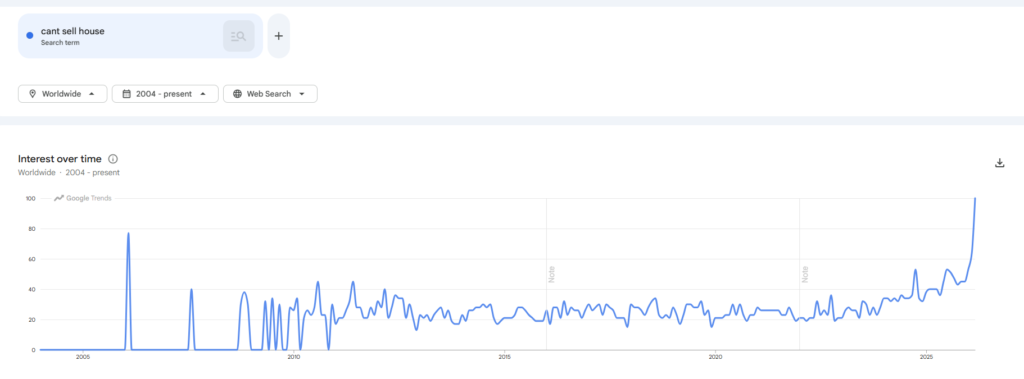
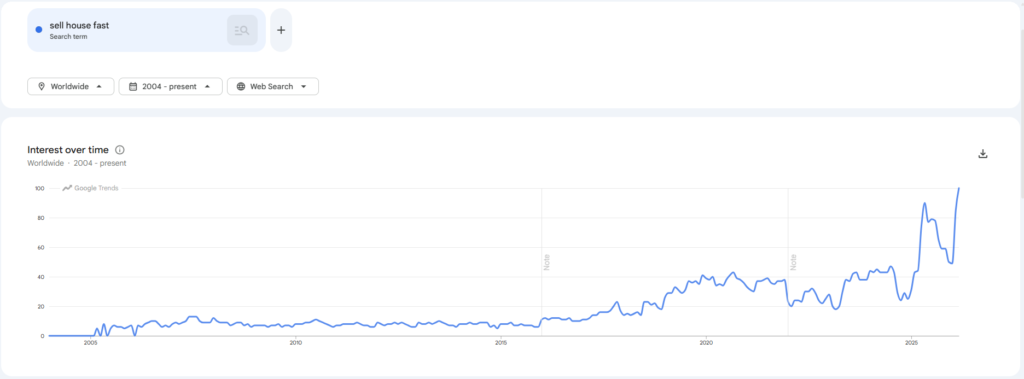
Searches like “can’t sell house” and “sell house fast” are exploding to all-time highs.
This matters.
Housing is usually slow to crack. It’s sticky. People hold on. They wait.
When search demand shifts this aggressively, it signals something different:
- Sellers are struggling to find buyers
- Liquidity is drying up
- Time-on-market is rising
- Pricing power is weakening
This isn’t a normal cooling cycle. This is stress surfacing in real time.
Financial Distress Is Broadening
Searches for:
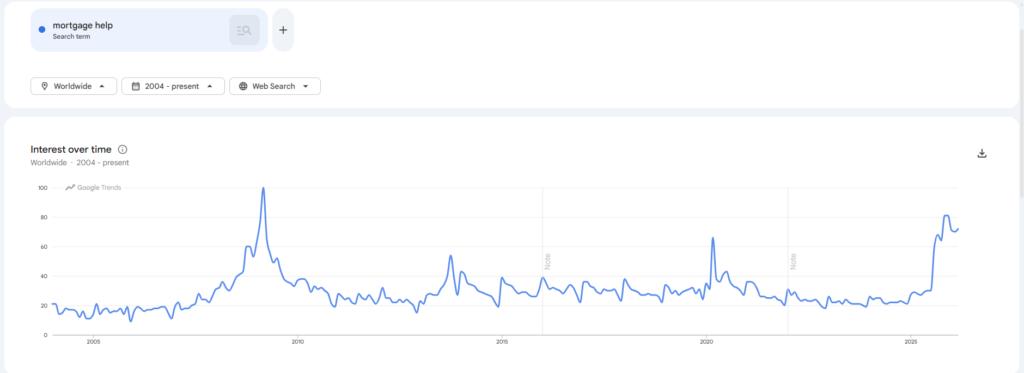
- “mortgage help”
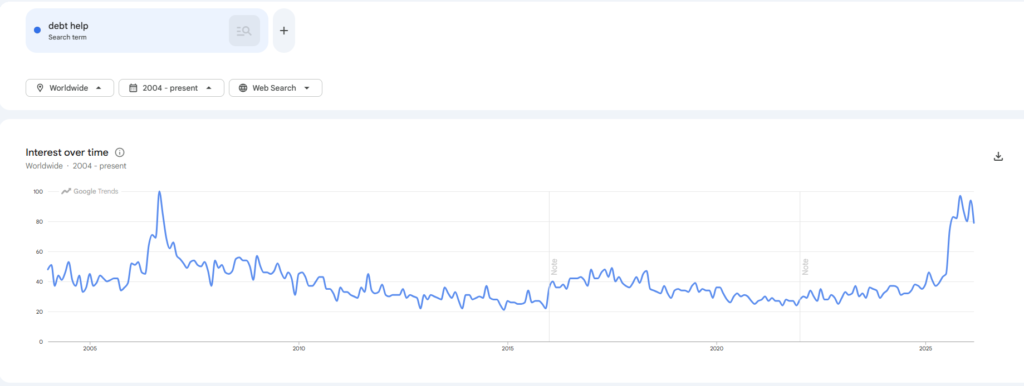
- “debt help”
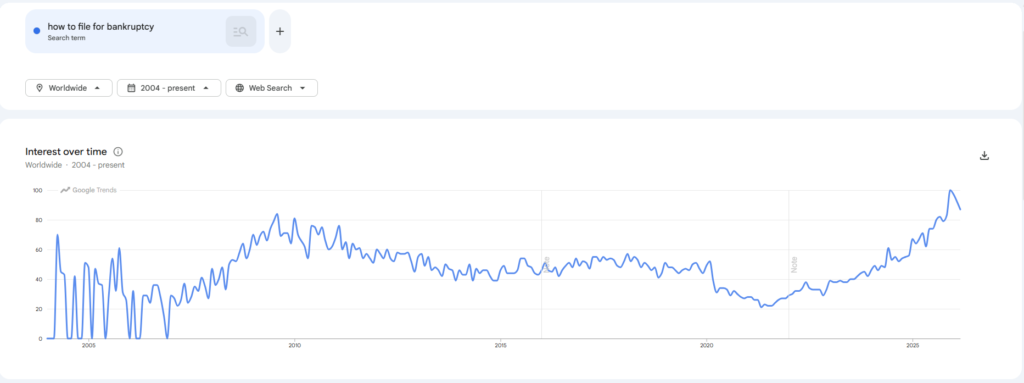
- “how to file for bankruptcy”
are all trending sharply upward again, approaching or exceeding levels seen during previous periods of financial strain.
At the same time:
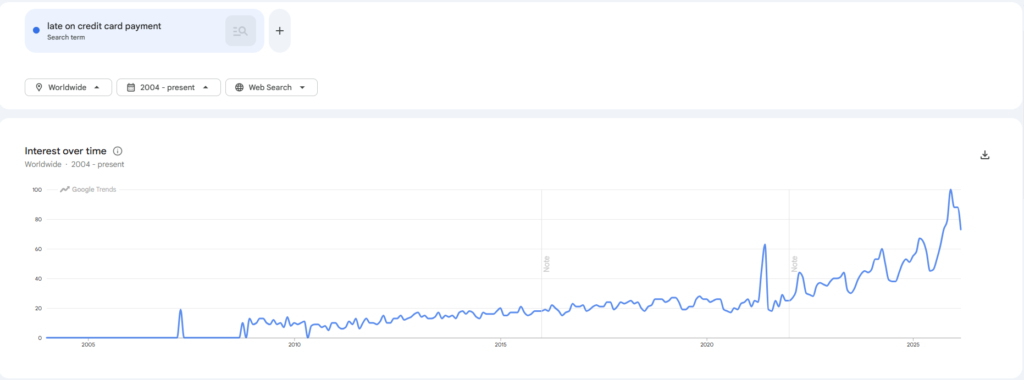
- “late on credit card payment” is surging
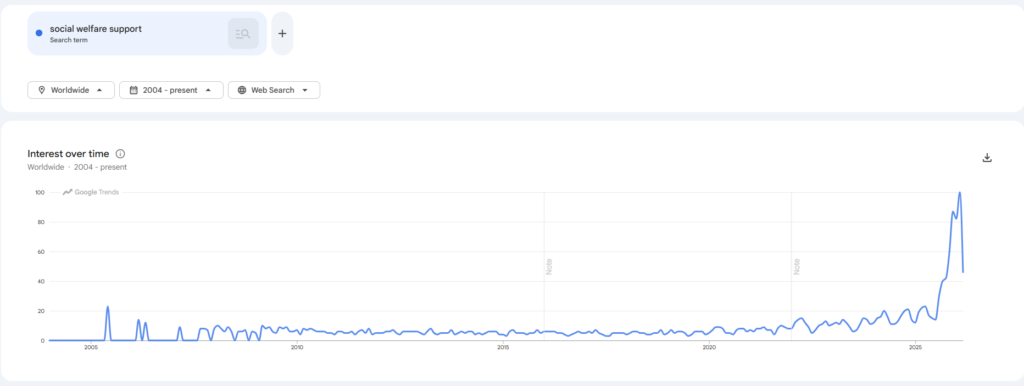
- “social welfare support” is rising rapidly
This is not isolated.
It’s a full-stack pressure signal:
housing → debt → credit → safety nets
That sequence is how financial stress propagates through an economy.
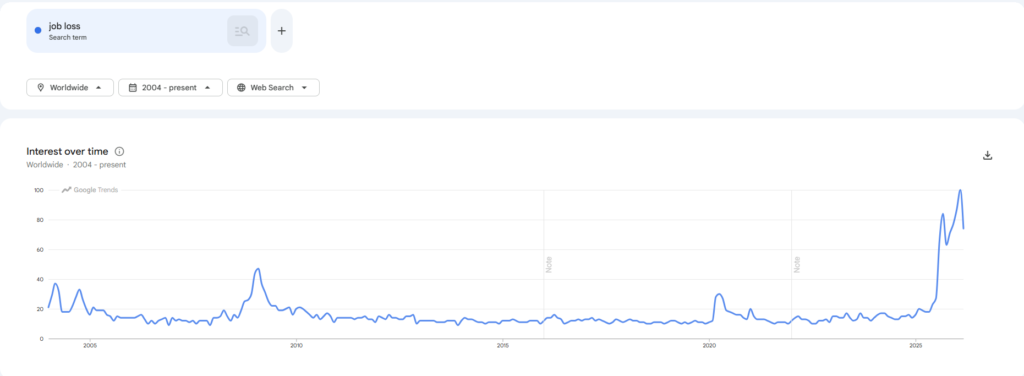
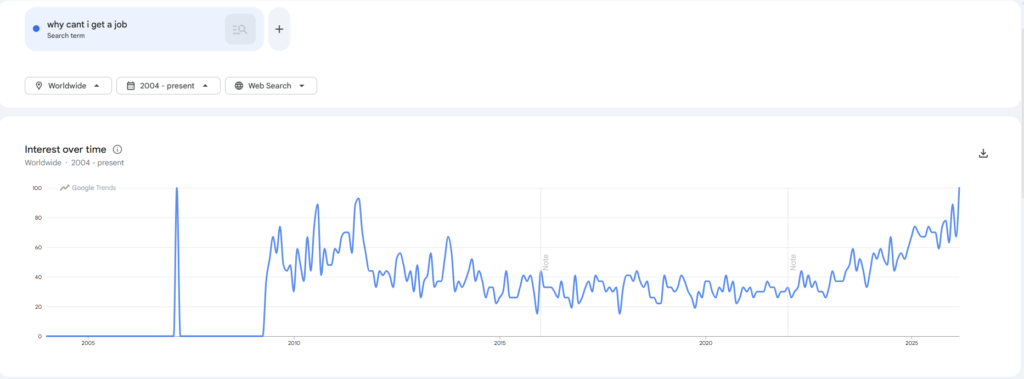
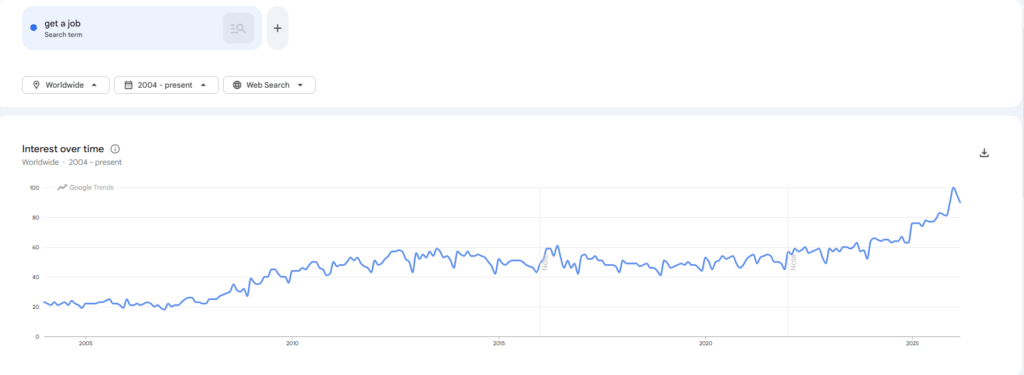
The Job Market Signal Is Turning
Searches like:
- “job loss”
- “why can’t I get a job”
- “get a job”
are all climbing simultaneously.
That combination is important.
It means:
- People are losing jobs
- People are struggling to find new ones
- People are becoming aware of how difficult it is
That’s not a strong labor market narrative.
That’s friction entering the system.
Consumers Are Financing Daily Life
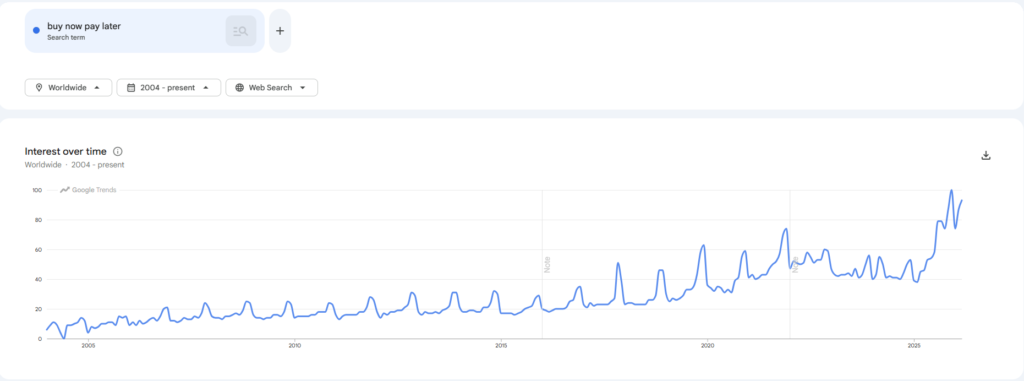
One of the clearest signals in your data:
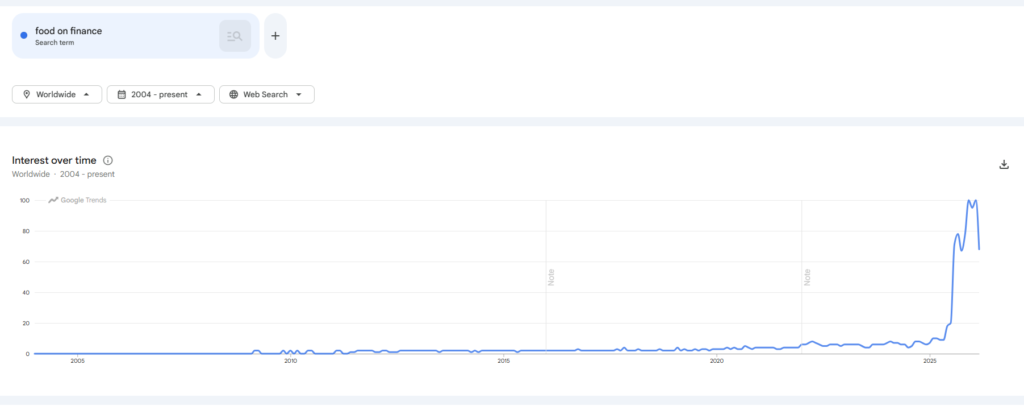
- “buy now pay later” is at record highs
- “food on finance” has gone vertical
That second one is critical.
Financing groceries is not discretionary behavior.
It’s survival behavior.
When consumers start borrowing for essentials instead of assets or upgrades, the cycle has already shifted.
Cost of Living Pressure Is Breaking Through
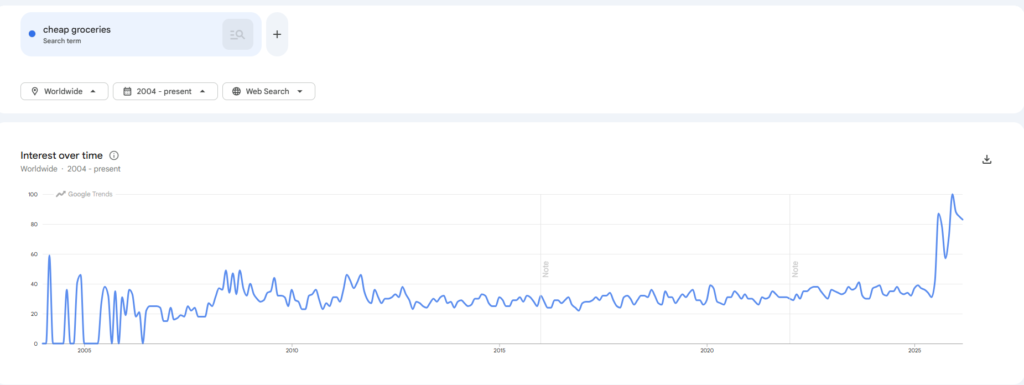
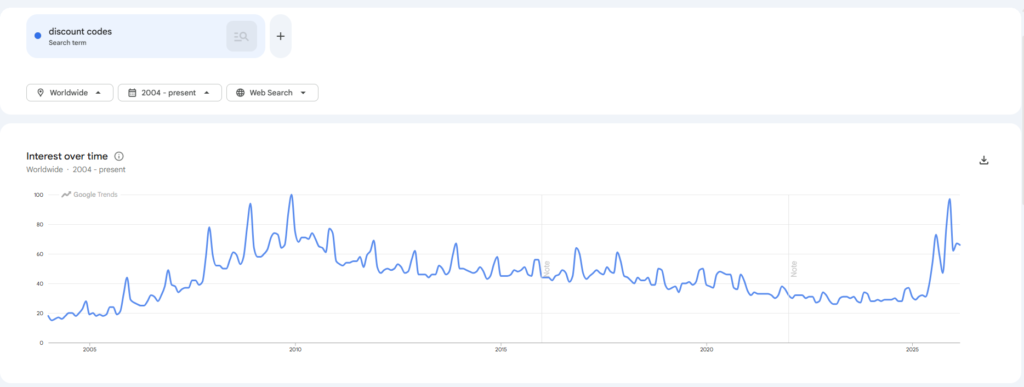
Searches for:
- “cheap groceries”
- “discount codes”
are rising sharply again.
These are classic late-cycle signals:
- People are cutting spending
- Optimizing every purchase
- Trading down in real time
You don’t see this kind of search behavior in a confident economy.
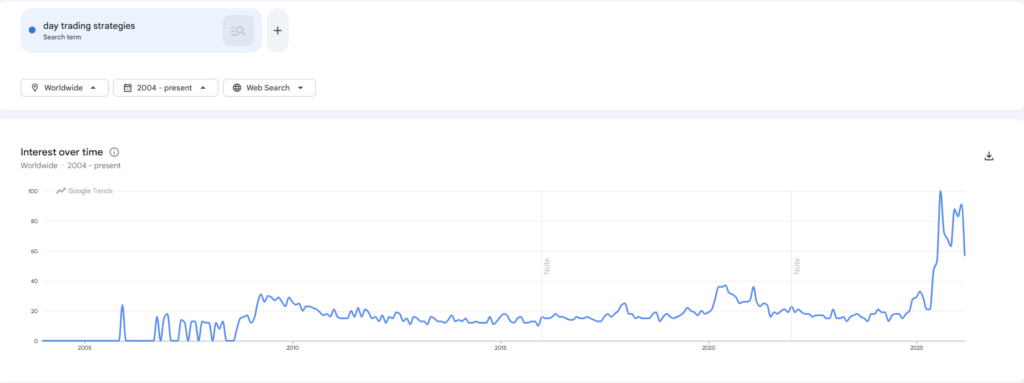
Speculation Hasn’t Disappeared
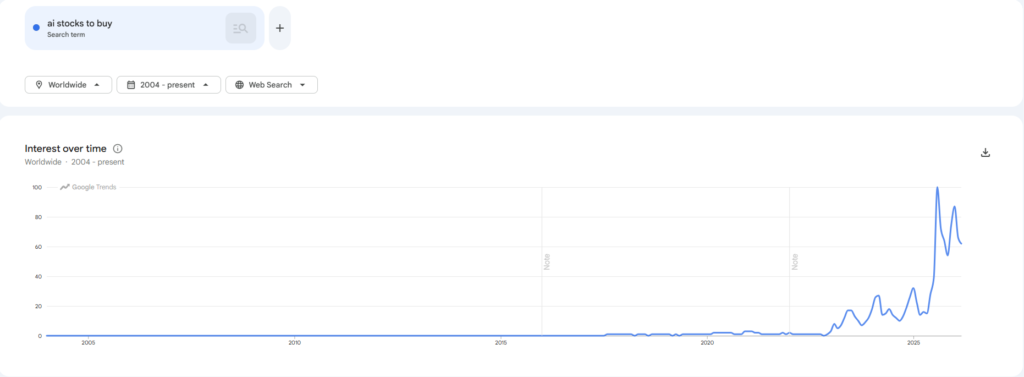
At the same time:
- “AI stocks to buy”
- “day trading strategies”
are also surging.
That’s a split market.
On one side:
- Consumers are under pressure
On the other:
- Capital is still chasing upside narratives
That divergence is historically unstable.
You saw it before:
- Late 2000s (housing vs financial engineering)
- 2020–2021 (stimulus vs speculation)
It doesn’t resolve cleanly.
What the Data Actually Says
Strip away sentiment, headlines, and narratives.
This is what the search data is showing right now:
- Housing liquidity is deteriorating
- Debt stress is rising across households
- Job market friction is increasing
- Consumers are financing essentials
- Cost-of-living pressure is accelerating
- Speculation is still elevated
That combination does not point to a stable economic environment.
It points to imbalance.
The Reality
This doesn’t look good.
Not because of opinion.
Because of behavior.
Search data reflects intent under pressure:
- People don’t search “bankruptcy” casually
- They don’t finance food unless they have to
- They don’t panic-sell houses in a strong market
The direction across nearly every stress-related category is the same.
Up.
Fast.
The Direction Is Clear
This is what early-stage deterioration looks like.
Not headlines. Not forecasts. Behavior.
People don’t suddenly search for bankruptcy, debt help, and food financing at the same time unless something underneath is shifting. Housing stress doesn’t spike in isolation. Job anxiety doesn’t rise alongside it by coincidence.
These signals are aligning.
The economy doesn’t break all at once. It tightens, quietly, until enough pressure builds across enough people at the same time.
That’s what this data is showing now.
The shift isn’t theoretical anymore. It’s already happening.