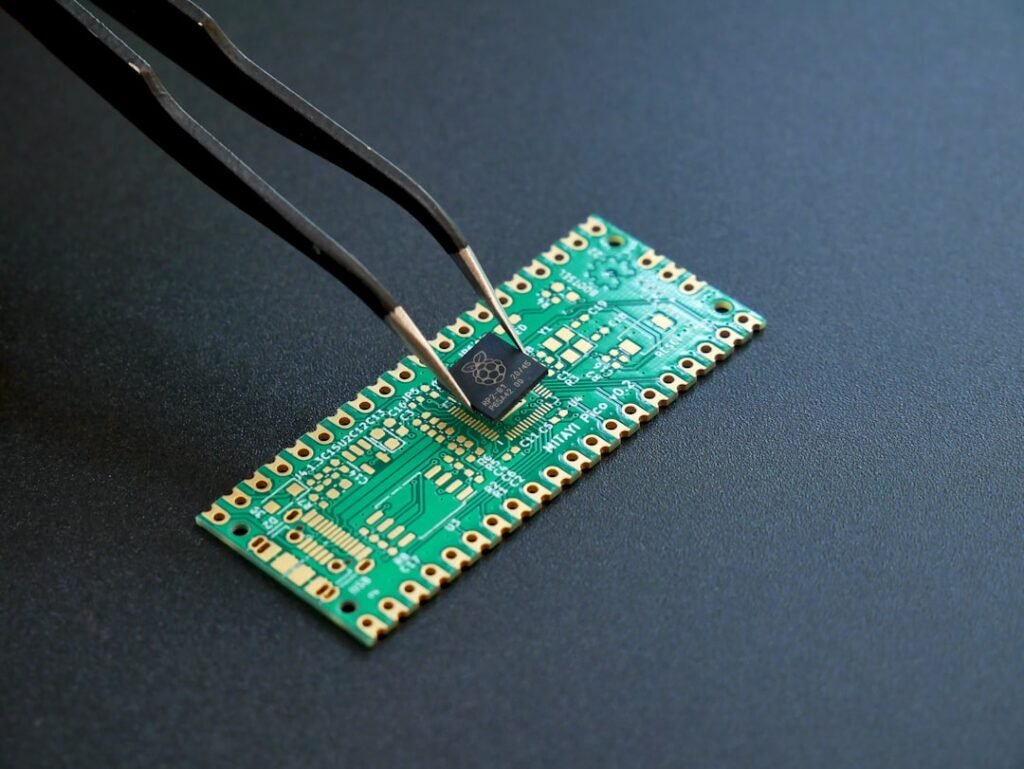
Running a 28.9M parameter language model on an $8 microcontroller isn’t just a technical feat—it’s a potential shift in how we think about deploying AI. This development could democratize access to AI capabilities, placing them in the hands of engineers and hobbyists who might not have access to high-powered computing resources. But as with any tech breakthrough, it begs the question: is this something the world genuinely needs, or is it just another notch on the hype cycle belt?
## What This Technology Actually Does
The project, spearheaded by a group of engineers and open-source enthusiasts, involves squeezing a language model with 28.9 million parameters onto a microcontroller that costs less than a latte. Typically, language models of this size require significant processing power, often housed in expensive GPU servers. The team’s achievement lies in optimizing the model and its dependencies to fit within the constraints of the microcontroller’s limited memory and processing capabilities. This means AI can now run offline, without the need for a constant internet connection to a server farm, allowing for real-time processing in embedded systems.
The microcontroller used is a common, low-cost unit often found in IoT devices. By making AI models accessible on such hardware, the potential applications expand—from smart home devices that can understand natural language commands to autonomous drones that process instructions on the fly. Yet, it’s crucial to note that while the technical marvel of fitting such a model on a microcontroller is impressive, the practical applications and consumer benefits remain to be fully realized.
## Competitive Context: David vs. Goliath
In a landscape dominated by tech giants like OpenAI and Google, who have the resources to develop and train massive language models, this microcontroller project appears as a David among Goliaths. Large models such as GPT-4 require vast amounts of data and compute resources, often making them inaccessible to smaller players due to cost and infrastructure demands.
The microcontroller approach levels the playing field, at least in terms of deployment. By reducing the hardware requirements for running a sophisticated language model, it opens up a path for smaller companies and individual developers to integrate AI into their products without hefty cloud computing fees. However, it’s worth considering whether the performance of such scaled-down models can genuinely compete with the larger, more resource-intensive versions. The trade-off between accessibility and capability is a key consideration for those looking to adopt this approach.
## Real Implications for Founders, Engineers, and the Industry
For founders and engineers, this development could lower the barrier to entry for AI deployment, enabling experimentation and innovation at a fraction of the cost. It democratizes access to AI, allowing for more grassroots innovation as developers can experiment without needing to secure massive funding for infrastructure.
However, the real-world implications are not just technical. The move towards smaller, more efficient AI models could spur a shift in the industry, where efficiency and cost-effectiveness become as valued as raw computing power. This could lead to a new wave of startups focused on optimizing AI for constrained environments, a niche that has been largely overshadowed by the race for bigger and better models.
For VCs, this could signal an opportunity to invest in companies that prioritize resource-efficient AI. As the environmental impact of large data centers becomes a growing concern, there is potential value in supporting technologies that reduce the carbon footprint of AI applications.
The broader implication is a potential shift in AI development philosophy—one that values sustainability and accessibility over sheer scale. This shift could redefine what it means to be competitive in the AI space, offering a counter-narrative to the bigger-is-better mentality that currently prevails.
## What Happens Next
The next steps for this technology will likely involve further refinement and testing in real-world applications to prove its utility beyond the novelty of the achievement. For engineers and founders, the message is clear: there are opportunities to create impactful AI solutions without breaking the bank.
Investors should watch for startups that are leveraging this type of technology to disrupt traditional AI deployment models. As the industry moves towards more sustainable practices, those who can offer efficient, scalable solutions may well become the new leaders in AI innovation.
Originally reported by Y Combinator.