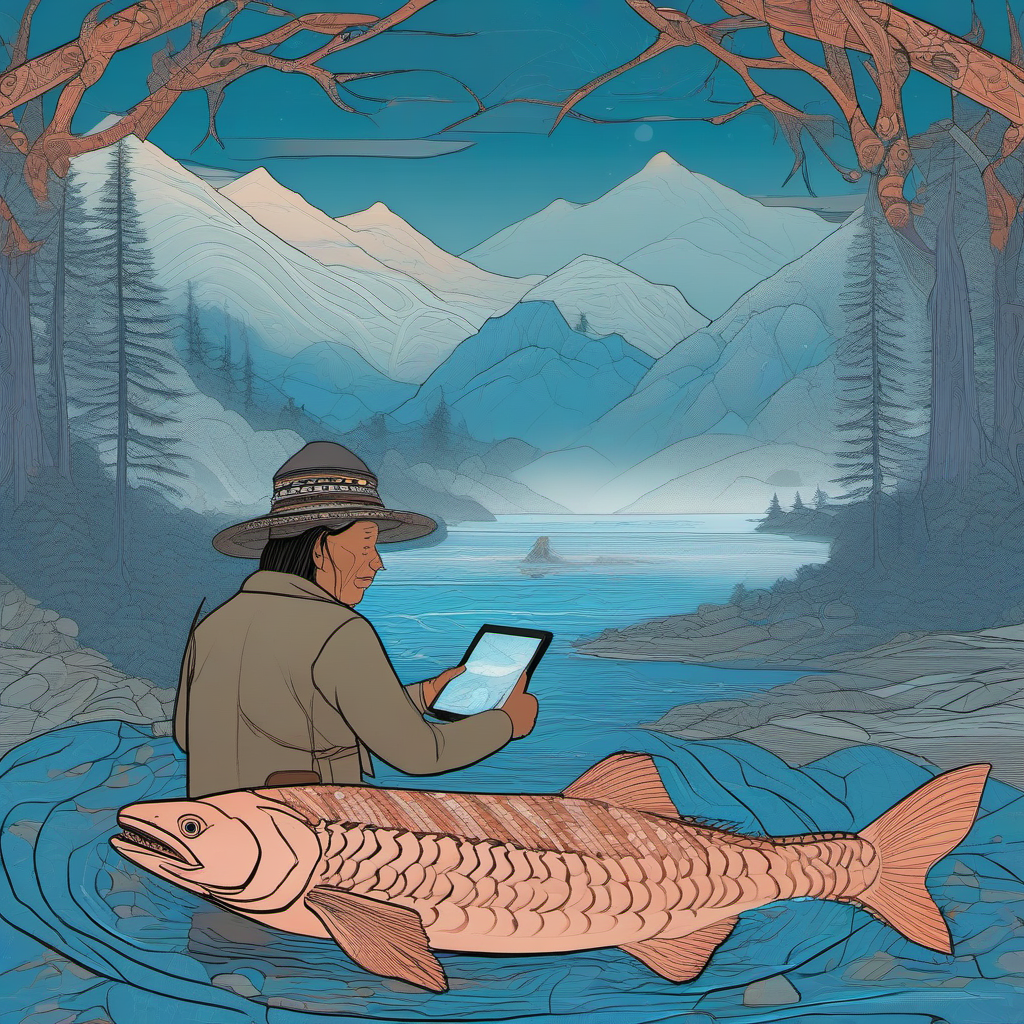
Lax Kw’alaams First Nation in British Columbia has embarked on a pioneering project intertwining Indigenous knowledge with artificial intelligence to enhance salmon conservation. By collaborating with Ocean Aid and Salmon Vision, the First Nation aims to improve salmon monitoring at the Orde Point Fish Trap, a crucial site for maintaining ecological balance. This initiative is part of the Integrated Marketplace, a program supported by Innovate BC, which aids organizations in deploying and scaling local innovations while mitigating financial risks.
### Merging Tradition with Technology
The Lax Kw’alaams First Nation has long been a steward of the Skeena estuary, applying traditional conservation management techniques. However, traditional monitoring methods are labor-intensive and can be logistically challenging, especially during peak fishing seasons. The integration of AI technologies offers a promising solution to these bottlenecks by automating data collection and analysis, reducing the need for constant manual oversight, and minimizing stress on the salmon population.
The AI-enabled monitoring system being tested is designed to provide real-time data, enabling rapid decision-making. This approach not only enhances operational efficiency but also aligns with the community’s commitment to sustainable resource management. By combining traditional ecological knowledge with modern technological tools, the project aims to establish a robust framework for co-management of the Skeena watershed, empowering the community to uphold their Section 35.1 Title and Rights with solid scientific backing.
### Competitive Context
While AI-driven conservation efforts are gaining traction globally, the integration of Indigenous knowledge into these technologies is less common, giving this project a unique edge. Many AI solutions focus solely on data without considering the invaluable insights offered by traditional ecological practices. By contrast, Lax Kw’alaams First Nation’s approach ensures that technology serves as a complement to, rather than a replacement for, time-honored conservation strategies.
This initiative represents a broader trend towards inclusive innovation that respects and incorporates Indigenous perspectives. The collaboration with Ocean Aid and Salmon Vision exemplifies how partnerships can leverage diverse expertise to address complex environmental challenges. While other regions may pursue AI for conservation, the distinctiveness here lies in the community-led approach that prioritizes Indigenous wisdom in tandem with technological advancements.
### Implications for Founders and Engineers
For founders and engineers, this project underscores the potential of marrying traditional knowledge systems with cutting-edge technology to solve real-world problems. It highlights the importance of designing solutions that are not only technologically sophisticated but also culturally and contextually relevant. As more organizations recognize the value of Indigenous knowledge in areas like environmental conservation, opportunities will arise for tech innovators who can bridge these worlds effectively.
Engineers working on similar projects should consider how their technology can support and enhance existing practices rather than disrupt them. This requires a deep understanding of the local context and a commitment to working collaboratively with community stakeholders. The success of such initiatives often hinges on building trust and ensuring that technological solutions are aligned with the values and needs of the communities they serve.
### What Happens Next
As the Lax Kw’alaams First Nation continues to test and refine its AI-enabled monitoring system, the focus will be on demonstrating the effectiveness of this integrated approach in real-world conditions. Success here could pave the way for broader adoption of similar models across other Indigenous communities and conservation efforts globally.
For founders and engineers, this project offers a blueprint for how to engage with Indigenous communities in a respectful and mutually beneficial manner. By prioritizing collaboration and cultural sensitivity, tech innovators can unlock new pathways for impactful innovation that not only advances technology but also honors and amplifies Indigenous voices.