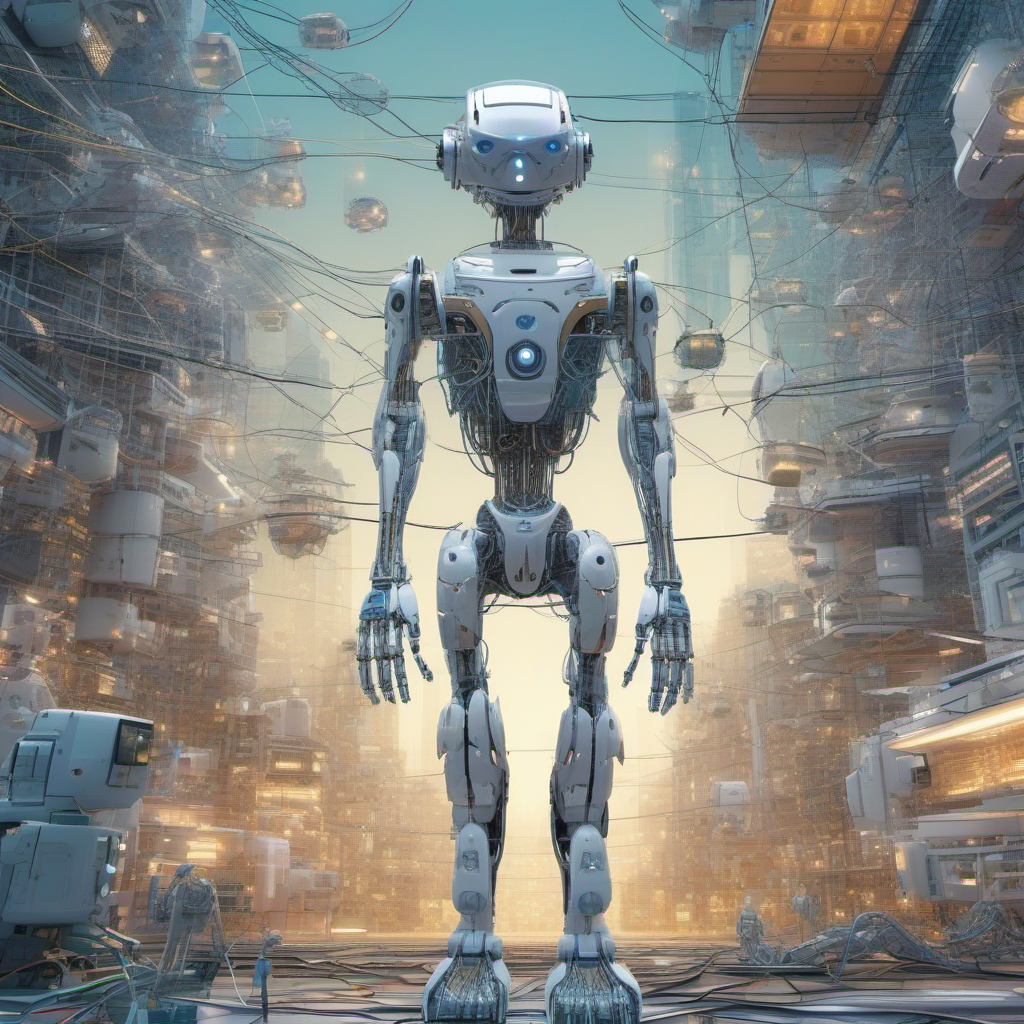
After two years of stealth development, the Ontario-based startup Neural Horizons has unveiled Starchild-1, touting it as the first real-time multimodal world model. This AI system promises to synthesize data from various sources—like visual, auditory, and textual inputs—into a coherent understanding of its environment. While Neural Horizons claims this could transform industries from robotics to virtual reality, it’s essential to ask if this technology is genuinely needed or if it’s another example of AI overreach.
## What Starchild-1 Does
Starchild-1 is designed to process and integrate multiple types of data in real time, aiming to create a holistic model of the world around it. Unlike traditional AI models that focus on a single type of data, Starchild-1 can handle a diverse range of inputs. For instance, it can simultaneously analyze video footage, audio clips, and written text, making it versatile for various applications. Neural Horizons suggests that this could enhance autonomous vehicles’ ability to navigate complex environments or improve AI’s role in interactive virtual spaces.
However, it’s worth questioning whether the integration of such diverse data streams truly enhances functionality or merely complicates it. While the technology is undoubtedly impressive, its practical applications remain to be seen. The company has yet to demonstrate any concrete use cases where Starchild-1 offers a clear advantage over existing solutions.
## Competitive Context
Neural Horizons isn’t the only player in the multimodal AI space. Industry giants like Google and OpenAI have been exploring similar technologies, investing heavily in research and development. Google’s DeepMind, for instance, has been working on AI models that integrate different data types, although their focus has often been on medical and scientific applications. OpenAI’s GPT models, while primarily text-based, have also ventured into multimodal capabilities.
The competitive landscape raises questions about Starchild-1’s differentiation. Neural Horizons is a startup with limited resources compared to these behemoths. Their success will likely hinge on their ability to carve out a niche or demonstrate superior performance in specific scenarios. Without a clear competitive edge or a unique application, Starchild-1 risks being overshadowed by more established players.
## Implications for Founders, Engineers, and the Industry
For founders and engineers, Starchild-1’s launch serves as a reminder of the challenges and opportunities in the AI space. The ability to integrate multiple data types could lead to new products and services, but the market for such technologies is still young and unproven. Engineers working with AI should consider the complexities involved in developing and maintaining such systems, as well as the potential for feature creep.
Investors, on the other hand, should be cautious about the hype surrounding multimodal AI. While the potential applications are intriguing, the path to commercialization is fraught with challenges. The true value of Starchild-1 will depend on its ability to solve real-world problems more efficiently than existing technologies.
## What Happens Next
Neural Horizons plans to roll out Starchild-1 to select partners in the coming months, aiming to gather feedback and refine its capabilities. For those in the tech industry, this means keeping an eye on any emerging case studies that demonstrate the model’s practical value. Founders and engineers should consider whether integrating multimodal capabilities into their products could offer a competitive advantage, or if it’s simply a buzzword to be wary of.