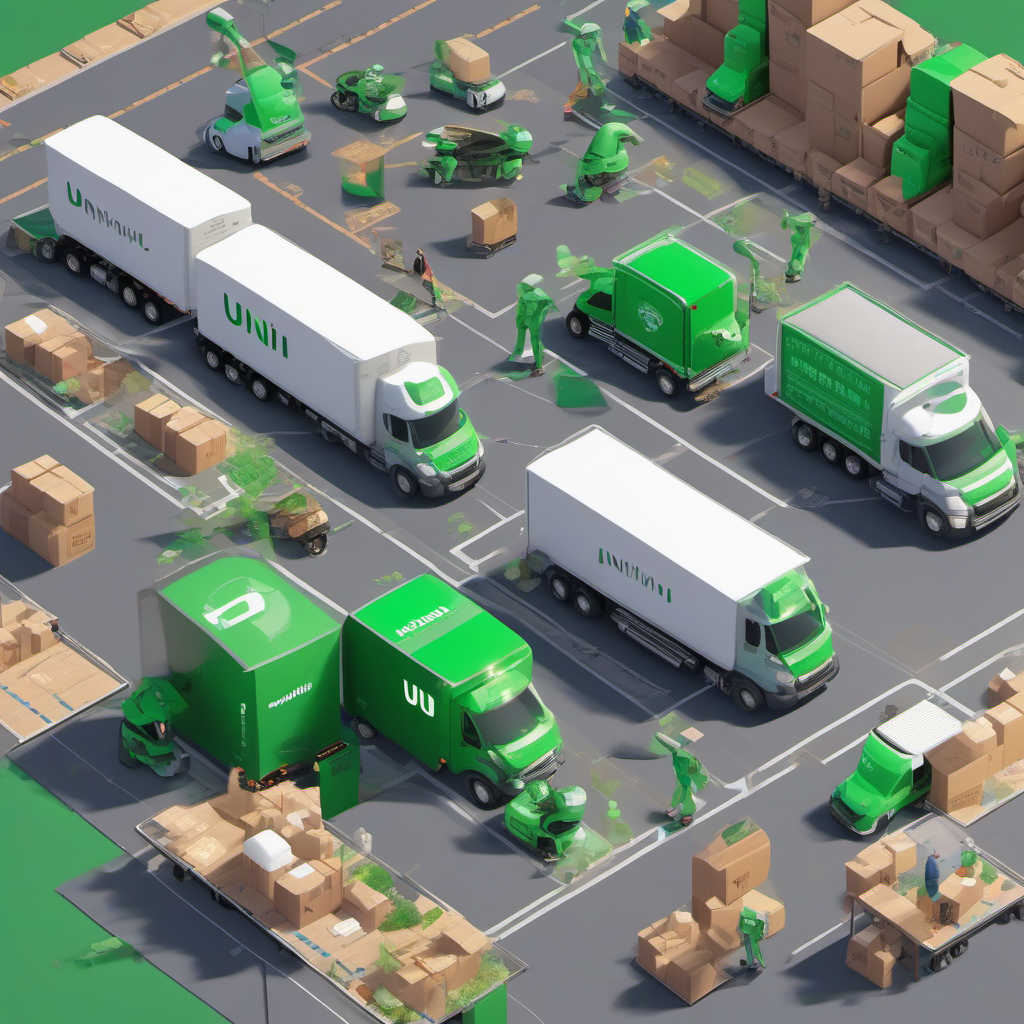
UniUni, the Richmond-based last-mile delivery company, is reportedly exploring a public debut through a merger with a Special Purpose Acquisition Company (SPAC). This move could value the combined entity at over US$1 billion, according to reports from The Globe and Mail. While the potential merger with MAK Acquisition is still in the discussion phase, it signals UniUni’s ambitions to further solidify its presence in the competitive logistics market.
## What UniUni Does
Founded in 2019, UniUni aims to revolutionize last-mile delivery by leveraging advanced technologies to enhance efficiency and reliability. The company employs AI-driven routing and predictive analytics, alongside robotic sorting systems, to streamline operations and scale delivery capabilities. UniUni’s platform currently covers 65% of the U.S. and 80% of Canada, reaching over 500 cities across North America.
With a mission to make “the last mile the best mile,” UniUni has raised nearly US$300 million to date, with the latest US$85 million secured to drive automation and expansion. This financial backing has supported their rapid growth trajectory, with the company being recognized as British Columbia’s fastest-growing tech firm in 2025.
## Competitive Context
The last-mile delivery sector is fiercely competitive, with giants like Amazon and FedEx continuously innovating to enhance their services. UniUni’s focus on technology and automation sets it apart, but the logistical landscape remains challenging. While its growth figures are impressive, the company must contend with established players who have deep pockets and extensive networks.
UniUni’s potential SPAC merger could provide the capital infusion needed to compete at a larger scale and possibly expand its footprint further. However, joining public markets through a SPAC also comes with risks, as the company will need to meet shareholder expectations and navigate increased scrutiny.
## Implications for Founders, Engineers, and the Industry
For founders and engineers in the logistics space, UniUni’s approach underscores the importance of technological innovation in driving growth. The company’s heavy investment in AI and robotics highlights the trend of automation becoming a critical factor for success in last-mile delivery.
Engineers can take note of how UniUni integrates technology to solve logistical challenges, providing a blueprint for building scalable and efficient systems. For the wider industry, UniUni’s public market ambitions could set a precedent for other tech-driven logistics companies to seek capital through SPACs, particularly when traditional IPO routes might not be feasible.
## What Happens Next
Should the merger with MAK Acquisition proceed, UniUni will face the challenge of proving its business model can deliver consistent returns in the public sphere. For founders and investors in the logistics sector, this development offers a glimpse into the potential of SPACs as a viable pathway for scaling operations and accessing capital. As the situation unfolds, the focus will be on how UniUni navigates the complexities of public market pressures while maintaining its rapid growth trajectory.