
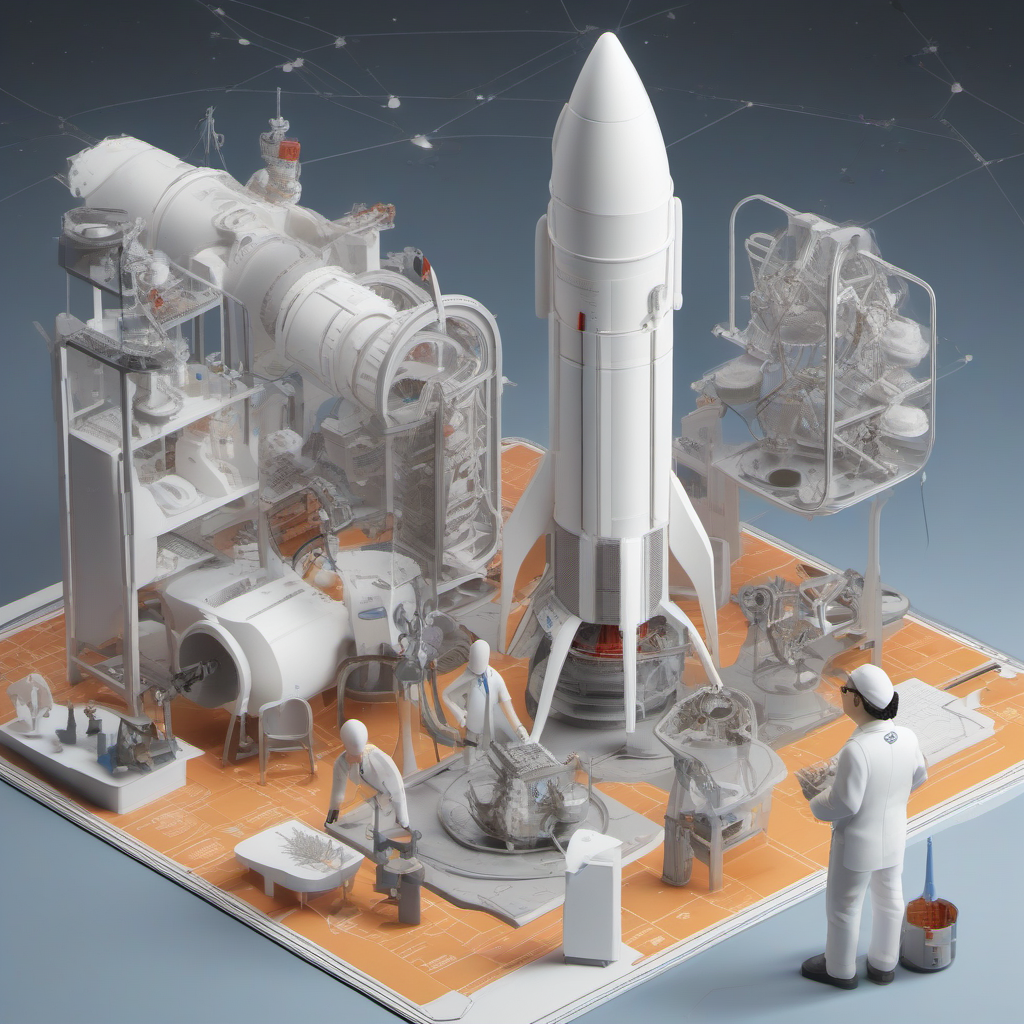
NordSpace, a burgeoning aerospace startup based in Markham, Ontario, has announced the opening of its new 60,000-square-foot Rocket Factory 1 (RF-1) campus. This facility is poised to become the production epicenter for the company’s light and medium-lift orbital launch vehicles and other space systems. As NordSpace embarks on this new chapter, the move underscores Canada’s ambition for sovereign space launch capabilities, reducing reliance on foreign providers.
### What NordSpace Does
NordSpace is carving its niche in the aerospace sector by developing orbital launch vehicles and 3D-printed rocket engines, among other space systems. The company aims to offer a homegrown solution for launching small payloads into space. With RF-1, NordSpace consolidates its design, engineering, manufacturing, integration, and mission control capabilities under one roof. This not only streamlines operations but also aligns with the Canadian government’s strategic interest in bolstering national space infrastructure.
### Competitive Context

The aerospace industry is crowded with established giants and emerging startups, all vying for a piece of the lucrative space launch market. While companies like SpaceX and Rocket Lab dominate the scene, NordSpace’s focus on Canadian sovereignty offers a unique selling point. The Canadian government’s recent funding initiatives, such as the nearly $225 million commitment to advance sovereign space launch capabilities, indicate a supportive environment for NordSpace’s ambitions. However, the challenge will be to prove that a domestic solution can compete with the scale and efficiency of international players.
### Real Implications for Founders and Engineers
For founders and engineers in the aerospace sector, NordSpace’s new facility represents both an opportunity and a challenge. The push towards domestic manufacturing and launch capabilities opens avenues for innovation and collaboration within Canada. Engineers have the chance to work on cutting-edge technology that could redefine Canada’s role in space exploration. Meanwhile, founders can look to NordSpace’s model as a case study in aligning business objectives with national strategic goals. However, they must also navigate the complexities of scaling in a competitive market, where cost efficiency and reliability are paramount.
NordSpace’s RF-1 is set to become fully operational in the coming months, marking a significant step in the company’s production capabilities. The next phase in NordSpace’s expansion includes the construction of a 200,000-square-foot facility for its reusable medium-lift rocket, a project expected to break ground later this year. For industry professionals, this development signals a growing ecosystem for aerospace innovation in Canada. For those looking to enter or invest in the space sector, NordSpace’s trajectory suggests that aligning with national initiatives could be a viable strategy for growth and success.