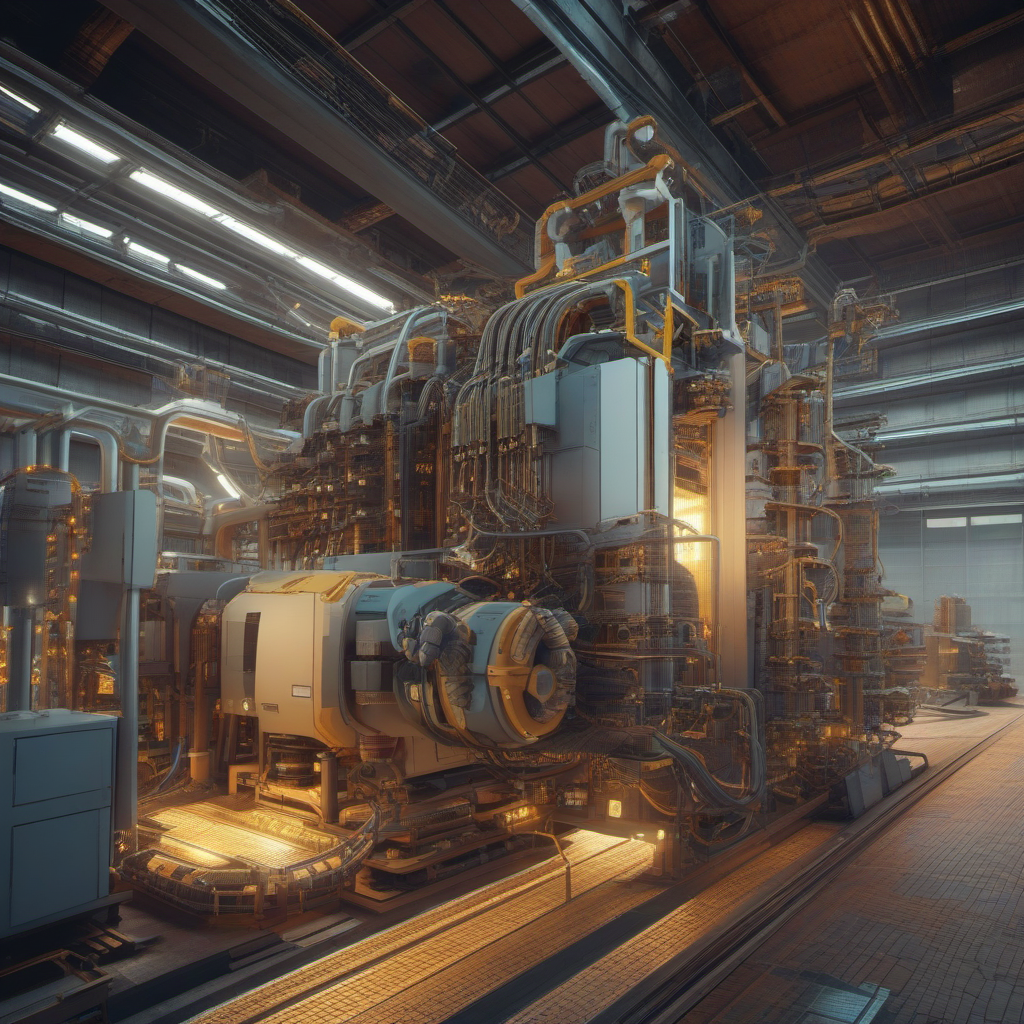
Mistral AI’s recent announcements at the AI NOW Summit in Paris have showcased its ambitious plans to expand into industrial AI and challenge the dominance of American tech giants like OpenAI. The French startup, founded just three years ago, is making significant moves to position itself as a major player in the enterprise AI space, especially for companies wary of sharing sensitive data with U.S.-based providers. With a bold strategy that includes a new data center and a rebranded consumer assistant, Mistral aims to integrate AI deeply into industries that rely heavily on precise engineering and manufacturing.
### Mistral’s New Frontier: Industrial AI
Central to Mistral’s announcement is its new platform, Mistral for Industrial Engineering. This fully integrated AI stack combines the company’s large language models with advanced physics simulation capabilities, strengthened by the recent acquisition of Emmi AI. The platform is specifically designed for the aerospace, automotive, and semiconductor industries, offering tools to accelerate product design, validate simulations, and optimize production processes.
Key partnerships underline the platform’s potential impact. Mistral is collaborating with Airbus to implement AI across its commercial aircraft, helicopter, defense, and space divisions. This partnership aims to enhance everything from initial design to onboard capabilities. Similarly, BMW Group has enlisted Mistral’s expertise for its “Large Industry Model” initiative, which focuses on complex engineering tasks such as crash simulation through multimodal reasoning models. These collaborations highlight Mistral’s commitment to embedding AI into the core operational workflows of its clients.
### The Competitive Landscape
Mistral’s expansion comes at a time when the AI industry is dominated by giants like OpenAI, Google DeepMind, and Anthropic. With over $3.9 billion raised in funding, including a €1.7 billion Series C round led by ASML, Mistral is no small player. Yet, it faces the daunting task of competing with companies that have more substantial resources and a longer presence in the market.
Mistral’s strategy to differentiate itself lies in its vertical depth approach, focusing on industry-specific solutions rather than broad, generalized AI applications. By building infrastructure that keeps everything on-premises, Mistral is appealing to enterprises that prioritize data sovereignty and security. This niche approach could carve out a significant market segment for Mistral, particularly in Europe, where data privacy concerns are paramount.
### Implications for Founders and Engineers
For founders and engineers, Mistral’s trajectory offers a blueprint for how smaller AI firms can compete against entrenched tech behemoths. By zeroing in on specific industries and developing deep, specialized solutions, startups can offer unique value propositions that larger companies might overlook. Mistral’s emphasis on owning the full stack—from hardware to software—also highlights the importance of infrastructure control in delivering effective AI solutions.
Engineers working in industries like aerospace and automotive should take note of the growing importance of AI in product design and simulation. As companies like Mistral push the boundaries of what’s possible with AI, professionals in these fields will need to adapt to new tools and methodologies that leverage AI’s capabilities.
### What’s Next for Mistral?
Looking ahead, Mistral’s success will hinge on its ability to deliver on its ambitious revenue targets and expand its customer base beyond its initial high-profile partnerships. The new data center south of Paris is a critical component of this strategy, enabling Mistral to offer robust, localized AI services.
For founders and engineers, Mistral’s journey underscores the importance of strategic partnerships and the potential of AI to transform traditional industries. As Mistral continues to grow, it will be crucial for those in the tech space to stay informed about how AI can be integrated into existing processes and products—potentially offering new opportunities for innovation and efficiency improvements.