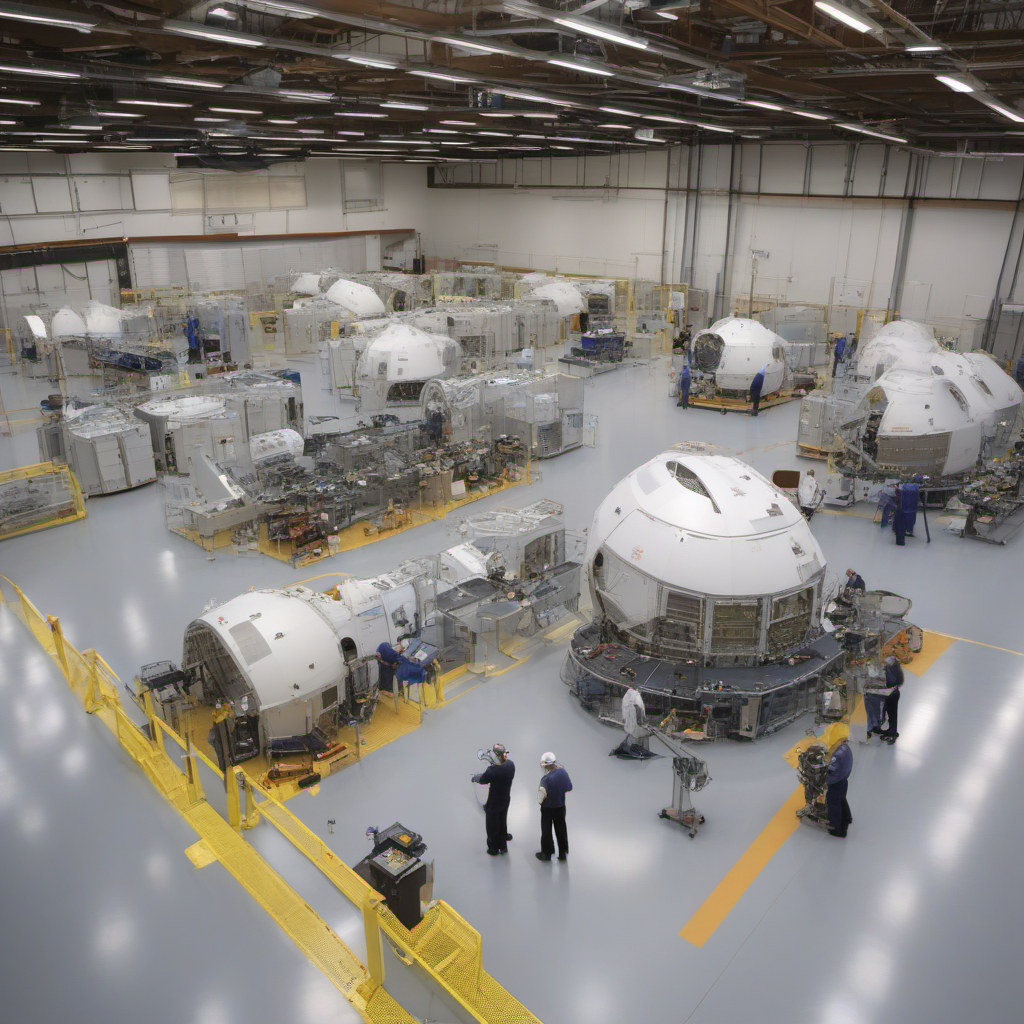
MDA Space has announced the completion of its Montréal facility expansion, positioning itself to produce up to 400 satellites annually. As global demand for satellite constellations intensifies, MDA’s move is a strategic step to capture a significant share of this burgeoning market. This expansion not only doubles the facility’s manufacturing space but also integrates advanced technologies to streamline the production process.
### What MDA Space Actually Does
MDA Space, headquartered in Brampton, Ontario, specializes in satellite systems, providing solutions for commercial, civil, and military applications. The company is recognized for its flagship Aurora satellites, which are designed to meet the increasing need for global connectivity. With the facility expansion, MDA aims to transition from producing custom, large-scale satellites to high-volume manufacturing of smaller satellite constellations. These constellations, comprising interconnected satellites, are crucial for comprehensive Earth coverage and are increasingly sought after by various sectors.
The expanded facility in Montréal is equipped with cutting-edge technology, including augmented reality and automation, to aid technicians and optimize production. Moreover, MDA has introduced a proprietary test chamber to expedite the validation process and ensure quality assurance, crucial for maintaining the reliability of its satellite systems.
### Competitive Context
MDA Space is entering a highly competitive market dominated by giants like SpaceX’s Starlink and Ottawa-based Telesat. Starlink, known for its ambitious low Earth orbit (LEO) satellite constellation, has been leading the charge in providing global satellite internet coverage. Meanwhile, Telesat is bolstering its position with federal support to challenge Starlink’s dominance.
Despite the competition, MDA’s strategic expansion and focus on high-volume production could carve out a substantial niche. The company’s CEO, Mike Greenley, believes MDA can become a leading prime contractor for satellite constellations. With an expected global launch of 40,000 to 50,000 satellites between 2025 and 2034, MDA aims to contribute to 20-30% of these deployments.
### Real Implications for Founders, Engineers, and Industry
For founders and engineers in the aerospace sector, MDA’s expansion signals a shift towards scalable satellite production. This move could lower entry barriers for startups looking to develop satellite-based technologies, as more affordable and accessible satellite constellations become available. Engineers can expect increased demand for skills in automation, augmented reality, and satellite integration, as these technologies become central to high-volume manufacturing.
Investors should note the potential for growth in the satellite market, driven by expanding connectivity needs and geopolitical factors. MDA’s commitment to rapid production and delivery of secure satellite solutions highlights a lucrative opportunity for those willing to invest in the evolving space industry.
### What Happens Next
As MDA ramps up its satellite production capabilities, the company is poised to play a more prominent role in the global satellite market. The expansion not only enhances its manufacturing capacity but also strengthens its competitive position against industry heavyweights. For founders and engineers, this development underscores the importance of agility and innovation in responding to market demands. It also offers a glimpse into the future of satellite technology, where high-volume, efficient production could become the norm rather than the exception.