
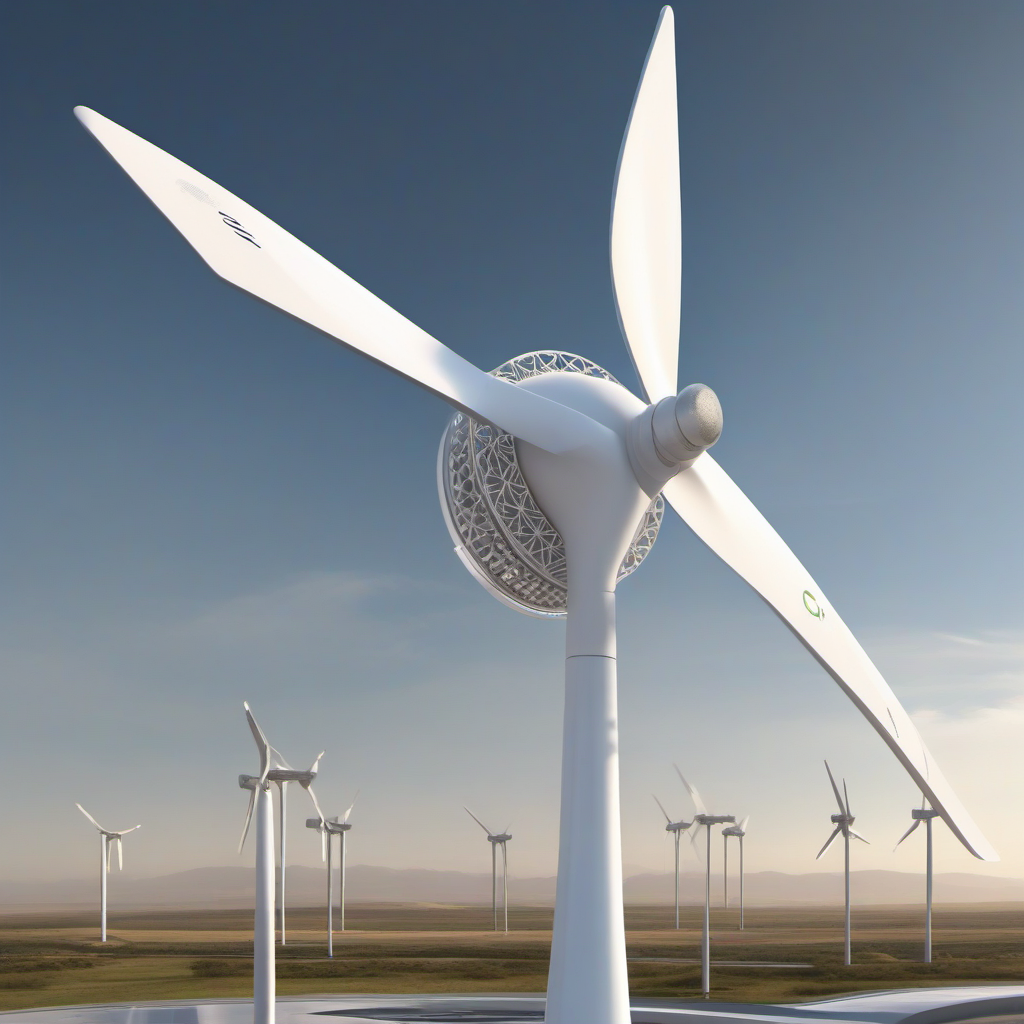
In a push to make renewable energy more accessible and cost-effective, researchers at Concordia University have developed a new 4D printing technique that promises to revolutionize the manufacturing of small, vertical wind turbines. The technology, spearheaded by PhD candidate Emad Fakhimi and Professor Suong Van Hoa, could lead to lighter and cheaper turbines. With renewable energy sources becoming increasingly crucial, this advancement may play a pivotal role in expanding the adoption of wind technology.
### What Concordia’s 4D Printing Technology Does
4D printing, an evolution of traditional 3D printing, integrates time as the fourth dimension. This means that printed objects can change shape or function after manufacturing, often in response to environmental stimuli. The Concordia team has applied this technique to create composite materials for wind turbines that can adapt their shape to enhance performance.
The primary focus is on small, vertical-axis wind turbines, which are typically used in urban environments or for residential purposes. By using 4D-printed composites, these turbines can be made significantly lighter without compromising structural integrity. This weight reduction not only lowers production costs but also improves transportation and installation efficiency. The adaptability of the materials can potentially optimize energy capture by adjusting to wind conditions, further enhancing efficiency.

### Competitive Context in the Renewable Energy Sector
While 4D printing is still a nascent technology, its application in renewable energy could position it as a contender against traditional manufacturing methods. Currently, large horizontal-axis turbines dominate the market due to their efficiency at scale. However, they come with high installation and maintenance costs, and their size makes them unsuitable for urban areas.
Vertical-axis turbines, despite being less efficient on a large scale, offer flexibility and easier installation in varied environments. The Concordia team’s approach could make these smaller turbines more competitive by reducing costs and improving efficiency, potentially opening new markets for urban and residential wind power solutions.
Competitors in the space are also exploring cost reduction and efficiency improvements, but few have ventured into 4D printing. The technology’s ability to produce adaptable, lightweight structures could give Concordia’s method a unique edge, provided they can scale production and demonstrate long-term reliability.
### Implications for Founders, Engineers, and the Industry
For founders and engineers in the renewable energy sector, Concordia’s 4D printing technique offers a fresh avenue to explore in product development. The potential cost savings in manufacturing and the enhanced performance of these turbines could lead to more viable business models for small-scale wind energy solutions.
However, the industry must approach this technology with cautious optimism. While the promise of cheaper, more efficient turbines is alluring, the real-world applicability of 4D printing in this context remains to be fully validated. Engineers will need to rigorously test these materials for durability and performance under various environmental conditions.
For investors, the development presents an opportunity to back a technology that could disrupt the small-scale wind turbine market. Yet, as with any emerging technology, due diligence is essential. Assessing the scalability of the 4D printing process and the long-term viability of the materials will be critical steps before committing capital.
### What’s Next?
The next phase for Fakhimi and Hoa’s project will likely involve scaling up their 4D printing techniques and conducting extensive field tests to ensure the technology’s practicality and durability. As they move from prototype to production, the focus will be on proving that these enhanced turbines can deliver consistent performance over time.
For those in the renewable energy sector, keeping an eye on Concordia’s progress will be crucial. This could mean exploring partnerships or licensing opportunities once the technology has demonstrated its value in real-world conditions. Ultimately, this development could offer new paths for innovation in making renewable energy more accessible and affordable.