
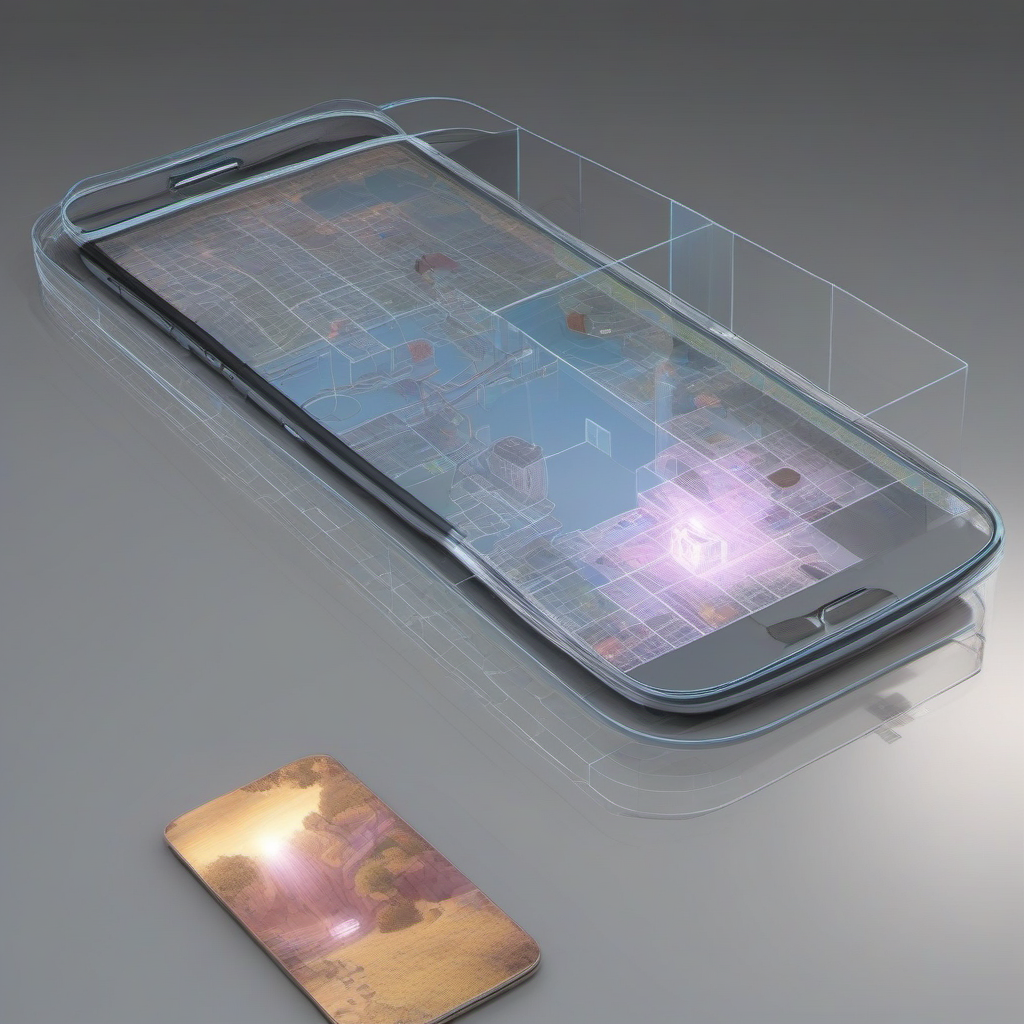
In a move that might just change how we think about visibility in everyday tech, a startup based in Toronto has announced a new lidar system capable of seeing around corners. While lidar isn’t new, traditionally used in autonomous vehicles and industrial applications, this iteration is compact enough to fit into smartphones. Could this be the next step in making advanced sensing technology as ubiquitous as GPS?
### What the Company and Product Actually Do
The company behind this development, Neosight Technologies, has designed a lidar system that uses laser pulses to map out environments beyond direct line of sight. Unlike conventional lidar systems, which are bulky and expensive, Neosight’s version is both small and affordable. The technology works by analyzing the way light bounces off surfaces to construct a 3D image of hidden spaces. This could open new avenues for applications ranging from augmented reality to enhanced safety features in consumer electronics.
Neosight’s lidar system is aimed at being integrated into everyday devices, specifically smartphones, to provide users with an enhanced level of spatial awareness. The company claims that their technology can be used for real-time mapping, navigation assistance, and even improved photographic capabilities. While this sounds impressive, the real test will be whether consumers find this functionality useful enough to warrant its inclusion in next-gen devices.

### Competitive Context
While lidar has been around for some time, it’s the miniaturization and cost reduction that Neosight is banking on to differentiate its product in a crowded tech landscape. Companies like Apple and Google have already dipped their toes into lidar, incorporating it into devices like the iPhone and various augmented reality platforms. However, these applications have been more geared towards enhancing camera functions and AR experiences rather than exploring environments beyond visible barriers.
Neosight’s approach could potentially shake up the existing market by providing a new layer of utility that other tech giants haven’t fully explored. The challenge will be convincing manufacturers and consumers alike that seeing around corners is not just a neat trick but a valuable tool. The competitive edge lies in Neosight’s promise of affordability and ease of integration, but they’ll need to prove that these benefits translate to real-world value.
### Real Implications for Founders, Engineers, and the Industry
For founders and product developers, Neosight’s technology presents an intriguing possibility: the integration of advanced sensing capabilities into mainstream consumer devices. This could encourage a wave of new apps and services that leverage the ability to capture and interpret hidden spaces. Imagine navigation apps that help you find your way around obstructed paths or security systems that can alert you to unseen obstacles.
Engineers might be interested in the technical challenges and opportunities this technology presents. The miniaturization of lidar sensors could lead to a reevaluation of design constraints in mobile tech, potentially opening doors for more compact and efficient devices. However, the technical complexity of accurately interpreting lidar data in real time and in varied environments will require robust engineering solutions.
For the broader tech industry, the introduction of smartphone-grade lidar could spur a new trend in sensor technologies, driving innovation in areas currently limited by traditional visibility constraints. The industry will need to watch how Neosight’s technology is adopted and whether it catalyzes a shift towards more advanced environmental awareness in consumer tech.
### What Happens Next
Neosight Technologies is currently in talks with several smartphone manufacturers to pilot their lidar system in upcoming models. If successful, we could see devices with this capability hitting the market within the next year. For founders and developers, this is the time to start considering how such technology could be integrated into new or existing products. The key will be finding practical applications that offer genuine utility, ensuring that this isn’t just another tech fad but a meaningful advancement in consumer electronics.