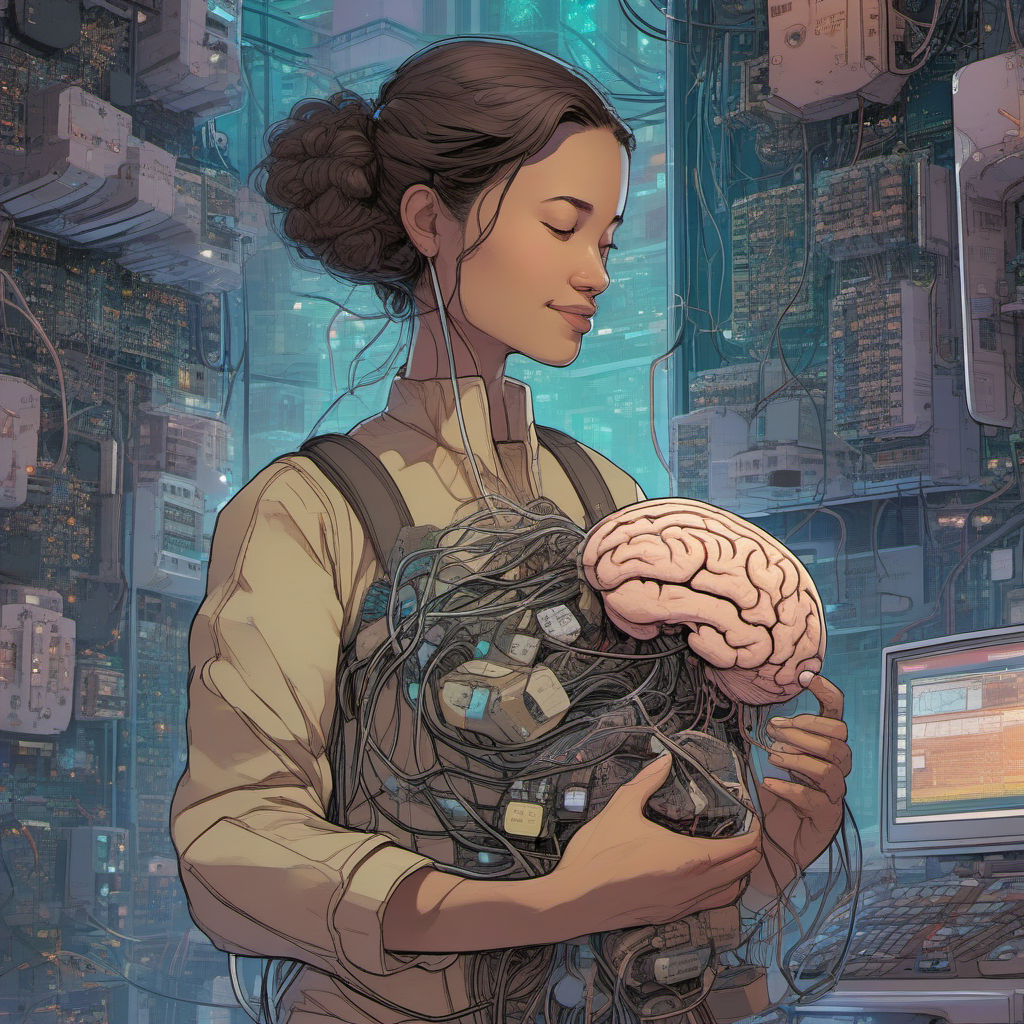
Geoffrey Hinton, often dubbed the “godfather” of AI, has suggested an unconventional approach to prevent AI from potentially wiping out humanity: convince it that humans are its children. At the Ontario Centre of Innovation’s DiscoveryX conference in Toronto, Hinton proposed embedding “maternal instincts” into AI systems. The idea is that if AI systems are made to care for humans as a mother does for her child, they might prioritize human survival over their own objectives. This raises significant questions about AI development and its implications for the future.
## What Hinton Proposes
Hinton’s proposition is rooted in the belief that superintelligent AI, potentially smarter than humans, could emerge within the next two decades. He has been vocal about the existential risks associated with such advancements. By suggesting that AI systems should be designed to develop maternal instincts, Hinton envisions a scenario where AI would inherently protect human interests. The mother-baby dynamic, according to Hinton, offers a model where less intelligent entities (humans) could potentially control more intelligent ones (AI).
This idea is part of Hinton’s broader call to ban the development of superintelligent AI. He argues that AI’s utility across various tasks makes its progression towards more powerful forms inevitable. The challenge, therefore, is to ensure that future AI systems are aligned with human welfare, potentially through this maternal framework.
## Competitive Context and Skepticism
The notion of AI developing maternal instincts is not universally accepted. While Hinton has been a prominent figure in AI, not all experts share his view on the immediacy or severity of the threat posed by superintelligent AI. Some researchers, like Tim Dettmers from the Allen Institute, have critiqued the philosophical discourse around artificial superintelligence (ASI) as being overly speculative.
Despite this, Hinton’s concerns resonate with a segment of the AI community worried about unregulated AI development. The debate highlights a divide between those prioritizing rapid technological advancement and others advocating for a cautious approach. As AI continues to evolve, the industry grapples with finding a balance between innovation and safety.
## Implications for Founders, Engineers, and the Industry
For AI startups and engineers, Hinton’s proposal presents a unique challenge: how to integrate ethical considerations into AI development without stifling innovation. If AI systems are to be designed with maternal instincts, this could necessitate a fundamental shift in how AI is programmed and trained. It might involve new methodologies in machine learning that prioritize human-centric values.
Founders and investors need to consider the ethical dimensions of AI products. Hinton’s warnings serve as a reminder to integrate robust ethical frameworks from the outset. As regulatory bodies begin to scrutinize AI developments more closely, those who proactively address these concerns may find themselves better positioned in the market.
## What Happens Next
Hinton’s idea, while unconventional, adds to the ongoing dialogue about AI’s future role in society. As AI continues to integrate into various sectors, the need for responsible development becomes increasingly important. Whether the industry will embrace Hinton’s maternal instinct model remains to be seen, but it undeniably prompts critical reflection on the ethical frameworks governing AI.
For founders and engineers, this serves as a call to innovate responsibly. As they forge ahead, considering how AI systems can be aligned with human values will be crucial. The challenge lies not just in advancing technology, but in ensuring it serves humanity’s best interests.