
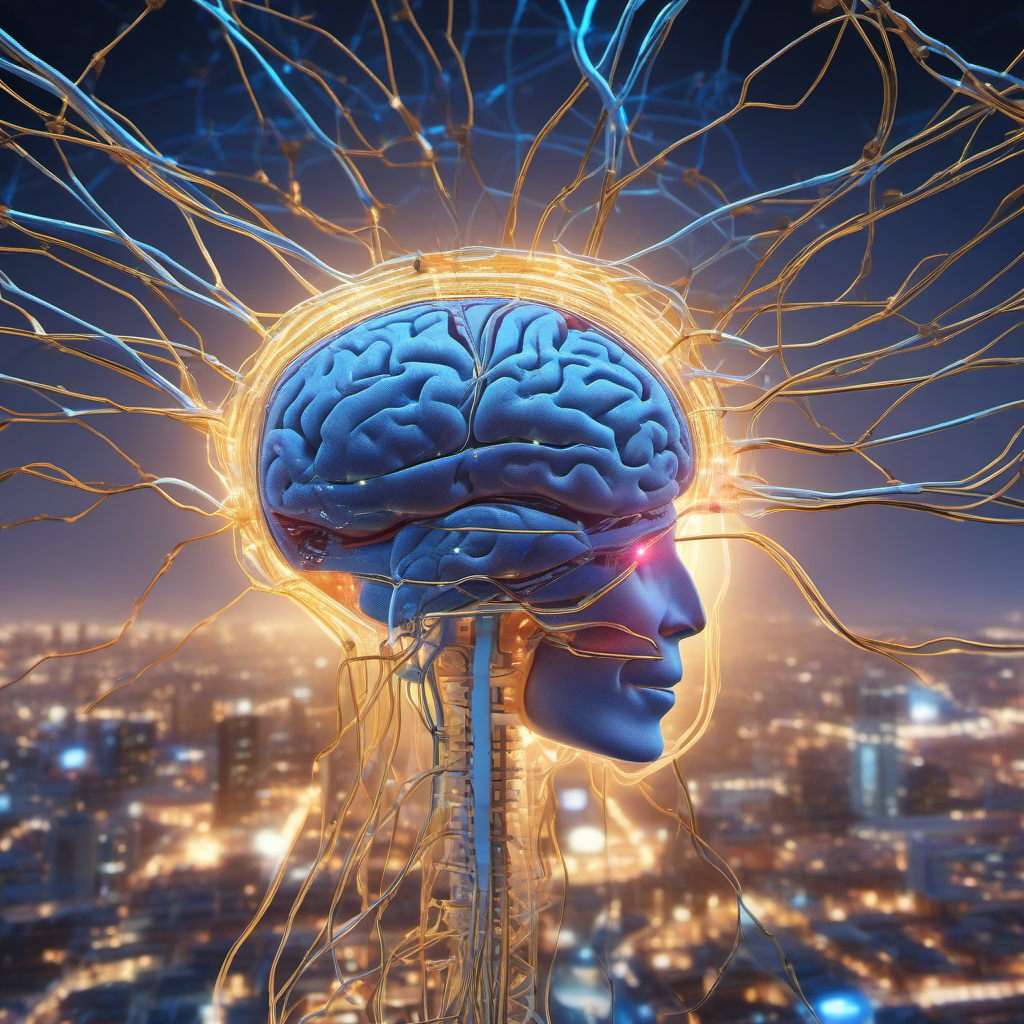
A Vancouver police sergeant has become the first Canadian ALS patient to receive a Neuralink brain implant. This development matters because it not only marks a potential breakthrough in medical technology for ALS patients but also sparks a conversation about the implications and ethics of brain-computer interfaces. The surgery took place at Toronto Western Hospital and could set a precedent for future treatments aimed at improving the quality of life for those suffering from neurodegenerative diseases.
### What Neuralink Actually Does
Neuralink, a company founded by Elon Musk, focuses on developing brain-machine interface technology. The primary goal is to enable direct communication between the brain and external devices, like computers and smartphones. For patients like Lee Marten, who is battling ALS, the implant translates neural signals into digital commands, allowing him to control devices using only his thoughts. In Marten’s case, this technology could help regain some independence by enabling him to operate electronic devices without physical movement.
The device is inserted using a surgical robot that threads thousands of tiny electrodes into the brain. This precision technology aims to mitigate human error and make the procedure safer and more consistent. Marten’s surgery also introduced a new technique: inserting the device’s strands through the dura mater, the brain’s protective outer layer, rather than cutting it open. This could reduce surgical risks and make the procedure more accessible to future patients.

### Competitive Context
Neuralink is not the only player in the brain-machine interface arena. Companies like Synchron and Paradromics are also developing similar technologies aimed at treating neurological disorders. However, Neuralink has garnered significant attention, partly due to Elon Musk’s involvement and ambitious promises. While Neuralink has made strides in clinical trials, the technology remains experimental, and widespread adoption is still a distant reality.
The competitive landscape is fierce, and Neuralink’s recent achievement with Marten places it at the forefront of public attention. Yet, questions about the ethical implications, long-term effects, and scalability of such implants remain unanswered. As more companies enter this space, regulatory scrutiny and public skepticism are likely to increase.
### Real Implications for Founders, Engineers, and the Industry
For founders and engineers, Neuralink’s progress underscores the importance of interdisciplinary collaboration. Developing a brain-machine interface requires expertise in neuroscience, software engineering, robotics, and ethics. Engineers working in this field must be prepared to address not only technical challenges but also ethical considerations and regulatory compliance.
For the tech industry, Marten’s case serves as a reminder that while innovation can be life-altering, it also demands responsible development and deployment. The potential to improve lives is immense, but the path forward must be navigated carefully to avoid pitfalls related to privacy, data security, and consent.
### What Happens Next
Marten’s procedure is part of a four-year clinical trial aimed at evaluating the safety and functionality of Neuralink’s technology. As the trial progresses, the focus will be on gathering data to understand the long-term effects and potential risks associated with brain-machine interfaces.
For founders and engineers, this development highlights the importance of staying informed about the ethical and technological advancements in the biotech industry. It presents an opportunity to contribute to a field poised to redefine human-computer interaction, albeit with significant challenges and responsibilities.