

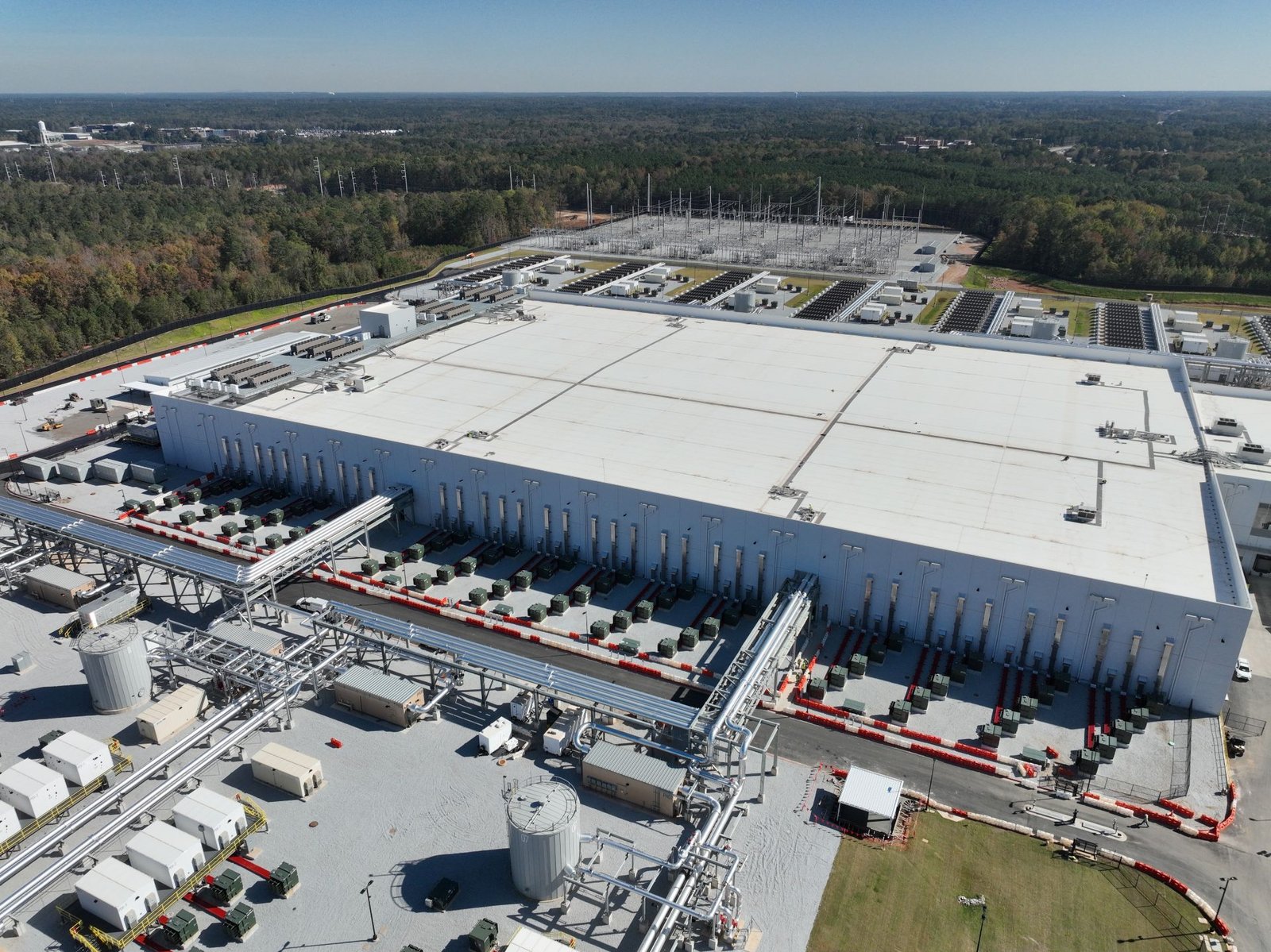
As the world’s biggest tech companies continue to build out their data center infrastructure, a quiet yet crucial issue has emerged: water. Specifically, the massive amounts of freshwater required to cool these behemoths of computing power. While the debate may seem niche, it speaks to the heart of our relationship with technology and the environment. In this piece, we’ll explore why Canada’s water advantage is a game-changer in the data center race.
Canada’s freshwater endowment is a treasure trove of strategic significance. With 20% of the world’s freshwater resources and a per-capita water abundance that’s orders of magnitude higher than most industrial economies, the Great White North is uniquely positioned to support the voracious thirst of the data center industry. The numbers are staggering: a single 100-MW data center can guzzle up to 2 million liters of water daily, while larger facilities can consume as much as 5 million gallons per day.
The U.S. data center landscape, on the other hand, is a different story. Many of America’s largest data-center hubs are situated in areas with serious water constraints, such as Arizona, Nevada, Texas, parts of California, and Virginia. This has created increasing backlash from communities, who are rightfully concerned about the environmental and economic implications of these facilities. Microsoft’s Arizona campus, for instance, was projected to require a staggering 1.83 billion gallons of water annually. Some towns have begun restricting water use by new data centers, a sign that the public is starting to push back against this trend.




In this context, Canada’s emergence as a key player in the data center infrastructure race is no coincidence. The country’s cold climate, cheap hydroelectric power, and abundance of freshwater reserves make it an ideal location for large-scale AI computing infrastructure. Quebec, British Columbia, and Manitoba are already benefiting from this trend, with big tech companies like Microsoft investing heavily in Canadian data center footprints.
But there’s more to this story than just numbers and statistics. As AI infrastructure becomes increasingly critical national infrastructure, the strategic implications of Canada’s water advantage cannot be overstated. Data centers require three things: massive electricity, cooling capacity, and a reliable water supply. Canada has all three, making it an attractive destination for companies looking to scale up their operations.
The geopolitics of this trend are equally fascinating. As the world becomes increasingly reliant on AI, Canada’s water abundance could become a key factor in determining the global balance of power. Will Canada become a key host for North American AI infrastructure, simply because of its climate and water abundance? Some analysts already argue that this is a distinct possibility.
In conclusion, the debate around data centers and water is far from trivial. As the world’s biggest tech companies continue to build out their infrastructure, they would do well to consider the long-term implications of their actions. Canada’s water advantage is a game-changer in the data center race, and it’s high time we started talking about it.