

Intel Optane’s Legacy and Its Impact on Storage Technology
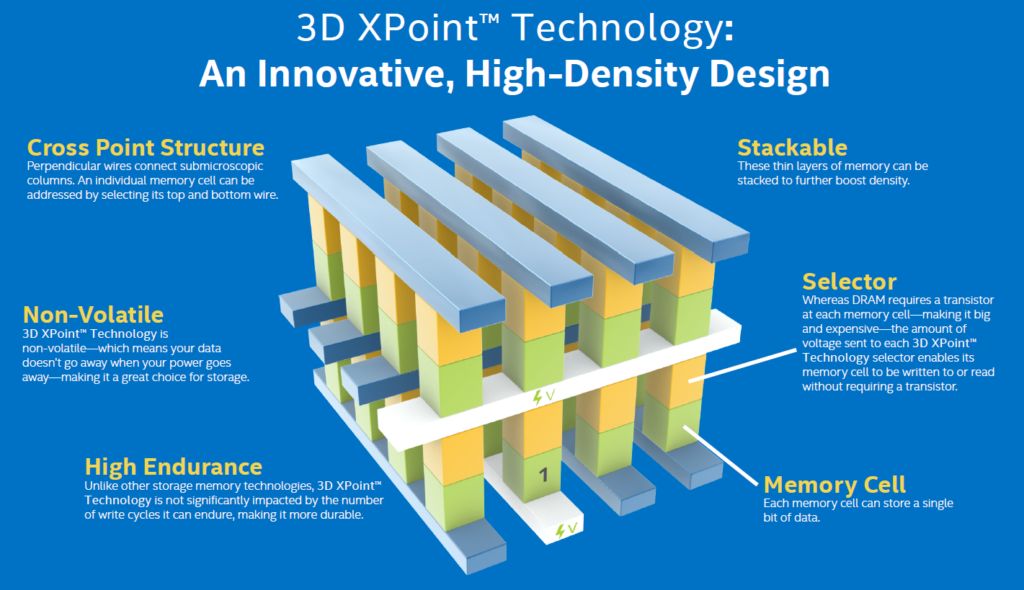
Intel’s decision to cease the development of its Optane technology in July 2022 marks a significant shift in the storage landscape. Initially released in 2017, Intel Optane SSDs, like the P4800X and P5800X, were renowned for their ultra-low latency, high durability, and performance. Built on 3D XPoint technology, co-developed with Micron, Optane offered a unique blend of DRAM and NAND flash characteristics. Despite its advantages, Optane’s high cost and limited capacity, combined with the rapid advancement of NAND SSDs and emerging technologies like Compute Express Link (CXL), led to its discontinuation. However, Optane products remain available for purchase, offering a glimpse into what was once a promising technology.
Intel Optane’s Technological Edge




Optane SSDs stood out for their durability and data consistency, crucial for high-write environments. The P5800X, for instance, boasted a durability rating of 100 Drive Writes Per Day (DWPD), far surpassing typical NAND SSDs. This made Optane ideal for applications requiring high endurance, such as databases and virtual desktop infrastructure (VDI) environments. Moreover, Optane’s power-loss protection ensured data integrity during unexpected power outages, a critical feature for enterprise applications.
Performance-wise, Optane’s latency was significantly lower than that of NAND SSDs, enhancing data retrieval speed and reducing CPU load. This performance consistency, even under heavy write loads, set Optane apart from traditional NAND SSDs, which often rely on DRAM caches and face performance degradation during intensive tasks.
Market Implications and Future Prospects
Intel’s withdrawal from the Optane market reflects broader industry trends favoring cost-effective and high-capacity NAND solutions. With NAND prices continuing to fall and performance improving, the market has shifted towards these more economical options. Meanwhile, technologies like CXL promise to further blur the lines between memory and storage, offering new opportunities for innovation.
The discontinuation of Optane underscores the challenges of sustaining niche technologies in a rapidly evolving industry. While Optane’s unique features will be missed by some sectors, the market’s pivot towards more scalable and affordable solutions indicates a clear direction for future storage developments.
As Intel phases out its involvement in the memory space, the focus will likely shift to how existing Optane products are utilized in high-performance environments. The lessons learned from Optane’s development and deployment will continue to influence storage technology advancements, shaping future innovations in the field.