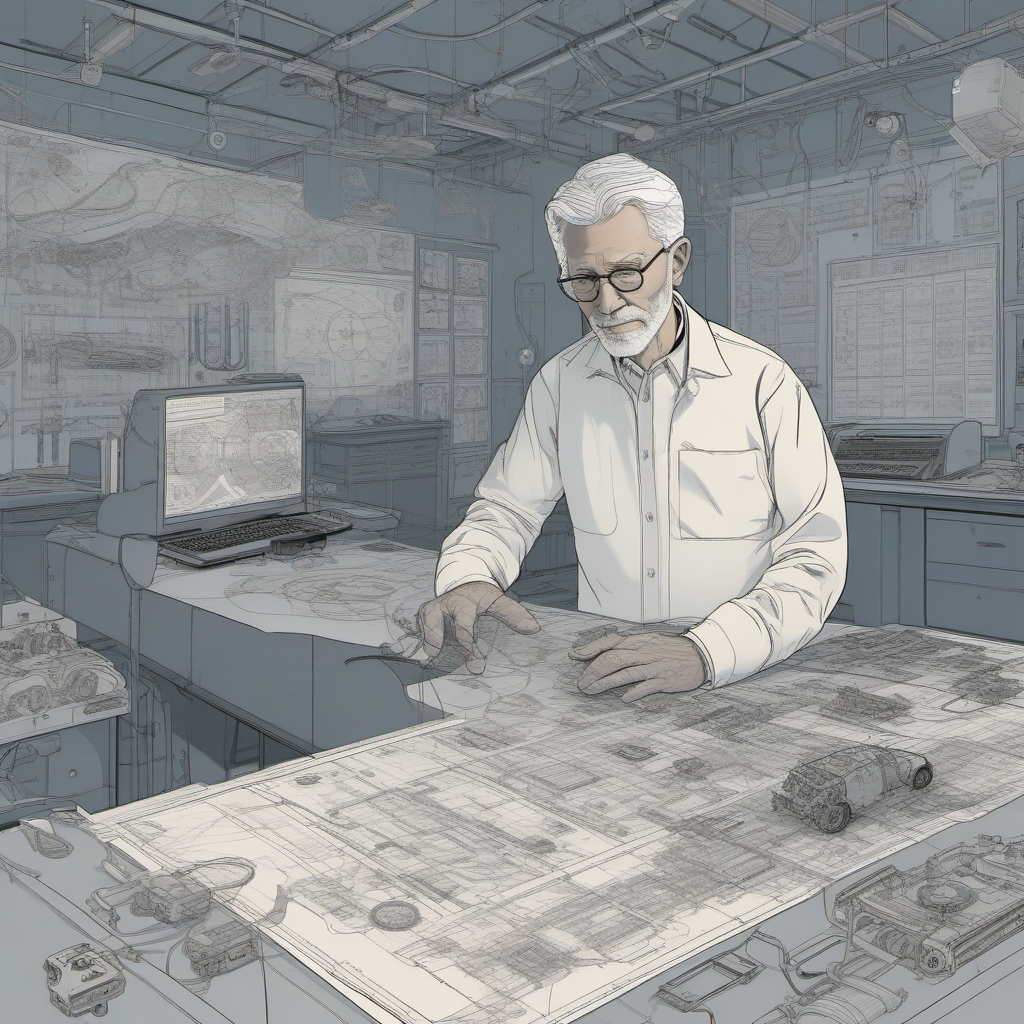
Ford, one of the stalwarts of the automotive industry, is taking a step back from its AI-driven ambitions by rehiring seasoned engineers, affectionately known as “gray beards.” This move comes after the company acknowledged that artificial intelligence alone wasn’t enough to meet their high-quality product standards. It’s a striking admission from a major player in an industry racing towards automation and AI-driven solutions, highlighting a critical reflection point for tech enthusiasts and skeptics alike.
## AI’s Limitations in Automotive Engineering
Ford’s recent decision underscores a significant realization: AI, despite its potential, isn’t a standalone solution for all engineering challenges. The company had initially invested heavily in AI technologies, with hopes that they could streamline production and enhance product quality. However, the complexities of automotive engineering proved too intricate for AI to handle without human oversight.
The rehiring of experienced engineers suggests that human expertise remains indispensable. These “gray beards” bring decades of knowledge and nuanced understanding that AI, with its data-driven approach, couldn’t replicate. It’s a reminder that while AI can augment processes, the human element is still crucial, especially in industries where safety and precision are paramount.
## Competitive Context: A Reality Check
Ford’s recalibration comes at a time when automakers globally are betting big on AI to drive the future of mobility. Companies like Tesla have been vocal advocates for AI, particularly in autonomous driving, while others invest in AI to optimize manufacturing processes. Ford’s move is a rare admission that the tech may not be as infallible as some competitors suggest.
This decision could prompt other automakers to reassess their reliance on AI. In a sector where technological advancements often dictate market leadership, Ford’s shift may resonate with companies that have similarly overestimated AI’s capabilities. It serves as a cautionary tale against the unchecked hype that often surrounds emerging technologies.
## Implications for Founders and Engineers
For founders and engineers, Ford’s strategy shift is a powerful reminder of the importance of balancing innovation with practicality. The automotive giant’s pivot back to human expertise highlights the need for startups and tech companies to critically evaluate where AI fits into their operations.
Engineers should see this as an opportunity to advocate for the integration of AI as a tool, not a replacement. There’s value in leveraging AI to handle repetitive tasks, allowing human experts to focus on complex problem-solving and innovation. Founders, particularly in tech-heavy industries, may need to recalibrate their pitches and product development strategies to acknowledge the limitations of AI.
Looking forward, Ford’s acknowledgment of AI’s shortcomings could lead to a more measured approach to tech integration across industries. For those in the tech sector, this means a potential shift towards hybrid models that blend AI capabilities with human expertise. As AI continues to evolve, the challenge will be to harness its strengths while respecting the irreplaceable value of human insight.