

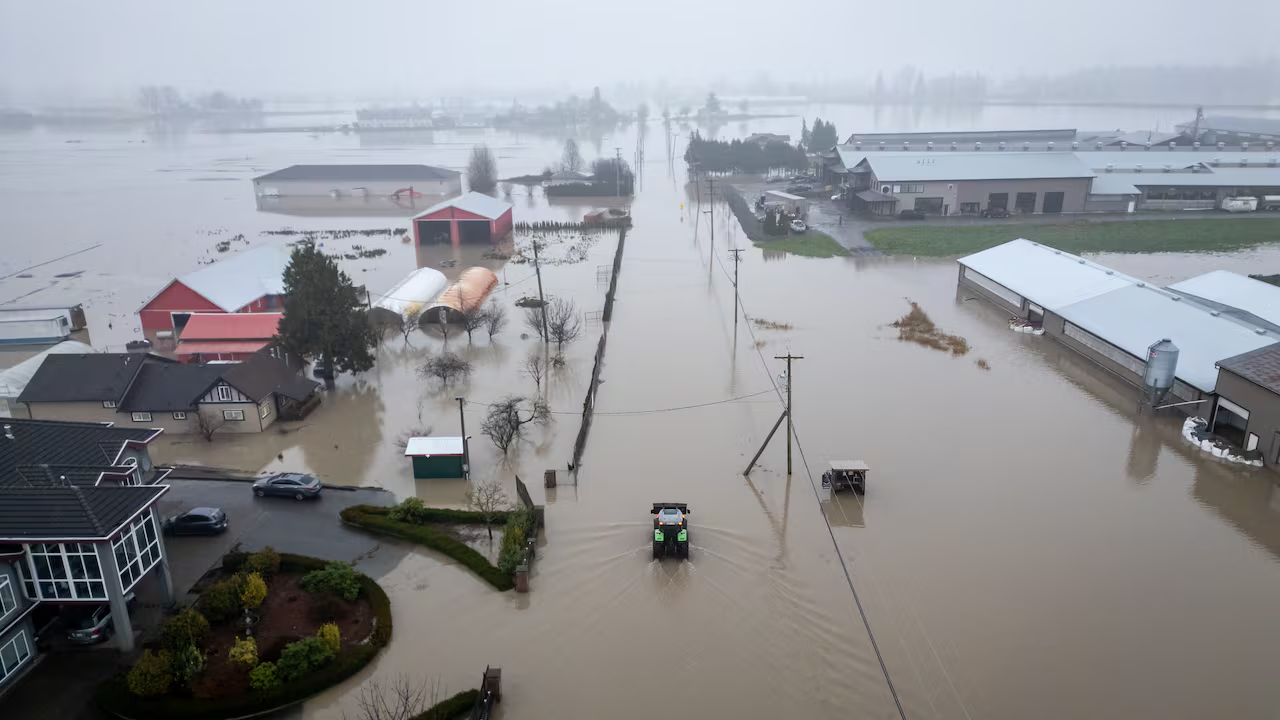
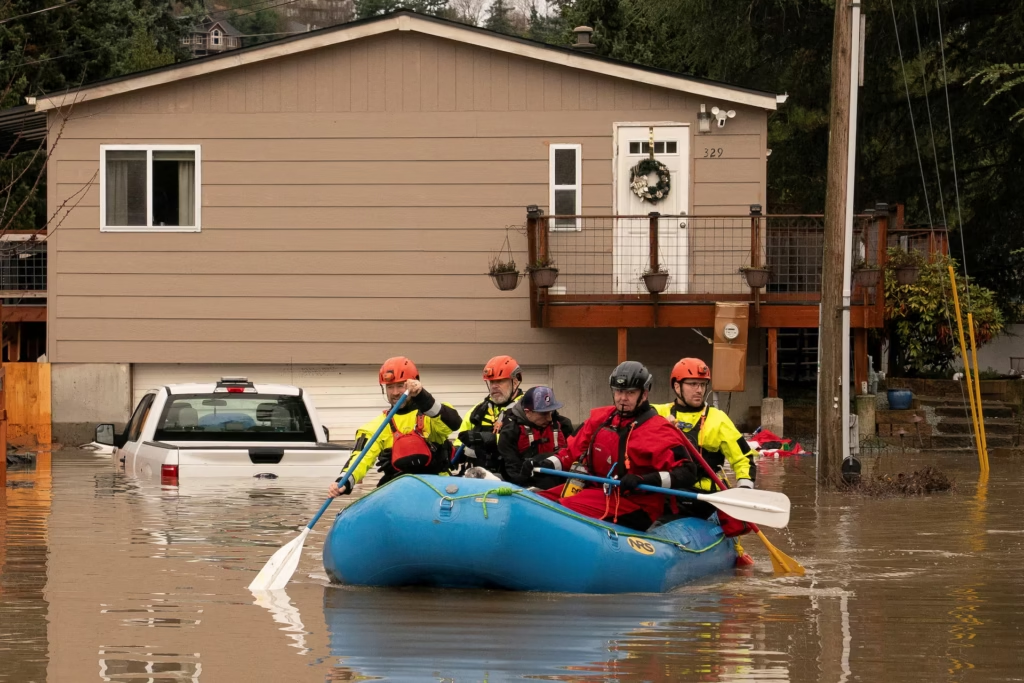
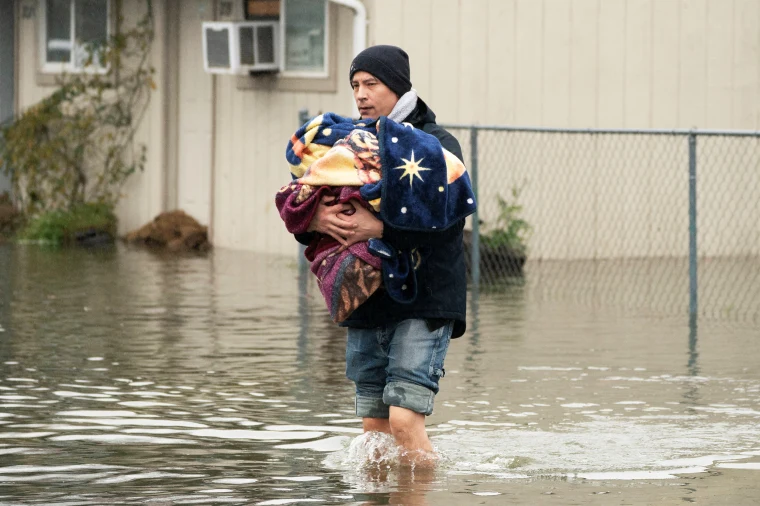
Severe flooding across parts of British Columbia and the wider Pacific Northwest has forced evacuations, disrupted daily life, and placed enormous strain on communities across the region. Thousands of residents have been asked to leave their homes, many with little clarity on when they will be able to return or what they may find when they do.
For those affected, this is not a story about weather patterns or infrastructure diagrams. It is about displacement, uncertainty, interrupted livelihoods, and the emotional toll of being uprooted with little warning. Emergency responders, local authorities, and volunteers continue to work under challenging conditions, while evacuees face the reality of temporary shelters, disrupted routines, and difficult personal decisions.
Our thoughts are with everyone who has been evacuated or impacted across British Columbia and the Pacific Northwest as response and recovery efforts continue.




At the same time, events like this raise unavoidable questions about how prepared modern systems truly are for the conditions they now face. Beyond the immediate humanitarian response, the flooding exposes deeper issues in infrastructure design, forecasting, coordination, and resilience—areas where technology plays a central role.
Infrastructure Designed for a Different Era
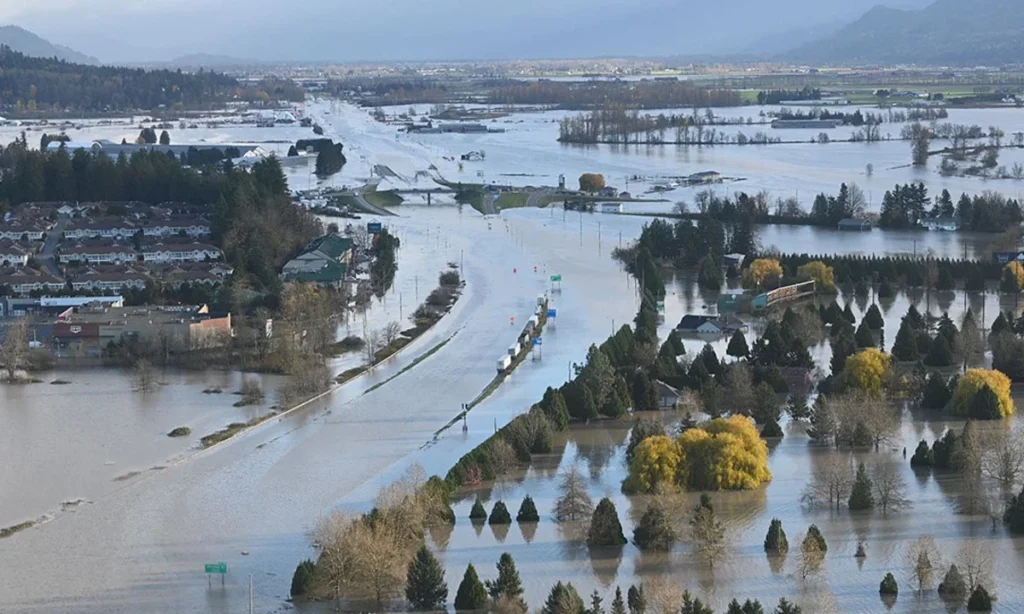
British Columbia’s geography presents unique challenges. Major highways, rail lines, energy infrastructure, and communication networks often pass through floodplains, river valleys, and mountainous terrain. Many of these systems were designed decades ago, based on historical climate patterns that no longer reliably apply.
The flooding has once again demonstrated how vulnerable critical corridors can be:
- Key transportation routes have been closed, isolating communities and disrupting supply chains.
- Rail and highway damage has highlighted the lack of redundancy in essential freight and commuter networks.
- Utilities and telecommunications infrastructure have faced exposure in areas increasingly prone to flooding.
From a systems perspective, this is not simply about extreme weather. It is about infrastructure operating outside the assumptions it was built upon.
Forecasting Is Improving—Response Still Lags
The technology used to anticipate flooding has advanced significantly. Satellite monitoring, hydrological sensors, and increasingly sophisticated weather models can now provide earlier and more accurate warnings than ever before.
Yet a persistent gap remains between forecasting and outcomes.
Warnings do not automatically translate into effective action. Challenges include:
- Coordinating responses across multiple levels of government
- Delivering alerts in ways that prompt timely public action
- Aligning emergency planning with real-world constraints on mobility and access
The issue is not a lack of data, but the difficulty of turning insight into coordinated, decisive response under pressure.
The Wider Economic and Technological Impact
Flooding of this scale also carries consequences that extend beyond the immediate emergency.
Disruptions to transportation and logistics affect ports, inland freight routes, construction timelines, and regional supply chains. Businesses—particularly small and medium-sized enterprises—face delays, lost revenue, and uncertainty. Insurance and risk-modeling systems are once again tested against conditions that are becoming more frequent rather than exceptional.
For Canada’s technology, logistics, and infrastructure sectors, climate resilience is no longer a long-term concern. It is an operational reality.
Emergency Systems as Real-World Stress Tests
Events like this function as live stress tests for public-sector technology:
- Emergency alert systems
- Evacuation mapping tools
- Inter-agency coordination platforms
- Public communication infrastructure
Where these systems perform well, harm is reduced. Where they fall short, the consequences are immediate and visible. Improving these tools is not simply a policy challenge—it is a technology and systems design challenge that will shape future outcomes.
Looking Forward
As waters recede and attention gradually shifts elsewhere, recovery for affected communities will take time. Homes must be assessed, infrastructure repaired, and lives put back together. For evacuees, the end of the immediate emergency does not mark the end of disruption.
At the same time, the broader lessons raised by this flooding cannot be ignored. Regions like British Columbia and the Pacific Northwest are likely to face similar events again. The question is not whether technology can help, but whether systems are designed—and governed—to act on what technology already tells us.
Resilience must be treated as a core design principle, not a reactive measure introduced after damage is done.