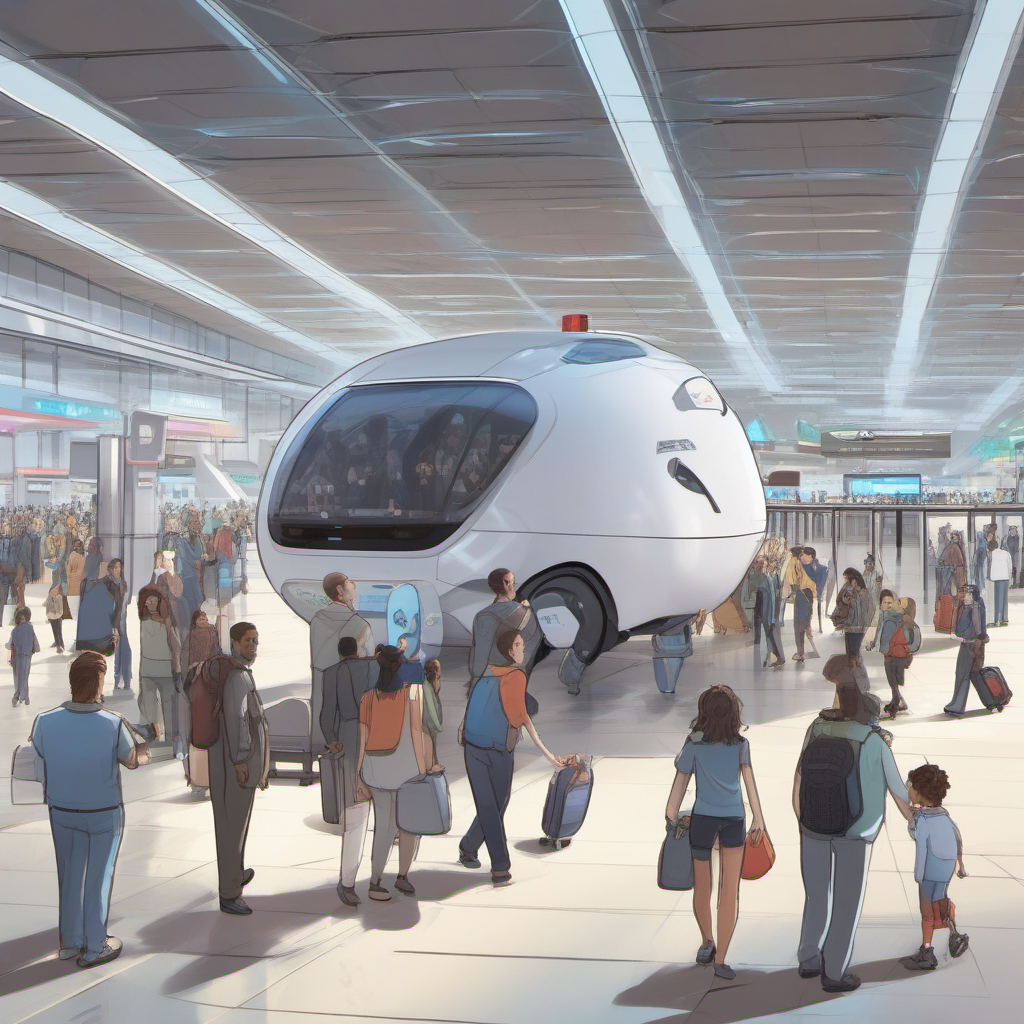
Vancouver-based A&K Robotics has nabbed $8 million CAD in Series A funding to expand its self-driving mobility pods in airports. As the global population ages, the demand for mobility solutions in crowded spaces like airports is skyrocketing. This funding marks a critical step for A&K in scaling operations and addressing this growing need.
## What A&K Robotics Actually Does
A&K Robotics specializes in developing autonomous mobility systems for indoor environments, with a particular focus on airports. Their flagship product, Cruz, is an electric self-driving vehicle designed to transport passengers through terminals smoothly and efficiently. Currently operational at Vancouver International Airport and Madrid-Barajas Airport, Cruz is engineered with 360-degree and three-dimensional sensing systems that gather data through cameras, sonar, and LiDAR. This information is processed by A&K’s proprietary Kinesos AI, allowing the pods to adapt to dynamic environments and crowd movements.
With the recent funding, A&K plans to transition from pilot programs to permanent installations, expanding its reach across North America and Europe. The startup is ramping up its manufacturing capabilities, aiming to produce hundreds of units monthly. A new R&D facility has been established, and a third manufacturing hub is set to open in Surrey, BC.
## Competitive Context
The market for autonomous mobility solutions is heating up, with various players vying for a share of the pie. Companies like Waymo and Uber have made headlines with their self-driving technologies, but A&K is carving out a niche in the indoor mobility sector, specifically targeting airports. This focus allows A&K to sidestep some of the regulatory hurdles faced by outdoor autonomous vehicle companies while capitalizing on a specific, underserved market need.
However, the competition isn’t just from traditional tech giants. Startups like Ottonomy and Piaggio Fast Forward are also exploring autonomous solutions for indoor spaces, albeit with varying approaches and technologies. A&K’s challenge will be to prove the scalability and reliability of its technology in real-world, high-stakes environments like airports, where operational hiccups can lead to significant disruptions.
## Real Implications for Founders, Engineers, and the Industry
For founders and engineers, A&K’s trajectory offers valuable insights into the practicalities of scaling autonomous technology. The company’s focus on proving its technology in challenging environments illustrates the importance of niche market validation before broader application. This targeted approach can be a model for startups looking to enter the autonomous space without getting lost in the broader, more competitive landscape.
Investors may find the airport mobility niche enticing due to its specific challenges and clear demand trajectory. Airports are continually looking for ways to enhance passenger experience and efficiency, and solutions like Cruz promise to address both concerns. However, the path to profitability remains uncertain, as the industry will need to see whether A&K can turn its pilot successes into widespread adoption.
## What Happens Next
With its Series A closure, A&K Robotics is poised to expand its self-driving pods across major airports in North America and Europe. The company’s immediate focus is on scaling production and integrating its technology into everyday airport operations. Stakeholders will be keenly watching how A&K navigates the complexities of scaling autonomous solutions in such tightly regulated and high-pressure environments.
For a founder or engineer intrigued by the autonomous vehicle sector, A&K’s journey underscores the importance of proving technology in demanding environments before scaling. It also highlights the potential for niche markets to provide a springboard for broader applications. As A&K pushes forward, the lessons learned from their expansion could inform strategies for tackling similarly challenging sectors.