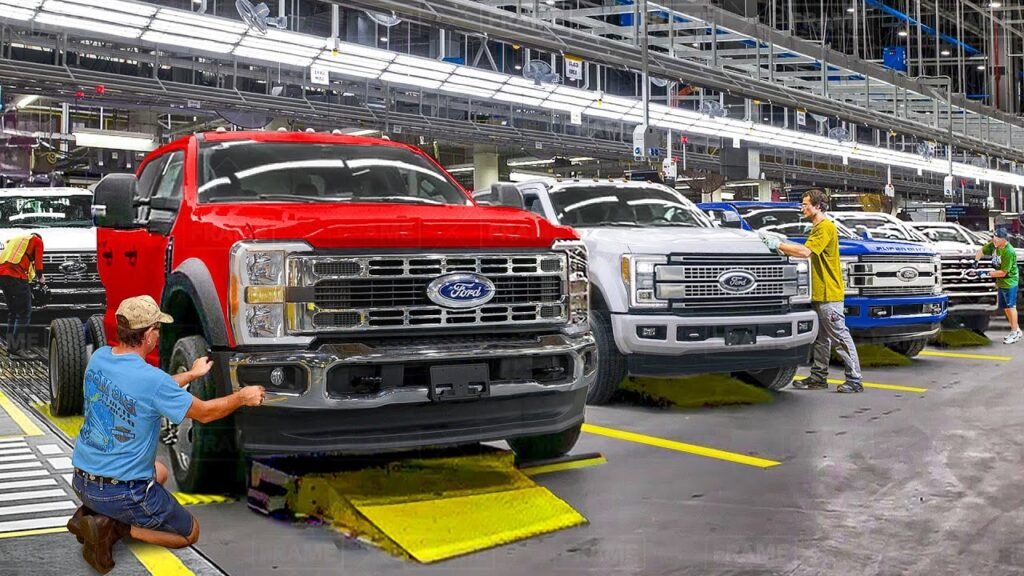
Ford Motor Company has announced a significant overhaul of its electric vehicle (EV) strategy in response to weakening consumer demand, rising costs, and changes in U.S. policy on EV incentives. The Detroit automaker revealed it will take a $19.5 billion pre-tax charge related to its EV business and pivot toward a broader mix of hybrid and extended-range vehicles. Analysts describe the move as one of the most visible signs yet that legacy automakers are recalibrating their electrification plans.
Major Write-Down and Strategic Shift
Ford said most of the $19.5 billion charge will be recognized in the fourth quarter of 2025, with some cash impacts extending into 2026 and 2027. The write-down reflects the company’s decision to cancel or scale back several large EV programs, including those for full-size electric trucks and commercial vans that had been part of its earlier electrification strategy.
The move comes at a time when EV sales have softened in the United States after the expiry of enhanced federal tax credits and a relaxation of emissions regulations, reducing financial incentives for buyers. In November, Ford reported a notable decline in pure EV demand, prompting leadership to rethink their approach.
End of the F-150 Lightning EV and New Models
Production of Ford’s all-electric F-150 Lightning pickup truck, once a flagship electrification product, concluded in December 2025. The company said it will replace the fully electric Lightning with a next-generation extended-range electric vehicle (EREV). This variant pairs electric propulsion with an internal combustion range extender, promising greater overall range and flexibility for customers.
Ford will also focus future electrification efforts on smaller and more affordable EV models built on a new Universal EV Platform. The first of these is expected to be a mid-size electric pickup truck priced near $30,000 that could launch in 2027.
Broader Product and Production Changes
In addition to new EV platforms, Ford plans to expand production of hybrid vehicles and extended-range EVs, which combine electric drive with a gasoline generator. These vehicles are seen as a middle ground for consumers seeking improved fuel economy without the range anxiety or higher purchase prices associated with full EVs.
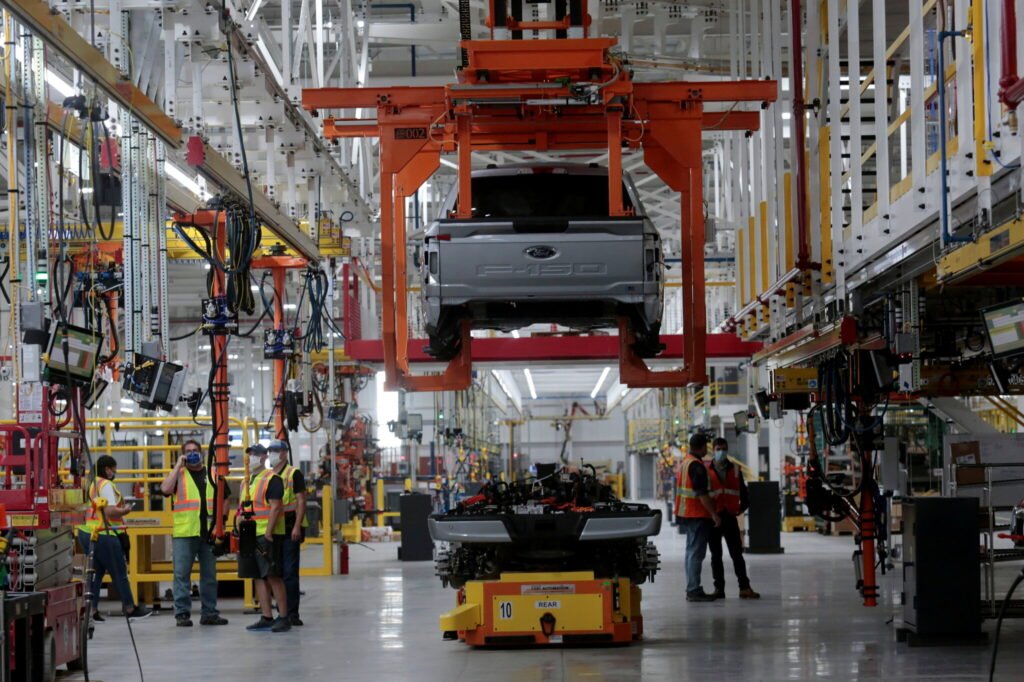
Some of Ford’s U.S. electric vehicle facilities are being repurposed to support these shifts. Battery plants that were built to serve pure EV production will be reconfigured to produce energy storage systems and components for other applications, including residential or commercial use, reflecting a strategy to diversify revenue streams.
What This Means for Ford and the Industry
Ford’s pivot reflects broader trends in the auto industry. Many traditional manufacturers invested heavily in all-electric vehicles over the past decade with the expectation of rapid adoption by consumers. However, slower than anticipated market demand, combined with lower cost competitiveness against EV-first companies, has forced a reassessment of those plans.
Executives at Ford and other automakers argue that hybrids and extended-range electrified vehicles offer a more profitable and customer-aligned pathway in the near term. The company still projects that hybrids, extended-range EVs and true EVs will represent about 50 percent of its global sales by 2030, up from roughly 17 percent today.
Industry Reaction and Outlook
Financial markets reacted to the announcement with relative stability in Ford’s stock, as investors weighed the immediate costs against the potential for improved long-term profitability. Ford also raised its 2025 earnings forecast to approximately $7 billion, indicating that the company believes the restructuring will strengthen its overall business.
Analysts note that Ford’s move is not an abandonment of electrification but a recalibration. By shifting emphasis toward affordable EVs, hybrids and energy storage applications, Ford aims to balance innovation with financial discipline in a rapidly evolving automotive landscape.
As the industry continues to adjust to consumer preferences and regulatory environments, Ford’s strategic reset is likely to be watched closely by investors, competitors and policymakers alike.