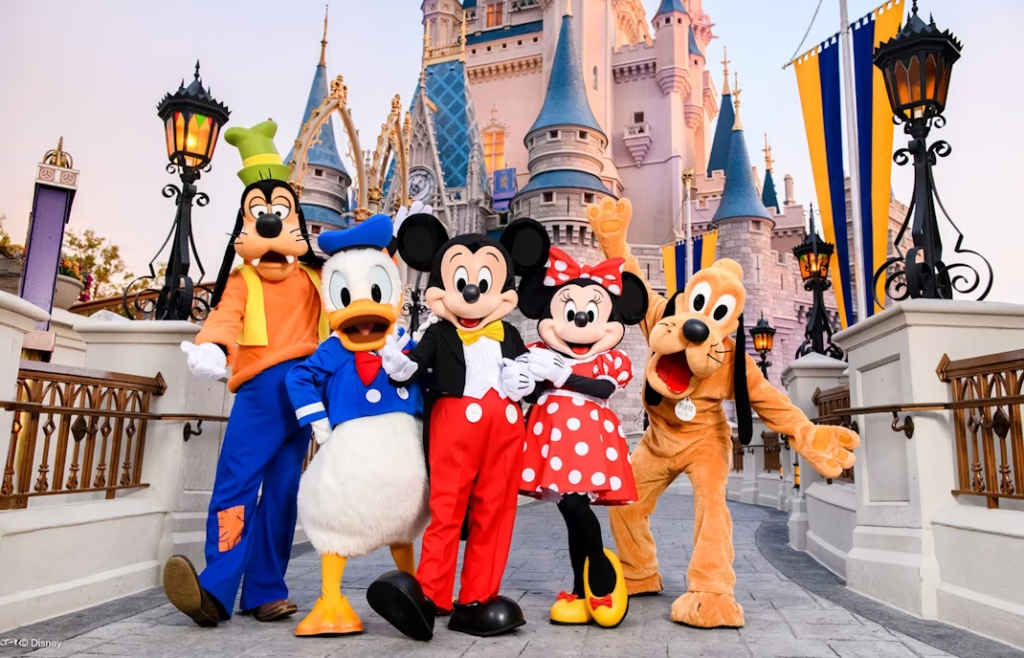
The Walt Disney Company and OpenAI have announced a major partnership that marks a significant shift in how entertainment and artificial intelligence intersect. Under the agreement, Disney will make a $1 billion equity investment in OpenAI and enter a three-year licensing deal allowing OpenAI to use more than 200 characters from Disney, Pixar, Marvel, and Star Wars in AI generated content. The companies also plan deeper technology integration across Disney’s products and services.
This move signals a new chapter for both companies and raises important questions about how AI will shape creative industries moving forward.
What the Deal Actually Entails
Under the agreement:
• OpenAI’s Sora AI video generator will be able to legally generate short videos featuring licensed Disney characters based on user prompts. These can include environments, costumes, props, and animated characters, though actor likenesses and voices are excluded.
• A curated selection of fan-created AI videos could be made available on Disney+, blending user creativity with the company’s streaming platform.
• Disney will bring ChatGPT and OpenAI technologies into its internal workflows and products, including Disney+.
• The deal reflects a stated commitment from both companies to responsible use of AI, protecting user privacy and creator rights.
Disney becomes the first major entertainment firm to license its IP at this scale to a generative AI platform, and the size of the investment signals how seriously it views the future potential of AI in storytelling.
Why This Matters for the Tech and Media Industry
Disney’s move represents an important shift in strategy for legacy media companies, many of which have historically viewed AI with caution or outright hostility. In recent years, writers, actors, and visual effects artists have battled against unlicensed AI use of creative content, and many in Hollywood have expressed fear that AI might replace human creativity.
By licensing its characters and investing directly in an AI company, Disney is choosing a path of engagement rather than resistance. For the tech industry, this signals that large intellectual property owners are no longer content to let AI companies develop on borrowed content or engage in protracted legal battles. Instead, they want a seat at the table and control over how their creations are used.
Analysts see this as a potential “blueprint” for future collaborations between traditional content owners and AI platforms. It gives AI companies legitimacy and access to premium content, while giving rights holders a revenue stream and influence over how their properties are represented in generated media.
Creative Industry Impact: A Double-Edged Sword
For creators, this partnership could bring new tools and revenue opportunities. Fans will be able to generate their own Disney themed videos and potentially share them on mainstream platforms. OpenAI will also integrate key Disney IP into tools that can generate images and videos from simple text prompts, lowering the technical barrier for creativity.
At the same time, the deal raises concerns about how AI might reshape the labour landscape in creative industries. AI tools that generate content based on licensed characters could accelerate production workflows, but they could also reduce demand for traditional roles in animation, character design, storyboarding, and other core creative functions if used to replace rather than assist human artists. Critics argue that without careful guardrails and ethical standards, generative AI risks turning rich creative universes into commodified “content slop” that lacks genuine artistic depth.
The broader creative community has mixed reactions. Some celebrate the opportunity for fan participation and new forms of expression. Others worry about dilution of artistic craftsmanship and potential job displacement for professional creators.
A Turning Point in Entertainment
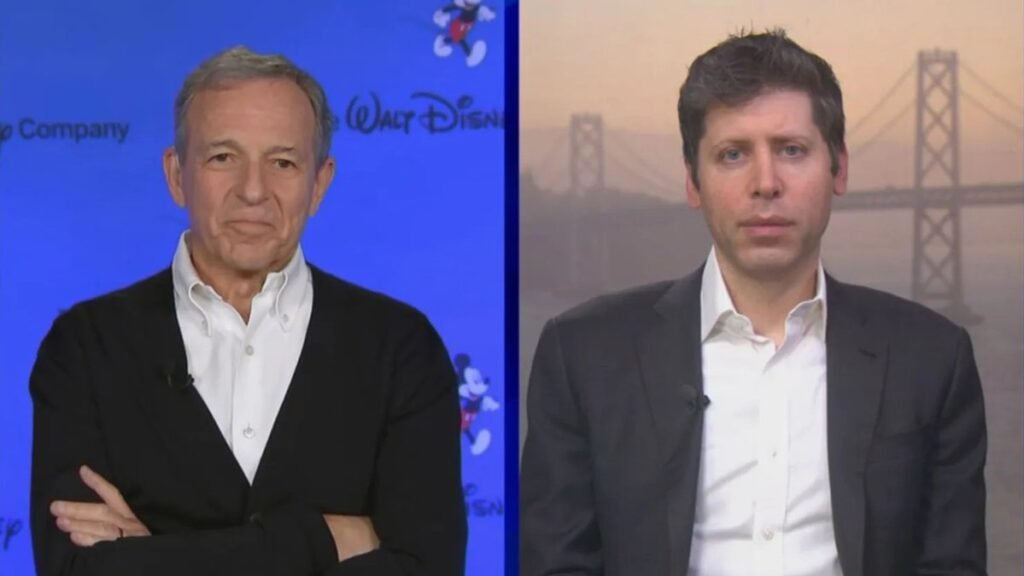
Disney’s embrace of AI stands in contrast to earlier resistance from parts of Hollywood, and reflects a recognition that AI is not going away. As Disney CEO Bob Iger noted, technological innovation has consistently shaped entertainment, and AI represents the latest frontier in that progression. The company’s investment and IP licensing suggest it wants to help shape that frontier rather than be disrupted by it.
For OpenAI, the deal significantly boosts the value of its Sora video platform and strengthens its position in a competitive landscape that includes rivals pursuing generative AI media tools.
The partnership between Disney and OpenAI may define the next era of how stories are told, shared, and experienced, creating new opportunities while forcing tough conversations about the role of AI in human creativity. This collaboration could set expectations for future media and tech alliances as the industry navigates the opportunities and risks of generative AI.