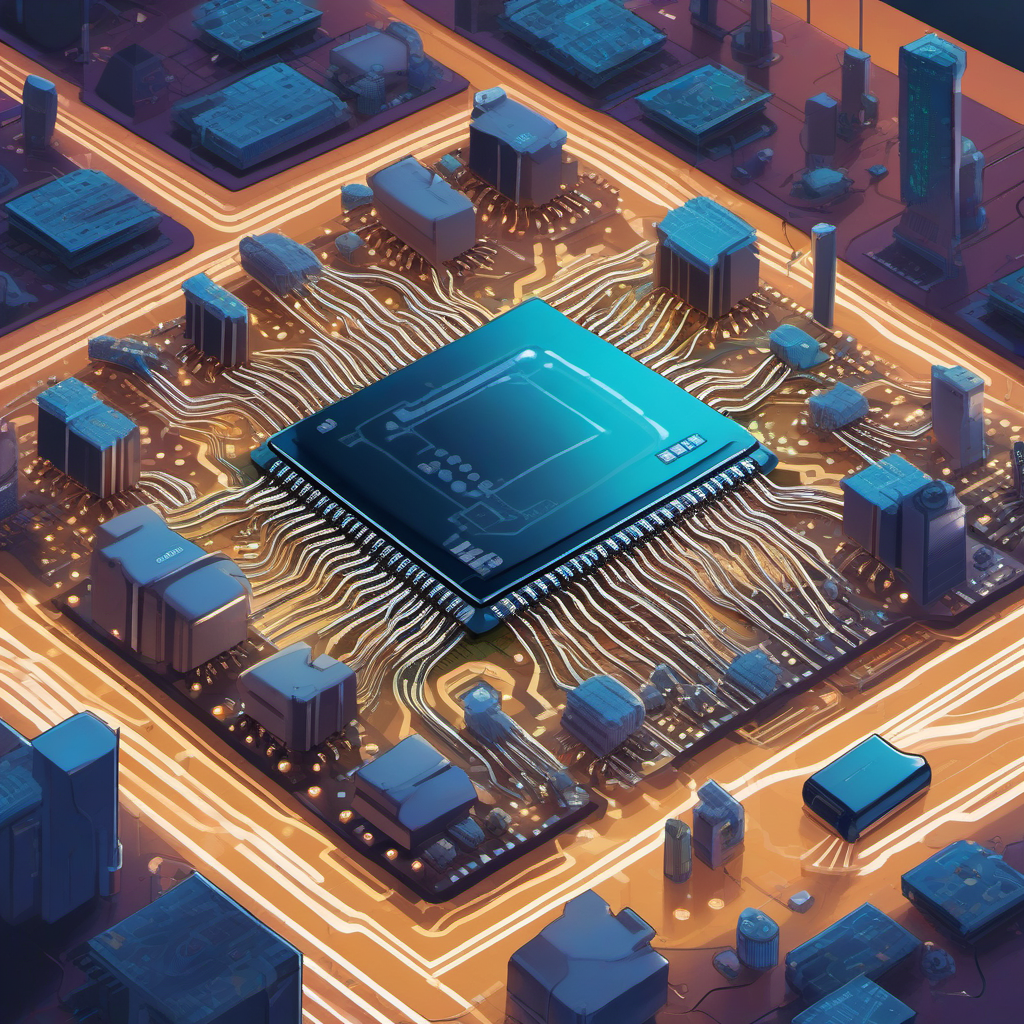
Anthropic, the artificial intelligence company known for its work on developing large language models, is now in talks with Samsung to develop a custom semiconductor chip. This potential collaboration highlights a growing trend among AI firms seeking to optimize their tech stacks with bespoke hardware solutions. As AI workloads become increasingly demanding, the need for tailored chips that can handle specific computational tasks more efficiently is becoming ever more apparent.
## What Anthropic is Up To
Anthropic focuses on AI research with an emphasis on safety and alignment, aiming to create AI systems that are not only powerful but also controllable and interpretable. The firm’s interest in custom chips stems from the need to enhance the performance of its AI models, which require substantial computational power to operate effectively. By collaborating with Samsung, a leader in semiconductor manufacturing, Anthropic is attempting to streamline its operations and reduce reliance on third-party hardware that may not fully meet its specific needs.
Custom chips are designed to optimize specific functions, such as processing speed or energy efficiency, which are critical for AI tasks. This move follows in the footsteps of industry giants like Google and Amazon, who have already developed their own AI-specific hardware. Anthropic’s initiative suggests that the company is positioning itself to better compete in a landscape where hardware capabilities play a crucial role in AI development and deployment.
## The Competitive Context
This news arrives on the heels of OpenAI’s announcement of its custom AI chip partnership with Broadcom, illustrating a broader industry shift towards in-house hardware development. The AI sector is witnessing an arms race of sorts, with companies striving to build chips that offer superior performance metrics compared to off-the-shelf options.
Samsung’s potential involvement with Anthropic provides the latter with access to one of the most advanced semiconductor manufacturing processes available. However, this isn’t an entirely unprecedented move for Samsung, which has a history of collaborating on custom silicon with tech giants like Apple and Nvidia. For Anthropic, partnering with a seasoned player like Samsung could provide a competitive edge, while offering Samsung an opportunity to solidify its presence in the rapidly growing AI hardware market.
## Real Implications for Founders, Engineers, and the Industry
For startup founders and engineers, the move towards custom AI chips underscores a critical trend: the integration of hardware and software development. Building AI solutions is no longer just about writing clever algorithms but also about ensuring that the underlying hardware can support and enhance these systems. This may require a shift in focus for tech founders, who must now consider hardware capabilities as part of their product development roadmap.
For engineers, this evolution means that hardware proficiency could become as vital as software expertise. Those working in AI will likely need to understand chip design and optimization to fully harness the potential of custom hardware solutions. This could lead to increased demand for skills in hardware-software co-design and a deeper understanding of how specific hardware architectures can influence AI performance.
Investors in the tech space should pay attention to how these developments could redefine competitive advantages. Companies that succeed in developing effective custom chips may outpace competitors reliant on general-purpose hardware. This presents both a risk and an opportunity: investing in companies that can marry hardware and software innovation may yield significant returns, but understanding which companies have the potential to succeed in this complex landscape is crucial.
## What Happens Next
As Anthropic and Samsung continue their discussions, the tech industry watches closely to see if this collaboration will materialize into a tangible product. If successful, this partnership could set a precedent for other AI startups considering similar moves.
For founders, engineers, and investors, the message is clear: the future of AI is as much about hardware as it is about algorithms. Those who can navigate both domains will likely be the ones to thrive in this evolving market.