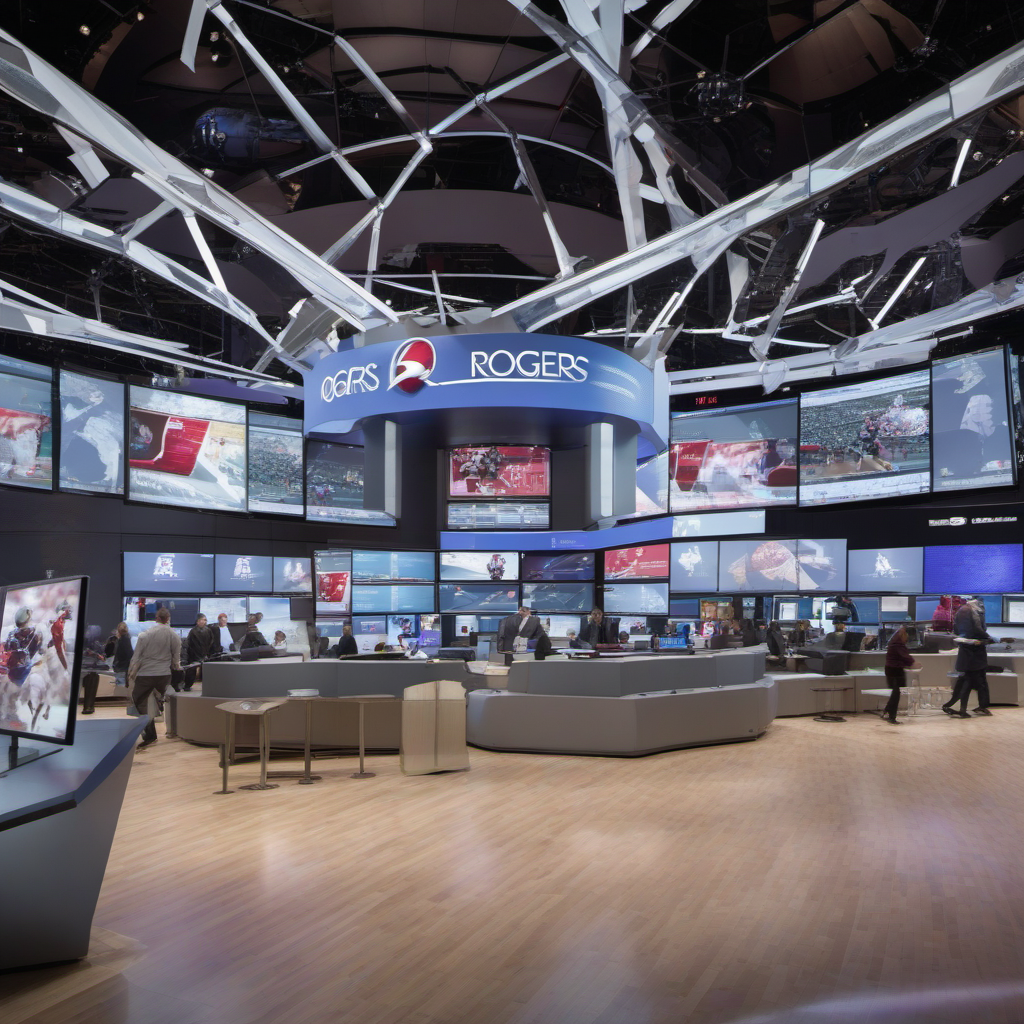
Rogers Communications is under the spotlight as it considers exercising its option to buy the remaining 25% stake in Maple Leaf Sports & Entertainment (MLSE) from Kilmer Group, led by Larry Tanenbaum. This move could make Rogers’ stock appear more expensive, according to Desjardins Securities analyst Jerome Dubreuil. As Canada’s telecommunications giant navigates this potential acquisition, stakeholders are left wondering about the strategic value and financial implications of such a decision.
### What Does Rogers Communications Actually Do?
Rogers Communications is a major player in Canada’s telecommunications landscape, providing a wide range of services including wireless, cable television, internet, and media. The company is headquartered in Toronto and serves millions of customers across the country. With its hands in various sectors, Rogers is not just a telecom provider but also a media powerhouse, owning television and radio stations and sports franchises. The potential acquisition of the remaining stake in MLSE aligns with Rogers’ strategy to strengthen its media and sports portfolio, which already includes a 37.5% interest in MLSE.
### Competitive Context in Canadian Telecommunications
The telecommunications market in Canada is fiercely competitive, dominated by the “Big Three”: Rogers, Bell, and Telus. Each company is vying for market share in a relatively saturated environment. Rogers’ potential acquisition of MLSE’s remaining stake is not just about expanding its sports media empire but also about differentiating itself from its rivals. While Bell also holds a 37.5% share in MLSE, Rogers’ move could heighten competition between these telecom giants. However, with the Canadian Radio-television and Telecommunications Commission (CRTC) keeping a close watch on market dominance, any significant move by Rogers could attract regulatory scrutiny.
### Real Implications for Founders, Engineers, and the Industry
For founders and engineers in the tech and media sectors, Rogers’ potential full acquisition of MLSE represents an opportunity to assess the interplay between technology and entertainment. As Rogers expands its media assets, there could be increased demand for tech innovation in content delivery, user engagement, and data analytics. Engineers might find new opportunities in developing advanced infrastructure to support seamless media streaming and interactive fan experiences.
For the industry at large, this move could signal a shift in how telecom companies are positioning themselves—not just as service providers, but as integrated media and entertainment entities. This could prompt other companies to explore similar strategies, leading to increased mergers and acquisitions activity. Investors, meanwhile, should weigh the potential short-term financial strain against the long-term strategic benefits of a more diversified portfolio.
### What Happens Next?
As Rogers evaluates whether to proceed with acquiring the remaining stake in MLSE, stakeholders should prepare for potential market fluctuations and regulatory developments. Engineers and developers should consider the technical demands of an expanding media empire, while investors might want to scrutinize Rogers’ financial health and strategic vision. For founders, this scenario underscores the importance of adaptability and foresight in an industry where telecom, media, and technology are increasingly intertwined.