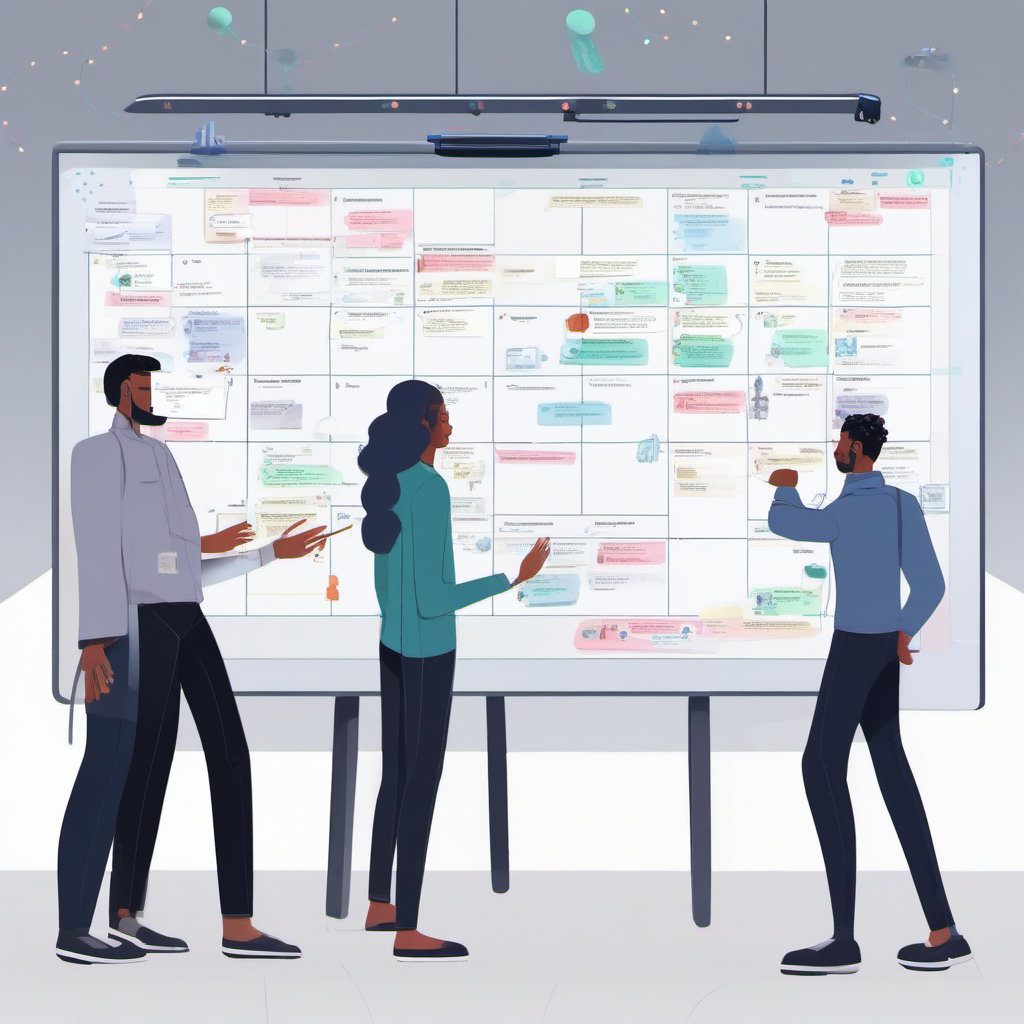
Paca, a new player in the project management software arena, is making waves with its lightweight alternative to Jira, designed specifically for human-AI collaboration. As tech companies increasingly integrate AI into their workflows, Paca aims to streamline project management processes by offering a platform that leverages artificial intelligence without the complexity often associated with existing tools. This development is particularly relevant for startups and small teams who need efficient yet manageable solutions.
### What Paca Actually Does
Paca bills itself as a more intuitive and less cumbersome alternative to Jira. The platform focuses on facilitating collaboration between humans and AI, aiming to enhance productivity without overwhelming users with features. Its interface is designed to be straightforward, allowing users to focus on tasks and collaboration rather than navigating through cluttered menus. Paca incorporates AI to automate routine tasks like scheduling, reminders, and progress tracking, ostensibly freeing up human users to focus on more strategic aspects of their projects.
The software’s AI capabilities are intended to assist rather than replace human input, a subtle but important distinction as companies navigate the integration of AI into daily operations. For those interested in exploring this tool, more information can be found on the [Paca website](https://www.paca.com).
### Competitive Context
Paca enters a crowded market dominated by established names like Atlassian’s Jira, Asana, and Trello. Each of these platforms has carved out significant user bases by offering robust sets of features for project management. However, they can also be seen as overly complex for smaller teams or startups lacking the resources to fully utilize their capabilities. This is where Paca sees an opportunity, positioning itself as a more accessible option with its AI-driven approach.
While Jira is known for its extensive features catering to large enterprises, its complexity can be daunting for new users. In contrast, Paca attempts to strike a balance by providing essential functionality enhanced by AI, without the steep learning curve. The challenge for Paca will be convincing users that its streamlined approach can match the depth of features provided by its more established competitors.
### Real Implications for Founders, Engineers, and the Industry
For startup founders and engineers, Paca offers a potential solution for managing projects more efficiently, particularly in environments where teams are small and resources are limited. Its lightweight nature could mean less time spent on onboarding and training, allowing teams to hit the ground running. The AI integration may also appeal to tech-savvy teams looking to incorporate cutting-edge tools into their workflows without the overhead of managing complex software.
From an industry perspective, Paca’s emergence highlights the ongoing trend of simplifying enterprise software. As more companies look to integrate AI into their operations, the demand for user-friendly tools that bridge the gap between human effort and machine efficiency is likely to grow. Paca’s success or failure could signal how much appetite there is for such solutions in a market that often prizes comprehensive feature sets over streamlined functionality.
### What Happens Next
Paca’s journey in the project management software landscape will hinge on its ability to attract users away from entrenched competitors. Early adopters will be crucial in shaping the platform’s evolution and determining whether its AI-driven approach delivers on its promises. For founders and engineers, the decision to adopt Paca will depend on whether its balance of simplicity and AI capability aligns with their project needs and team dynamics.
As Paca contends with the giants of project management software, its progress will serve as a case study in whether a lighter, AI-enhanced approach can carve out a niche in a feature-heavy market. For those considering this tool, it’s an opportunity to test whether less can indeed be more in the world of team collaboration.