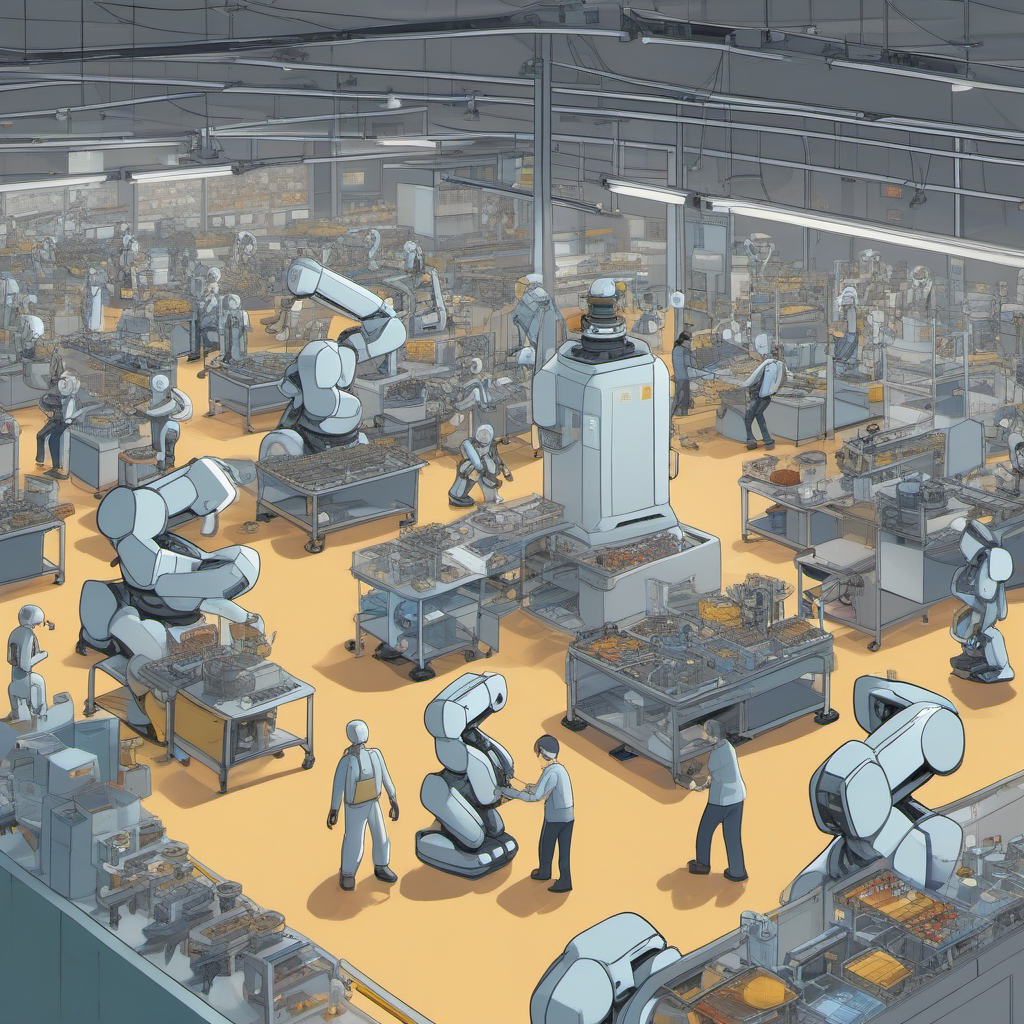
Theker, a company based in Toronto, has raised $85 million in a Series B funding round to develop versatile factory robots that defy specialization. This round was led by prominent venture capital firms, including Forerunner Ventures and XYZ Capital, with participation from existing investors. In a market flooded with niche automation solutions, Theker’s adaptable robots promise to shake up traditional manufacturing processes. But the real question remains: do factories need robots that can do everything, or are they better off with specialized machines?
### What Theker Actually Does
Theker’s robots diverge from the typical path of factory automation. Unlike robots designed with a fixed form, such as those from Boston Dynamics, Theker’s creations are built to be reconfigured. The company claims its robots can shift between different tasks and roles more easily than traditional industrial robots, which are typically locked into a single function. This flexibility is enabled by modular hardware and a software platform that allows operators to quickly adapt the robots to various jobs on the factory floor.
The potential applications are vast. A Theker robot could be reprogrammed to assemble electronics one day and package consumer goods the next. This could theoretically reduce downtime and increase productivity for manufacturing plants that handle diverse or rapidly changing product lines. However, whether this flexibility translates into tangible cost savings or productivity gains remains to be seen.
### Competitive Context
The industrial robotics market is crowded with players, each touting their specialized approach to factory automation. Companies like Fanuc and ABB dominate with their reliable, task-specific robots that have proven their worth over decades. Meanwhile, newer entrants like Universal Robots focus on collaborative robots that work alongside humans. Theker aims to carve out a niche by combining the adaptability of these collaborative robots with the robustness of traditional industrial machines.
Yet, skepticism is warranted. Specialized robots are deeply entrenched in manufacturing due to their efficiency and reliability. They are often optimized for specific tasks, making them hard to beat in terms of speed and precision. Theker’s promise of a jack-of-all-trades robot must overcome these entrenched advantages and demonstrate that versatility can equate to productivity without sacrificing performance.
### Real Implications for Founders, Engineers, and Industry
For factory owners and engineers, Theker’s proposition might sound appealing—one robot to handle multiple tasks could mean fewer purchases and less maintenance. However, the upfront cost of such adaptable technology might be higher than single-purpose machines. Founders considering investments in Theker-type technology need to weigh the potential for long-term savings against these initial costs.
Engineers tasked with integrating Theker’s robots will face new challenges. The flexibility of these machines requires a different approach to programming and maintenance. Training and reskilling workers to handle these adaptable robots could represent both an opportunity and a headache for manufacturers.
For other robotics startups, Theker’s funding success highlights the interest in flexible automation solutions but also underscores the need for a clear value proposition. Competing in this space means proving that adaptability can deliver real-world benefits that justify the investment.
### What Happens Next
Theker plans to use its new funding to accelerate product development and scale manufacturing capabilities. The company is gearing up to deploy its robots in pilot programs with select manufacturing partners by mid-2024. As these trials unfold, the industry will be watching closely to see if Theker’s flexible robots can deliver on their promise.
For founders and engineers, the rise of adaptable robotics represents both a challenge and an opportunity. As Theker and its competitors push the boundaries of what’s possible in automation, those in the industry must stay informed and ready to adapt their strategies to incorporate—or compete against—these new technologies.