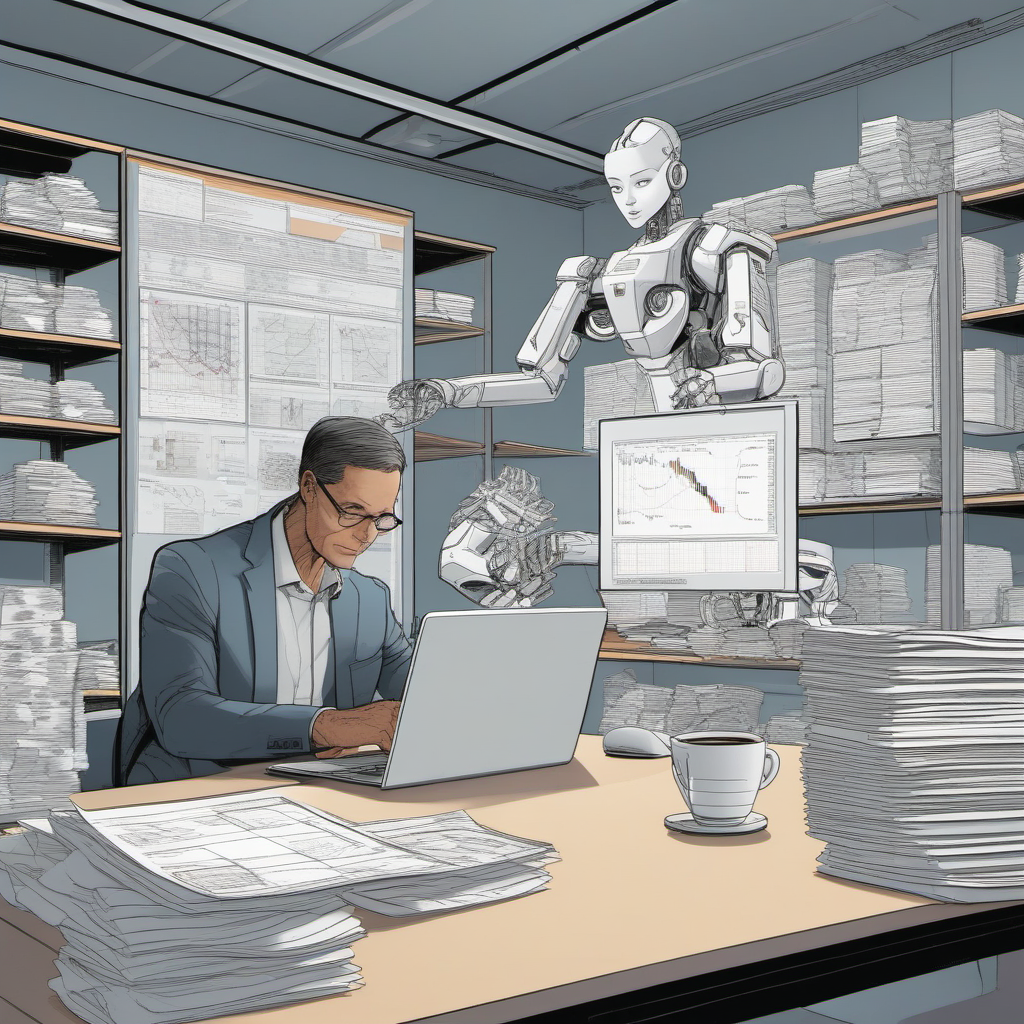
The debate over whether artificial intelligence will replace human jobs has reached a fever pitch in recent years. While some CEOs are quick to see AI as a cost-cutting measure, others argue this approach is fundamentally flawed. The truth is, AI should complement human skills, not replace them. CEOs who fixate on AI as a replacement for employees might be missing the bigger picture.
## What AI Actually Does
Artificial intelligence, when properly implemented, enhances productivity by taking over repetitive and mundane tasks. This frees up human workers to focus on more complex and creative aspects of their jobs. AI excels in data analysis, pattern recognition, and automation of routine processes. It can sift through massive datasets at speeds no human can match, providing insights that would otherwise be inaccessible.
However, AI lacks the nuanced judgment, emotional intelligence, and creativity that human employees bring to the table. It’s a tool, not a replacement for the human brain. When companies leverage AI to augment human capabilities, rather than replace them, they typically see improved outcomes.
## Competitive Context
In the competitive landscape, companies that use AI to enhance human potential are often more successful than those that rely on it as a substitute for human labor. Tech giants like Google and Microsoft have integrated AI to improve efficiency and innovation, not to eliminate jobs. They invest heavily in AI development but also in training and upskilling their workforce to work alongside these technologies.
On the other hand, companies that view AI as a direct replacement for humans often face backlash from both employees and consumers. Fear of job loss can lead to decreased morale and productivity among employees. Moreover, consumers might question the ethics of a company prioritizing machines over human welfare.
## Real Implications for Founders, Engineers, and the Industry
For founders and engineers, the takeaway is clear: AI should be seen as a partner, not a competitor. Entrepreneurs should focus on building AI systems that enhance human skills and creativity. Engineers should be developing AI solutions that are intuitive and user-friendly, allowing workers to seamlessly incorporate AI into their daily tasks.
The industry as a whole needs to shift its narrative. AI should not be seen as a threat, but as an opportunity to redefine roles and responsibilities. This perspective not only alleviates fears but also encourages innovation and growth. Companies that embrace this approach are likely to attract top talent and foster a culture of collaboration and innovation.
The next steps involve a conscious effort from CEOs and business leaders to reimagine their workforce strategy. It’s important to prioritize employee training and development to work alongside AI technologies. For investors, the focus should be on supporting companies that invest in human-AI collaboration, as these are the ones poised for sustainable growth.
Ultimately, the message is simple: AI is a tool to enhance human capability, not replace it. CEOs who don’t grasp this might find themselves outpaced by those who do.