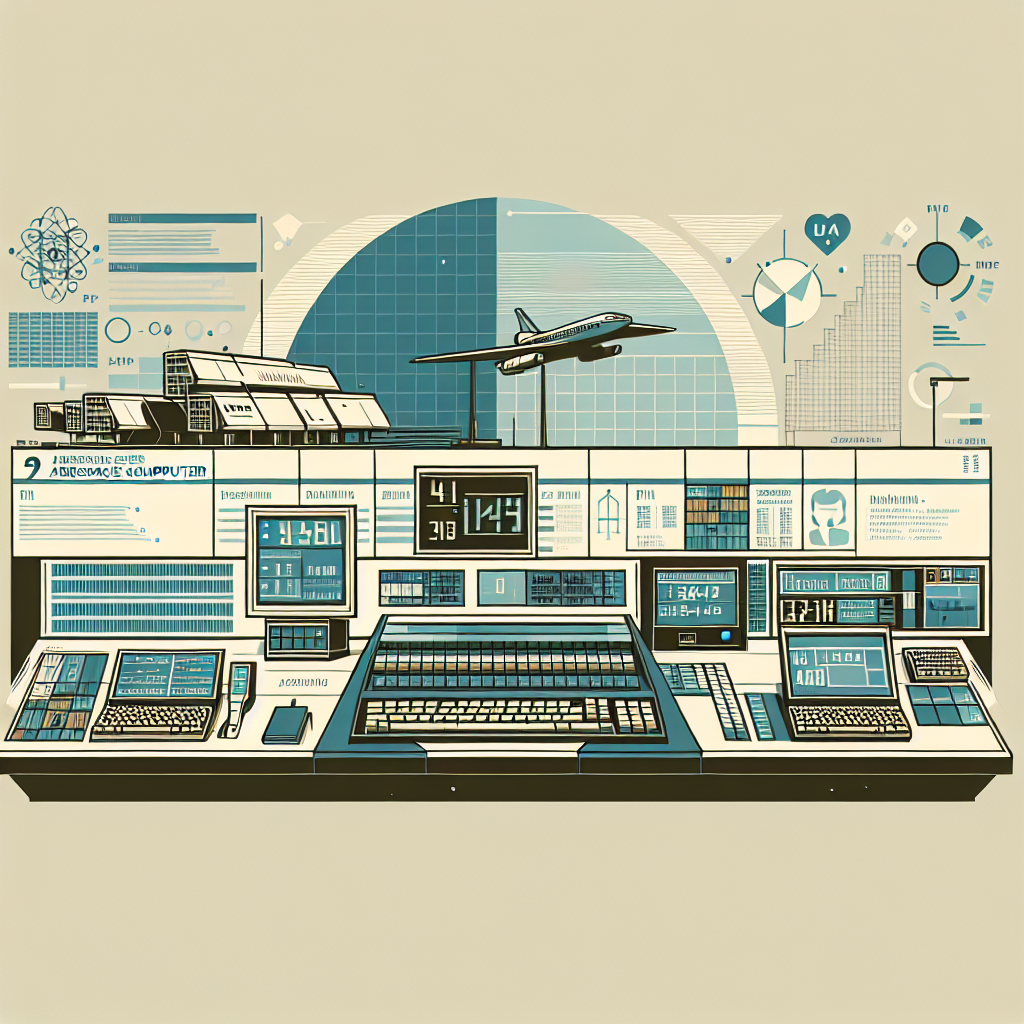
The Rise and Fall of IBM’s 4 Pi Aerospace Computers
IBM’s System/4 Pi computers once represented the pinnacle of aerospace computing, powering everything from military aircraft to the iconic Space Shuttle. Introduced in the late 1960s, these computers played critical roles in aviation and space exploration. However, as technology evolved, they gradually became obsolete, leading to their eventual discontinuation.
IBM’s System/4 Pi: A Technological Marvel
IBM’s System/4 Pi family was introduced around 1967, designed to meet the demanding needs of aerospace applications. These computers were integral to numerous military and space missions, including controlling the Skylab space station and the Space Shuttle. The 4 Pi computers were known for their compact size and robust performance, utilizing magnetic core memory and transistor-transistor logic (TTL) circuits. The AP-101 model, in particular, was used extensively in the Space Shuttle program, demonstrating reliability and precision in critical missions.
The System/4 Pi line included several models tailored for different applications, such as the TC Tactical Computer for missiles and the CP Customized Processor for real-time computing. These computers were pivotal in advancing avionics technology, providing capabilities that were cutting-edge for their time.
Market Evolution and Competitive Context
Despite their initial success, IBM’s 4 Pi computers faced growing competition as technology advanced. By the 1980s, the emergence of semiconductor memory and more powerful microprocessors began to overshadow the capabilities of the 4 Pi systems. The introduction of new computing standards, such as the MIL-STD-1750A architecture, further challenged IBM’s dominance in military and aerospace computing.
The market shift was evident as IBM’s avionics division struggled to keep pace with rapidly advancing commercial computing technologies. The once-revolutionary 4 Pi computers were gradually outperformed by newer systems that offered higher speeds, greater efficiency, and reduced costs.
Implications for the Aerospace Industry
The decline of IBM’s 4 Pi computers highlights the rapid pace of technological advancement in the aerospace industry. As newer, more efficient technologies emerged, legacy systems like the 4 Pi became less viable for modern applications. This transition underscores the importance of continuous innovation and adaptation in the aerospace sector.
IBM’s decision to sell its Federal Systems Division to Loral in 1994 marked the end of an era for the 4 Pi line. The sale allowed IBM to refocus on its core business, while Loral and later Lockheed Martin continued to serve the defense and aerospace markets.
The legacy of IBM’s 4 Pi computers remains a testament to their impact on aerospace technology. While they are no longer in use, their contributions to space exploration and military applications paved the way for future advancements. As the industry continues to evolve, the story of the 4 Pi serves as a reminder of the importance of innovation and adaptability in maintaining technological leadership.